PAUL DONOVAN is chilled by the contemporary resonance of Harper Lee’s coming of age tale amidst racism and white supremacy in this excellent production


 Latest editorial
Book Review: Shire Child by Nicholas Dykes
Gwyn Griffiths feels shire delight from a poet at the borders

GEOFF BOTTOMS recommends the unashamedly light-hearted escapism on offer in this stage version of the 1963 film
Full of mysterious religious references and radical sound design, the Scottish duo’s new offering is candidate for album of the year, suggests SIMON DUFF
MARY CONWAY revels in a powerful reminder that human lives are not defined by physical perfection
PAUL DONOVAN recommends the fine performances in this account of the pre-war meeting between the US president and the British king
TECLYN AROD relishes an intimate celebration of jazz improvisation that mixes local and national musicians


Shire Child
by Nicholas Dykes
(Lathe Biosas Publishing, £7.50)
“ARE all lives lived as long marches through difficult terrain?” asks Nicholas Dykes in his poem entitled Wanderer.
Yet most of the time in Shire Child he does not convey the idea of life as a long hard slog.
His poems, written over a lifetime, are of a sunnier disposition, especially on harvest days, when rabbits lollop “across shaven stubble.”
Yet though spring features often, it’s with a cold edge — it’s not always a time of hope and resurrection.
Anyone who has experienced spring on the Herefordshire borders or Canada, where Dykes lived for many years, will understand what he means. But there is also the hope coming with the return of the redwing and a squirrel’s chatter answering “the rapid pulse/Of a stream swollen with snow melt.”
His poems will delight anyone brought up in the country a generation ago, when summers were hot and winters cold: “Barn days, with ice in the trough.../while the cattle stamped/their breath and ours mingling jets of steam/under solemn eyes.”
There is a haunting nostalgia to his work, with “the feathery-frosted panes” and the story of the nativity in Church at Christmas and confused adolescent passions recalled.
But there are poems which strike less comfortable chords. In 1916, the Irish girl killed in the Easter rising is: “fright-triggered, veering bullet spilled/a running girl whom no-one meant to kill.”
Homecoming is the ironic welcome, on return from exile, of finding his family’s land is now government property: “an abandoned city of grey concrete/crumbling, cracked and stained.” No appeal could halt the state, who “heard us no more than did the roaring black machines/which struck our green and rolling land/and ground it flat.”
Dieppe is a stark reminder of the 900 Canadians killed in the disastrous raid of August 19, 1943. In lighter vein, On Mynydd Troed (Mount Foot) he climbs the hill, presumably after a serious illness, and feels the joy of standing on a mountain top again, while In Bluebell Wood he tells of a walk the morning after the birth of his daughter, a heady mix of ecstasy at being a father coupled with the sights and sounds of the wood he had loved as a child.
This is a book many will identify with. The startling phrases and the love for the rich tapestry of landscape beautifully conveyed bear the hallmarks of a very fine poet.

Similar stories

ALAN MORRISON recommends a consummate, heart-warming collection about a working-class upbringing in the industrial north-east

ANDY CROFT welcomes the publication of an anthology of recent poems published by the Morning Star, and hopes it becomes an annual event
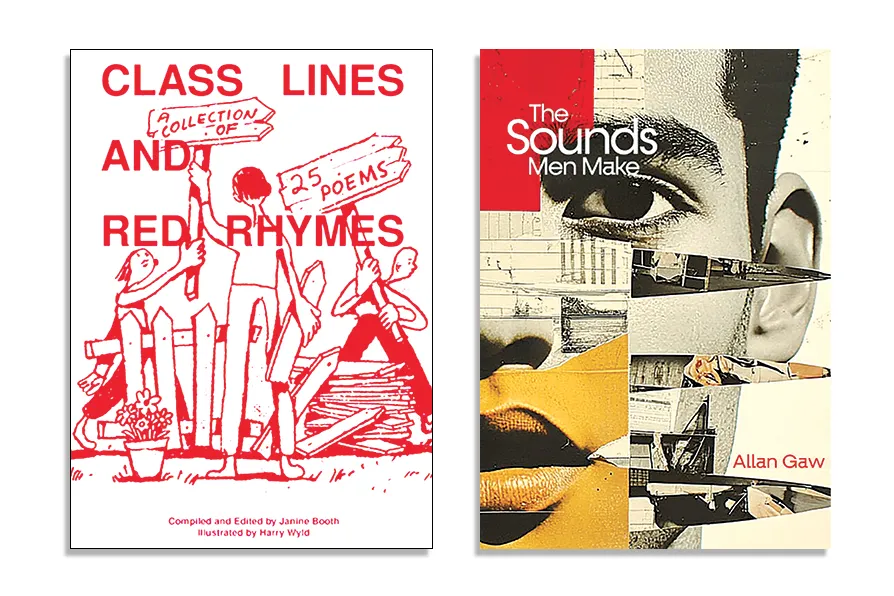
RUTH AYLETT reviews two collections of outright political poetry

JAN WOOLF examines work that aims to give viewers a material experience of the environments in the polar north and Britain equally affected by the climate crisis