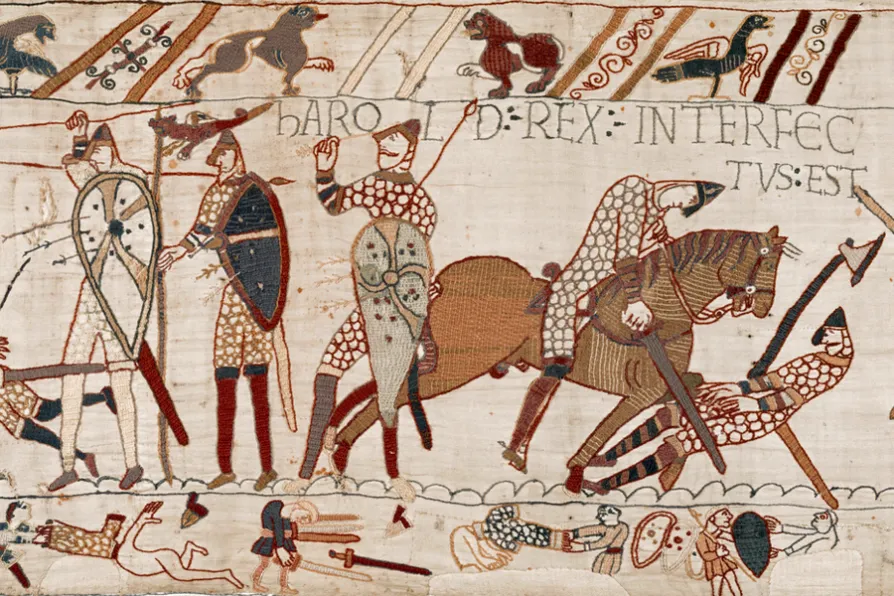
STEPHANIE BROWN draws attention to the hidden labour of the female embroiderers, and how a 19th century replica made no such error


 Latest editorial
Exhibition Review: Conscience and Conflict: British Artists and the Spanish civil war
CHRISTINE LINDEY recommends an exhibition of art inspired by the Spanish civil war
MIK SABIERS revels in a band that ploughs an idiosyncratic furrow of expletive laden, guitar-driven alt rock
ANDY HEDGECOCK, MARIA DUARTE and ANGUS REID review Synthetic Sincerity, Our Hero, Balthazar, Heartstopper Forever, and A Year In London
The bard invites readers to a gig, raps for Clacton, and lays out the Burnham-Hurzeler conundrum
RON JACOBS recommends an important book that enhances the oppositional theories put forth by Fanon and, in doing so, remakes psychology itself
JAN WOOLF relishes an extensive history of our long relationship to trees in Britain that underlines the current emergency
DIANE WATT argues that while evidence of sex is not there, a 16th‑century lesbian poet could be Scotland’s answer to Gentleman Jack


THE momentous interwar years between 1918 and 1939 galvanised British artists into political commitment. Inspired by the Bolshevik revolution, and appalled by the rise of fascism and the deprivation caused by the great depression, many turned to the left. Defence of the Spanish republic against the 1936 fascist insurrection united the anti-fascist peace movement.
This exhibition about British artists’ responses to the Spanish civil war highlights wider 1930s political and aesthetic debates. Art historian Roger Fry’s dominant ideology of “art for art’s sake” was contested by calls for politically engaged art by socialist and communist artists.
While working as an illustrator in the USSR in the early 1930s Cliff Rowe was impressed by its cultural policies. On returning home he founded the Artists International in 1933. It called for “the international unity of artists against imperialist war on the Soviet Union, fascism and colonial oppression” and its purpose was to spread this message through posters, banners, illustrations, exhibitions, meetings and lectures.

Similar stories
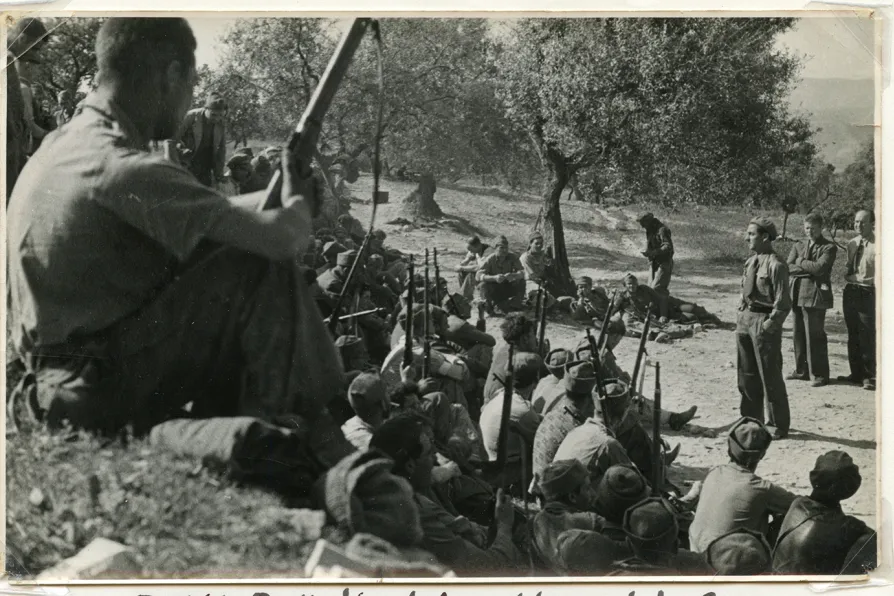
Thousands of remarkable Britons left ordinary lives behind to join the struggle against Franco. Here is a snapshot of those who answered the call
![Harry Pollitt (right) with International Brigade volunteer David Guest, who was killed at the Ebro in July 1938 [Pic: Marx Memorial Library]](https://morningstaronline.co.uk/sites/default/files/styles/desktop/public/2026-07/a-2_a_50b_Harry%20Pollitt_David_Guest.jpg.webp?itok=Ag0u-8n5)
ALEX GORDON applauds the leading role played by Harry Pollitt and the Communist Party in the fight against fascism in Spain and salutes the memory of the International Brigades
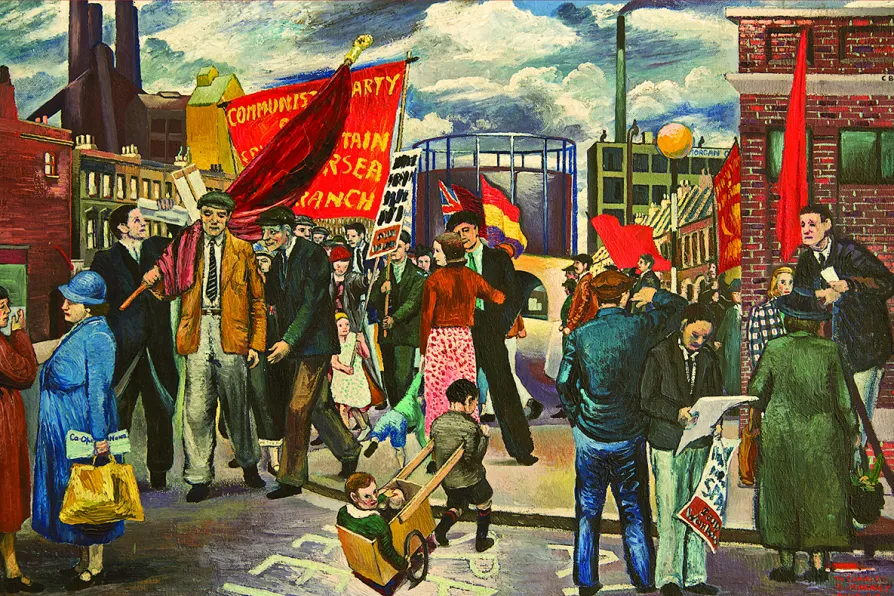
JIM JUMP describes how artists in Britain rallied to the anti-fascist cause
![Meirian Jump with MML archivist Matt Dunne [Pic: Marx Memorial Library]](https://morningstaronline.co.uk/sites/default/files/styles/desktop/public/2026-07/image.png.webp?itok=EO4HHX_7)
The Marx Memorial Library’s Spanish Collection remains a powerful tool for the working-class movement today, writes MML director MEIRIAN JUMP