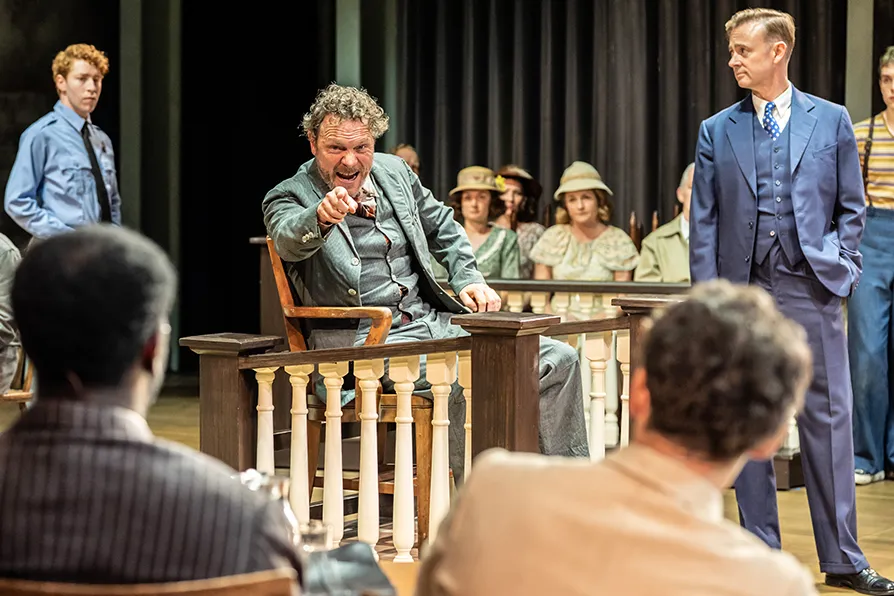
PAUL DONOVAN is chilled by the contemporary resonance of Harper Lee’s coming of age tale amidst racism and white supremacy in this excellent production


 Latest editorial
The fuse behind the fire
Singer-songwriter BILLY BRAGG tells Mike Quille how he sees echoes of the past in today’s energised political scene
GEOFF BOTTOMS recommends the unashamedly light-hearted escapism on offer in this stage version of the 1963 film
Full of mysterious religious references and radical sound design, the Scottish duo’s new offering is candidate for album of the year, suggests SIMON DUFF
MARY CONWAY revels in a powerful reminder that human lives are not defined by physical perfection
PAUL DONOVAN recommends the fine performances in this account of the pre-war meeting between the US president and the British king
TECLYN AROD relishes an intimate celebration of jazz improvisation that mixes local and national musicians


You’ve just finished touring — how did it go?
Great. I started with a couple of London shows at the Union Chapel, a non-conformist church in Jeremy Corbyn’s constituency of Islington North. Built in 1877, it’s a wonderful gig to perform, but backstage is a Victorian warren.
One of my crew asked if I’d seen the mural of Corbyn in one of the rooms so I went to investigate and found that, while it did depict a kindly looking fellow with a beard, this chap was carrying a lamb and his head was suspiciously back-lit.
Then I headed up to Scotland to do my first gigs there since the independence referendum. I was very encouraged to find that the energy of the Yes campaign had not dissipated, despite its defeat last September. Corbyn’s election means something different in Scotland. Progressively minded people are happy that someone who opposes the neoliberal consensus has been elected leader of the Labour Party but they do wonder why it’s taken us so long to catch on to the idea that the Westminster system is broken.
The Syria vote fired everyone up — even the doorman at my Glasgow hotel said it was outrageous that parliament had voted in favour of bombing. The Oldham by-election added some edge to things and the new left wing grouping, Rise, were holding their first conference on the coming weekend. As a result, the Scottish gigs were highly politicised.
We finished off with a gig at Butlins Skegness holiday camp for the Great British Folk Festival and although I’m not really part of the tradition, the folk audience has always been very supportive. In a music business where most artists would rather not say anything politically controversial, the folk fans deserve respect as people who have helped keep the topical song alive.
I gave them the same politicised set that I’d been doing in London and Scotland and it went down a storm. Every mention of Corbyn was cheered and when I finished with There is Power in a Union, they stood and sang along.
How is it you got into the protest music tradition and why have you stuck with it when others have fallen away?
I got into politics through music. My earliest heroes were the singer-songwriters of the 1960s — Simon and Garfunkel, Bob Dylan, Tom Paxton, Jackson Browne all wrote topical songs. My other love was US soul music — the likes of songs by Marvin Gaye, Otis Redding and the Impressions I heard were inspired by the civil rights movement.
Although people believed that music could change the world in the ’60s, that has not been my experience. Ultimately, the responsibility for changing the world rests not with the artist but with the audience. To pretend otherwise is to fail to understand history. But I do believe that music has a role to play in inspiring the audience to take up that challenge.
Attending the Rock Against Racism Carnival in May 1978 was my first political activism. That event made me realise that I was not the only person who was troubled by the casual racism, sexism and homophobia I saw every day at the office where I worked. However, it wasn’t the bands that gave me the courage of my convictions, it was being in that audience with 100,000 kids just like me. That day I realised that my generation were going to define themselves in opposition to discrimination of all kinds, just as the previous generation had been defined by their opposition to the Vietnam war.
The bands that played that day did a great service to me by creating an atmosphere in which my perceptions were challenged, which in turn led me to take a different view of things. That is the role that music can play in the struggle. I know, because it happened to me and so I try to challenge perceptions every time I do a gig.
You fronted Red Wedge in the 1980s — is there any chance of something similar happening in the next few years?
Red Wedge was an artist-led initiative that sought to encourage young people to support the Labour Party at the 1987 election.
When the miners’ strike ended in defeat, those of us who had done gigs in support of the strikers and their families didn’t just want to go back to normal. Red Wedge was our way of continuing the struggle, taking the fight to the Tories at the next possible opportunity, the 1987 election.
We chose to work with — not for — the Labour Party because we felt they represented the best vehicle for getting rid of the Tories. The miners’ strike had been a genuinely revolutionary moment but it had failed. Now we had to take the next best option. We didn’t see the fight against the Tories as an either/or choice. Our message to revolutionary colleagues was that we would come on to the street with them when it was time, if they would come into the ballot box with us. What defined us was our opposition to Margaret Thatcher, rather than an avid support for the Labour Party.
Could Red Wedge happen again? I think that’s a question for someone under 30.
Could someone with your background and your openly political approach still make it today?
When I started out, there were three weekly music papers that sold big — NME, Melody Maker and Sounds — as well as many smaller publications. There were only two pop radio stations, BBC Radio One and Capital, its regional commercial equivalent in London. And there was a weekly pop show Top of the Pops on national TV that broadcast all the latest music and styles into your living room. All of that has either disappeared or had its voice drowned out by digital competition.
More significantly for someone who wants to make political pop, music has lost its vanguard role as the primary identifying medium of youth culture. When I was 19 years old, the only avenue of expression open to me was pop music. If I wanted to broadcast my thoughts about the world, I had to learn to play an instrument, write songs and do gigs. Now any 19-year-old can express their views by blogging or making a film on their phone or using the ready-made platforms of social media.
Back in the latter years of the 20th century, music was our social medium and we used it to speak to one another and to our parent’s generation. Now if 19-year-olds want to know what their peers are thinking, they don’t buy an album or look at the charts or the NME, they simply check their Instagram account.
I wonder if I’d have been able to overcome the amount of scorn and abuse directed at anyone who expresses a progressive opinion on social media these days. If I’d had to endure the slings and arrows of Twitter and Facebook while forming my political opinions, would I have thought better of it and just stuck to writing love songs?
You’ve just published a book of lyrics A Lover Sings. How do you see the difference between poems and songs?
You generally experience poetry in solitude, reading quietly somewhere. Songs tend to be more of a communal experience.
To hear a favourite song sung by the artists who wrote it and to sing along with them and hundreds, maybe thousands of others, has the effect of validating whatever emotions you’ve invested in the song. It’s a kind of solidarity.
The left know the powerful unity that can come from singing together but it doesn’t have to be a political song to make you feel that you’re not alone. You can’t get that sense of communion on the internet, which is why I think gigs are becoming more popular, particularly festivals where you can feel part of something bigger.
What’s your response to the sudden and unexpected resurgence of the political left?
Unexpected is the word. I think Corbyn himself may have been the most surprised by his elevation but it’s clearly not just about him, there is something bigger at work.
My hunch is that he has become a lightning rod for a different way of doing politics. His sudden popularity is less to do with his own position and more to do with an urge on the left to be part of a genuinely transformative movement.
That’s the feeling that I got in Scotland last year, when doing gigs with supporters of the Yes campaign during the referendum. People were energised not by nationalism but by a sense that another world was possible.
That’s why the turnout was unprecedented — people knew that their vote would really mean something. I think the same urge is behind Corbyn’s landslide. At a time when globalisation has allowed corporations to set the agenda, our democracy has become less about change and more about rewarding the status quo. Corbyn challenges that cosy arrangement.
My hope is that now we Corbynites have been engaged in the process of changing our politics for the better, we won’t simply melt away if the Great Helmsman is brought down by Blairite revanchists within the PLP. They can oust him, but they will still have us to deal with in the ensuing leadership contest.
What do you mean by your phrase “socialism of the heart”?
It’s a term I came up with after the fall of the Berlin Wall, at a time when ideology was being swiftly abandoned and the language that we’d used to debate our politics no longer meant anything to the public we hoped to engage.
I’ve always believed that if socialism is not, at heart, a form of organised compassion, then it is not really worthy of the name. So I began trying to find ways of expressing the compassionate politics that I felt had to form the bedrock of our attempts to forge a new ideology that connected with people’s everyday experiences. “Socialism of the heart” was the first term I came up with.
- A Lover Sings, The Selected Lyrics of Billy Bragg, is published by Faber and Faber.

Similar stories
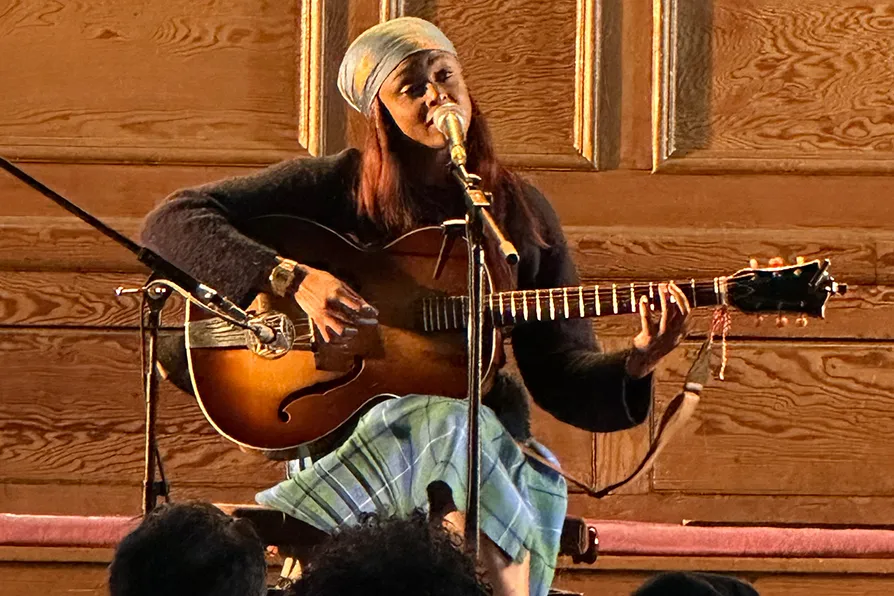
STEVE JOHNSON relishes a celebration of the commonality of folk music and its links with the struggles of working people the world over
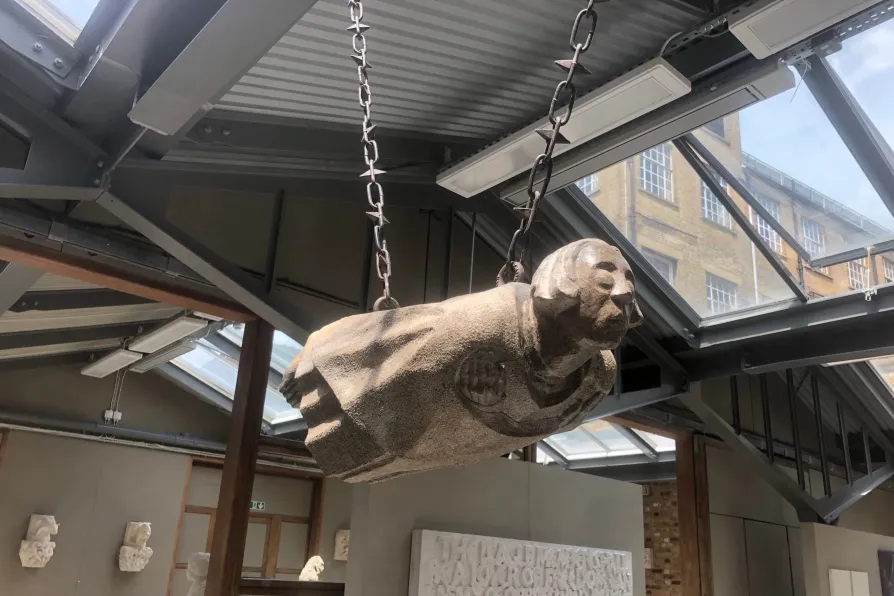
OLIVER SNELLING, a south London stonecarver and yeoman stonemason, relates how he is helping bring about a new festival next month
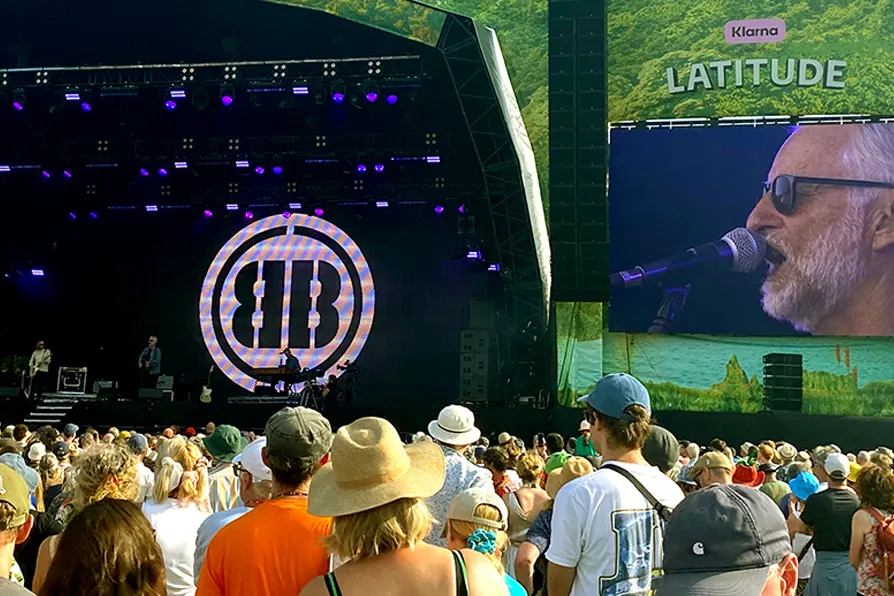
TOM STONE checks the political coordinates of a festival where the pleasures of nostalgia were (sometimes) harnessed to a new message
From sexual innuendo about Blackpool Rock to Bob Dylan’s ‘God-almighty world,’ the corporation’s classist moral custodianship of pop music has created a roll call of censored artists anyone would feel honoured to join, writes NICK MATTHEWS