PAUL DONOVAN is chilled by the contemporary resonance of Harper Lee’s coming of age tale amidst racism and white supremacy in this excellent production


 Latest editorial
Riotous conclusions from class conflict
There are contemporary lessons to be drawn from a new novel about the 19th-century Swing Riots, says PAUL SIMON

GEOFF BOTTOMS recommends the unashamedly light-hearted escapism on offer in this stage version of the 1963 film
Full of mysterious religious references and radical sound design, the Scottish duo’s new offering is candidate for album of the year, suggests SIMON DUFF
MARY CONWAY revels in a powerful reminder that human lives are not defined by physical perfection
PAUL DONOVAN recommends the fine performances in this account of the pre-war meeting between the US president and the British king
TECLYN AROD relishes an intimate celebration of jazz improvisation that mixes local and national musicians


A Servant of the Governor
by Paul Duthie
(Y Lolfa, £7.95)
PAUL DUTHIE’S second novel, as with his debut offering, explores the issue of exploitation and punishment of the poor and vulnerable in the 19th century.
That first novel, Standing on the Giant’s Grave, graphically illustrated the servility of women and their lack of basic human rights, while his latest considers the desperate plight of the rural worker in the decades after the Napoleonic wars.
At that time, falling wages, bad harvests and the growing underemployment caused by landowners hastily mechanising many agricultural tasks reduced rural communities to a state of despair and poverty.
By 1830, enough was enough for many and the response was the wave of attacks on hayricks, threshing machines and occasionally on the rich themselves that became known as the Swing Riots.
Duthie focuses on the virtually neglected story of the Dever Valley radicals, whose direct but still political actions against these injustices resulted in a brutal crackdown by the authorities in Hampshire.
His novel is as straightforward and honest as the men he gives voice to. Chronologically ordered, it pays particular attention to the actions and characters of Joseph and Robert Mason, leaders of the rural workers.
Denied a legal route to seek redress, they take on the greedy landowners and hypocritical priest in their midst.
After a show trial in Winchester, the brothers are sentenced to transportation to Australia and another man is hanged.
But so appalling have been the conditions in England that the brothers consider Australia to be a more tolerable though bizarrely unfamiliar place. At least there they get to eat bread and beef.
Their spirits remain unbroken, although they differ in their responses to the society of which they have unwillingly become a part.
The book, both harrowing and hopeful, lacks impact and a real emotional resonance, partly due to Duthie relying on a third-person narrative — his previous novel is told in the first person and is stronger and more unsettling in consequence.
Duthie hurries the book along far too hastily to its conclusion, with the brothers’ sea journey giving little sense of the cramped and claustrophobic conditions and the aching boredom and homesickness that must have gnawed away at the men for the many weeks of the passage.
The six years spent in Australia are sped through and although the author addresses the parlous state of the territory’s Aboriginal peoples, the debauchery of many of the settlers — whether convicts or free citizens — and the dilemma for many like the Masons as to whether to marry again are considered in a perfunctory and superficial way.
Yet in spite of these flaws, A Servant of the Governor is a valuable addition to that growing body of literary works that recalls the struggles, triumphs and political and moral courage of working-class men and women.
The likes of Joseph and Robert Mason should be an inspiration today in the struggles against the depredations of our very own oppressors.

Similar stories

RON JACOBS recommends a book that charts the disparate circumstances that defined the lives of two prominent black Afro-Americans — one a communist, the other an anti-communist
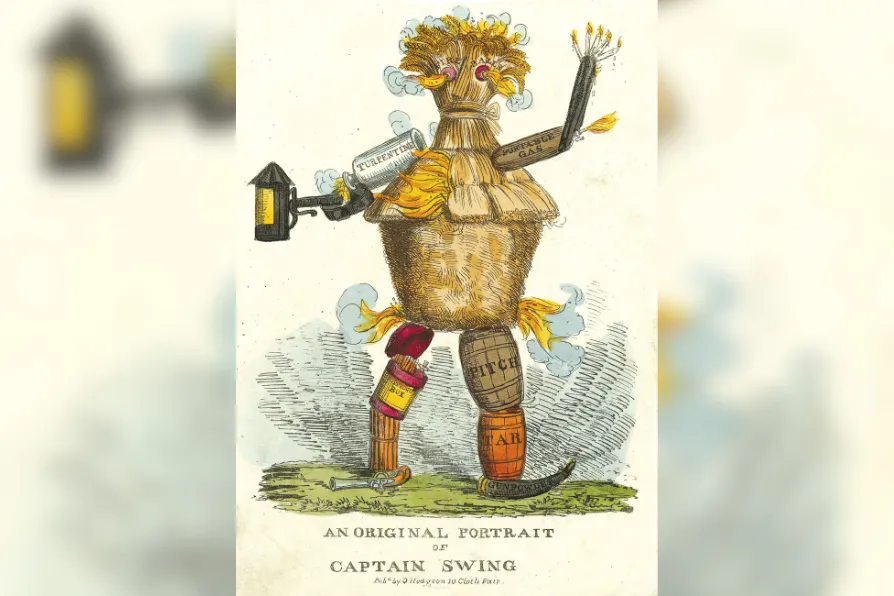
Long before modern labour movements, England’s farmworkers fought back against their oppression – and for some, like Elizabeth Studham, the price was exile to Australia. MAT COWARD tells the story

JULIA TOPPIN recommends Patti Smith’s eloquent memoir that wrestles with the beauty and sorrow of a lifetime

KEN COCKBURN relishes the memoir of a translator, but wonders whether the autobiography underlying the impulse would make a better book