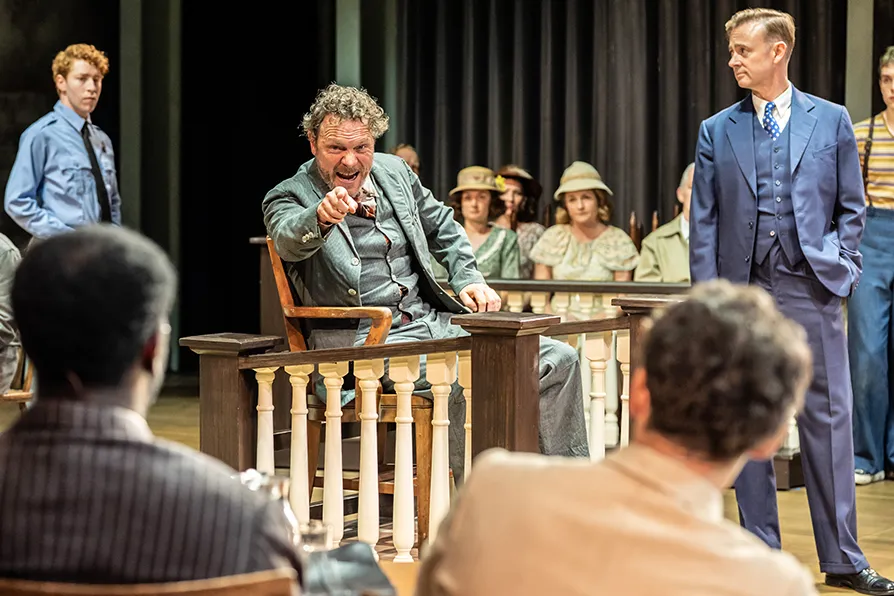
PAUL DONOVAN is chilled by the contemporary resonance of Harper Lee’s coming of age tale amidst racism and white supremacy in this excellent production


 Latest editorial
Theatre with Susan Darlington
GEOFF BOTTOMS recommends the unashamedly light-hearted escapism on offer in this stage version of the 1963 film
Full of mysterious religious references and radical sound design, the Scottish duo’s new offering is candidate for album of the year, suggests SIMON DUFF
MARY CONWAY revels in a powerful reminder that human lives are not defined by physical perfection
PAUL DONOVAN recommends the fine performances in this account of the pre-war meeting between the US president and the British king
TECLYN AROD relishes an intimate celebration of jazz improvisation that mixes local and national musicians


IN TERMS of sheer visual spectacle this year, it was difficult to surpass Cirkopolis. Staged by Quebec-based Cirque Eloize, one of the world’s premier urban circus troupes, it portrayed one man’s rage against the machine.
Set in a soulless black-and-white world, inspired in equal parts by Fritz Lang’s Metropolis and Terry Gilliam’s Brazil, its choreography at times seemed to defy laws of space and gravity.
The 13 multi-talented artists variously juggled while scooting around on office chairs, danced tender pas de deux with a dress on a clothes rail, performed one-handed handstands while balanced mid-air and provocatively twirled around a Cyr wheel.
This eye-popping extravaganza was contrasted with the understated One of Each by Mikron Theatre. A four-handed comedy about a family separated by the sea but united by the nation’s favourite dish, it featured the actors playing multiple roles while also performing live music.
Warm and engaging, its minimalistic set was specifically designed to allow Deborah McAndrews’s play to be staged in non-traditional venues such as allotments and chip shops.
Intended to capture people who wouldn’t usually go to the theatre, it also made each show special by having an interactive vote that made the conclusion different every night.
The choreography within Mermaid by Shared Experience made such spontaneity impossible but Polly Teale’s feminist retelling of Hans Christian Andersen’s much loved fairytale nonetheless captured a strange and beautiful energy.
Recasting the central character as an unhappy teenager living in a run-down seaside town, the often frustrating production ambitiously tried to cover topics as wide ranging as Poverty Britain, the Iraq war and body image.
At times this left the audience craving simplicity, with maybe just a handful of themes. But ultimately its graceful physical theatre elements and grand designs remained long in the mind.
Kneehigh also gave a feminist update to Daphne du Maurier’s gothic thriller Rebecca (pictured). Bringing the company’s usual mix of irreverence to the production, it adopted an at times affectionately mocking tone to the famous story of the other woman.
Live musical interludes and characters drawn in broad brush-strokes provided moments of dark comedy, yet the caricatures cleverly provided a static backdrop onto which the novel’s narrator was allowed to blossom.
Far from being a passive heroine she here matured from a wallflower to a confident, sensual woman who started to adopt the mannerisms of her dead rival. In so doing Emma Rice created a production full of unbounded energy and empowerment.




In his second round-up, EWAN CAMERON picks excellent solo shows that deal with Scottishness, Englishness and race as highlights
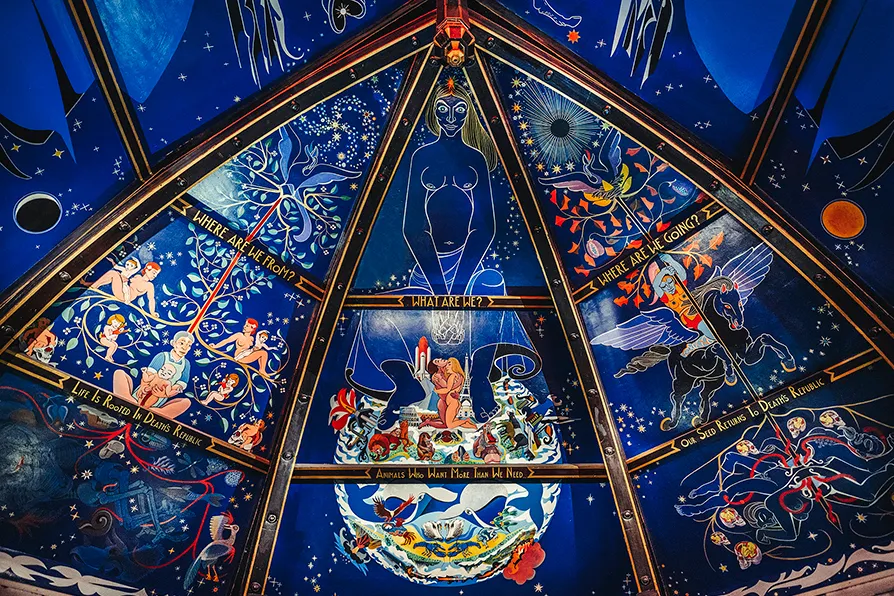
BLANE SAVAGE recommends the display of nine previously unseen works by the Glaswegian artist, novelist and playwright