Latest editorial




ASIA-PACIFIC countries gave a resounding approval yesterday to plans to work towards a free-trade pact proposed by China.
Participants at the Asia-Pacific Economic Co-operation (Apec) summit in Beijing, including US President Barack Obama and Russia’s Vladimir Putin, agreed to a first step of launching a two-year study of the initiative.
“This is a historic step in the direction of an Asia-Pacific free-trade area,” said Chinese President Xi Jinping.
China is promoting its own idea of a Free Trade Area of the Asia Pacific despite pressure from Washington to conclude other trade deals such as the US-led Trans-Pacific Partnership (TPP), which includes 12 countries but excludes China.
The Apec leaders also promised to work closely to combat official corruption.
That is a special concern for Beijing, which is stepping up efforts to pursue officials who flee abroad with stolen public money.
It has launched a series of trade and finance initiatives in pursuit of a bigger role in US-dominated economic and security organisations to reflect China’s status as the world’s second-biggest economy.
Apec was the first major international gathering in China since Mr Xi became president, offering the country a greater international leadership role.
Beijing announced a free-trade agreement with South Korea on the eve of the conference, while regulators approved a plan to open Chinese stock markets wider to foreign investors by linking exchanges in Hong Kong and Shanghai.
That followed the weekend announcement of a £25 billion Chinese-financed fund to improve trade links between Asian economies.
It marks the first time Beijing has played a leading role in a multinational trade agreement.
Wu Xinbo, director of the Centre for American Studies at Fudan University in Shanghai, commented: “TPP is being used to push aside China and to weaken China’s economic core status.”
Promotion of its own initiative “will give China a bigger right to speak in the Asia-Pacific, to have a new status.”
Mr Obama said on Monday that the US “welcomes the rise” of a prosperous, peaceful and stable China.
However, US trade officials are impatient for Beijing to conclude a bilateral investment treaty and a separate agreement to lower barriers to trade in information technology.


Friedrich Merz’s call for a new Plaza Accord ignores how Washington’s 1985 currency ambush destroyed Japan without fixing US deficits — China, a sovereign socialist state with 1.4 billion consumers, cannot be bullied the same way, writes CARLOS MARTINEZ
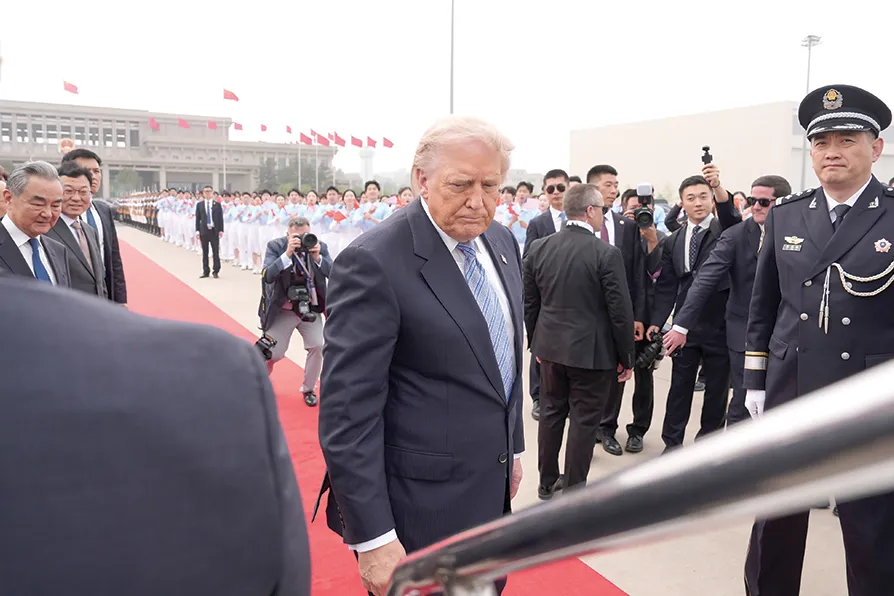
JENNY CLEGG looks at the key points that defined the China-US relationship, for now