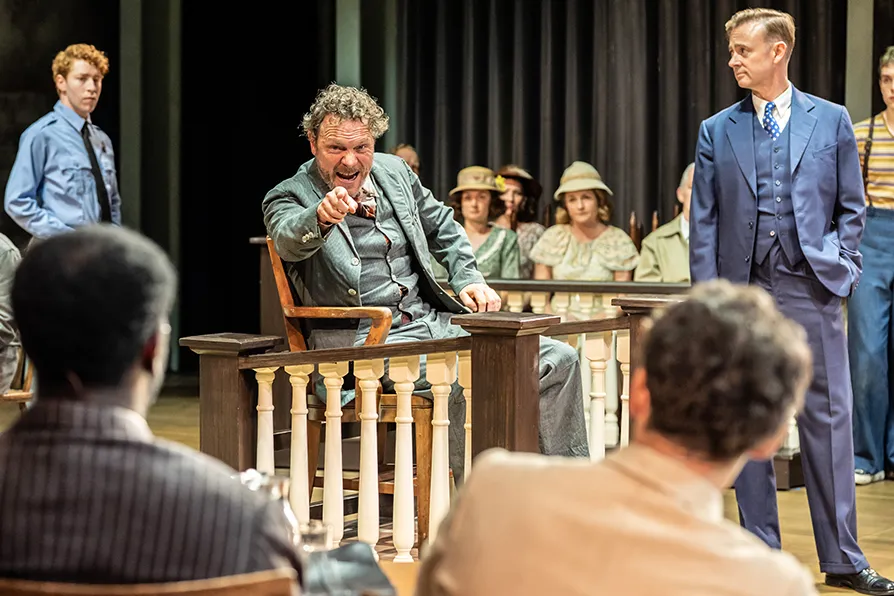
PAUL DONOVAN is chilled by the contemporary resonance of Harper Lee’s coming of age tale amidst racism and white supremacy in this excellent production


 Latest editorial
2015 in Music with Susan Darlington
GEOFF BOTTOMS recommends the unashamedly light-hearted escapism on offer in this stage version of the 1963 film
Full of mysterious religious references and radical sound design, the Scottish duo’s new offering is candidate for album of the year, suggests SIMON DUFF
MARY CONWAY revels in a powerful reminder that human lives are not defined by physical perfection
PAUL DONOVAN recommends the fine performances in this account of the pre-war meeting between the US president and the British king
TECLYN AROD relishes an intimate celebration of jazz improvisation that mixes local and national musicians


FOR the second year running, Sharon Van Etten delivered one of the most memorable gigs.
Despite being on the road for over 12 months, the Brooklyn-based singer-songwriter showed no signs of tour fatigue and many of the tracks from fourth album Are We There sounded more vital than ever.
There was also an evolution in the material, with the confessionally broken Your Love Is Killing Me injected with new-found defiance and I Don’t Want to Let You Down morphing from a somewhat plodding country standard into a galloping rocker.
Her Name Is Calla demonstrated a similar ability to turn catharsis into beauty.
The Leeds-based quintet’s emotionally heavy music shifted from quiet reflection to dark, intense crescendos and, in creating powerfully intuitive moods, the band are closely aligned with the post-rock scene that sprung up around Godspeed! You Black Emperor.
At the core, however, their tracks are far more traditional in structure and some could almost be played solo on acoustic guitar in a manner reminiscent of mid-period Radiohead.
As dark as the music got, there were always moments of hope that elevated them above their apocalyptic peers.
There was also darkness within Lone
Lady’s electro-pop that mirrored the urban wastelands that Julie Ann Campbell detailed on her breakthrough second album.
Indebted to her hometown’s musical heritage, Hinterlands was the sound of St Vincent — if she’d been raised in Manchester.
Full of loose grooves and fat funk bass-lines, tracks such as Groove It Out and Bunkerpop were summer club anthems that had been reworked for dystopian grey skies.
She nonetheless updated the city’s cold industrialism with an accessibility and inventiveness in her choice of unpolished beats and samples.
While too brittle to be outright dance, the collection nonetheless hinted at breakthrough potential.
A comparable blossoming in confidence was evident with Meghan Remy, who’s been quietly releasing lo-fi records since 2008 but it was with this year’s Half Free that she really found her voice.
Touring the album with just a minimal synth set-up and second vocalist Amanda Crist, the Toronto-based musician unleashed a curious mix of electro-dub, deep disco and vintage girl-group pop that walked the line between art pop and karaoke.
Forging between-song collages out of radio commentary, applause and whining static she gave every appearance of hosting a party with her best friend, while signalling the arrival of a new contender for electronica’s art-pop crown.

Similar stories
New releases from Kneecap, Sam Blasucci, and Juni Habel
New releases by Porridge Radio, The Cribs, and Bjorn Meyer
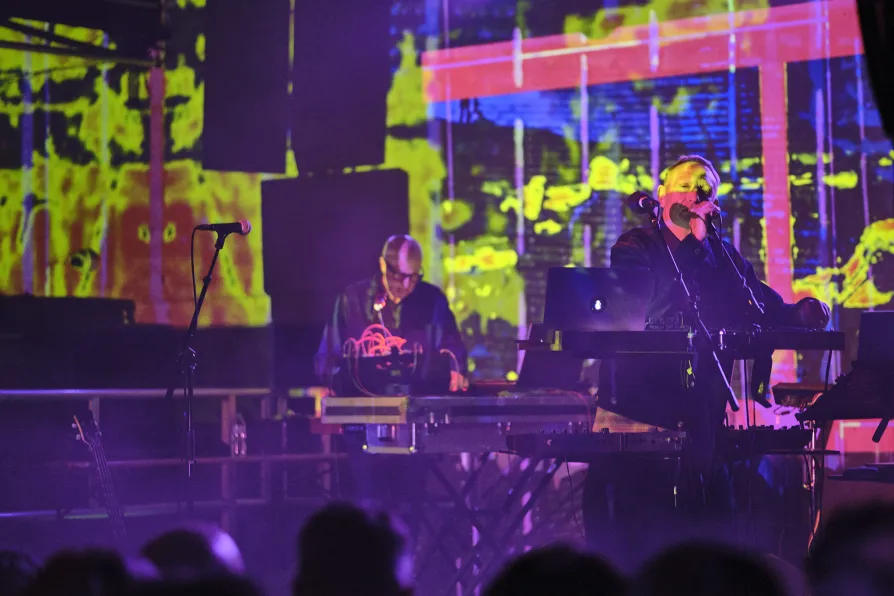
NEIL GARDNER listens to a refreshingly varied setlist that charts Cabaret Voltaire's voyage from avant-garde experimentalists to techno pioneers
WILL STONE applauds a comprehensive survey of love in its many moods and musical forms