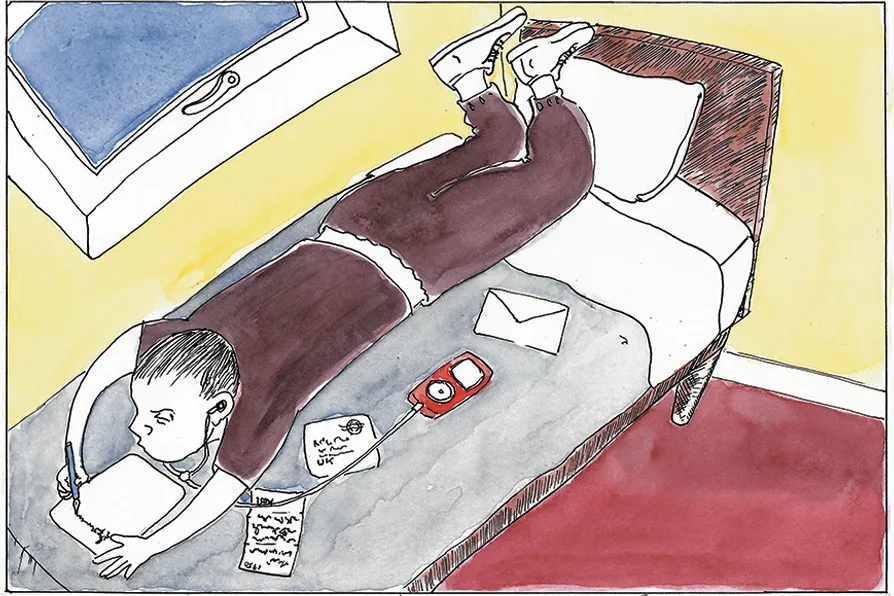
When the ravages of Alzheimer’s leave an elderly woman marooned in painful memories of October 1950, her grandchild comes up with a creative strategy.


 Latest editorial
Pestilent pains and pleasures
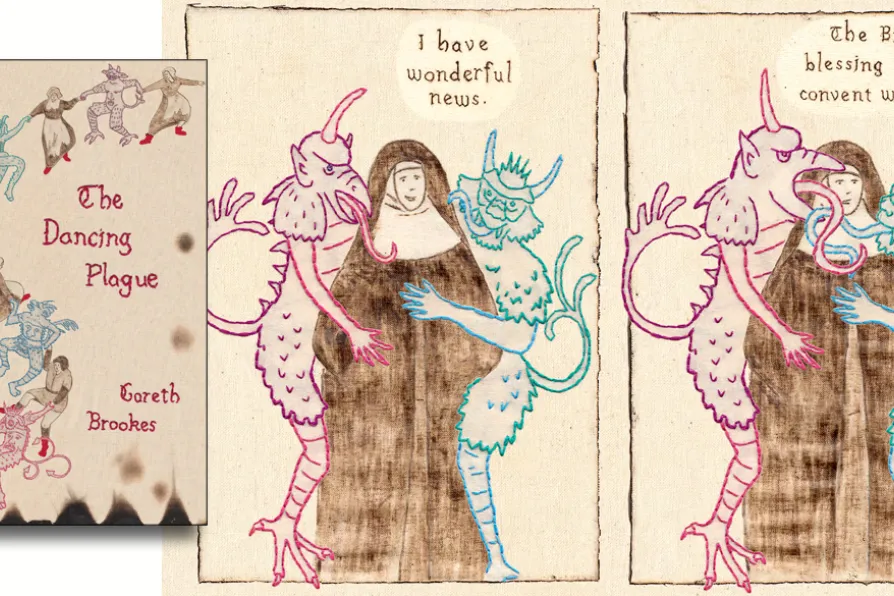
GORDON PARSONS recommends an entertaining reminder of the 'dancing plague' which swept through Strasbourg in 1518
New releases from Simone White, Brass Funkeys, and Souad Massi
SUE TURNER is compelled by a history that shows how far a country can turn in on itself to collude with abuses of power
RON JACOBS is persuaded by the parallel drawn between Charles Manson and Donald Trump
In this comparison of Britain pre- and post Thatcher, WILL POMORE applauds the analysis, but distrusts the solutions offered
MARIA DUARTE defends a solid, late-career Spielberg conspiracy flick that calls for empathy in a hostile world


The Dancing Plague
by Gareth Brookes
(SelfMadeHero, £15.99)
THERE may be several reasons for the growing popularity of graphic novels, among them the speed and ease of accessing a narrative, society’s ever-shortening concentration span or simply that our filmic world has inhibited the flexibility of our imaginations.
In Gareth Brookes’s The Dancing Plague, which engages as much as graphic non-fiction as novel,
the focus is on the dancing plague that broke out in late mediaeval Strasbourg, when one woman’s uncontrollable dancing developed into a kind of mass epidemic.
Not the first, but seemingly the last of its kind — various cases of mass hysteria are far from unknown following that period — the year 1518 sits roughly on the cusp of the emergence of modernity, when science began untangling itself from magic and religious superstitions.

Similar stories
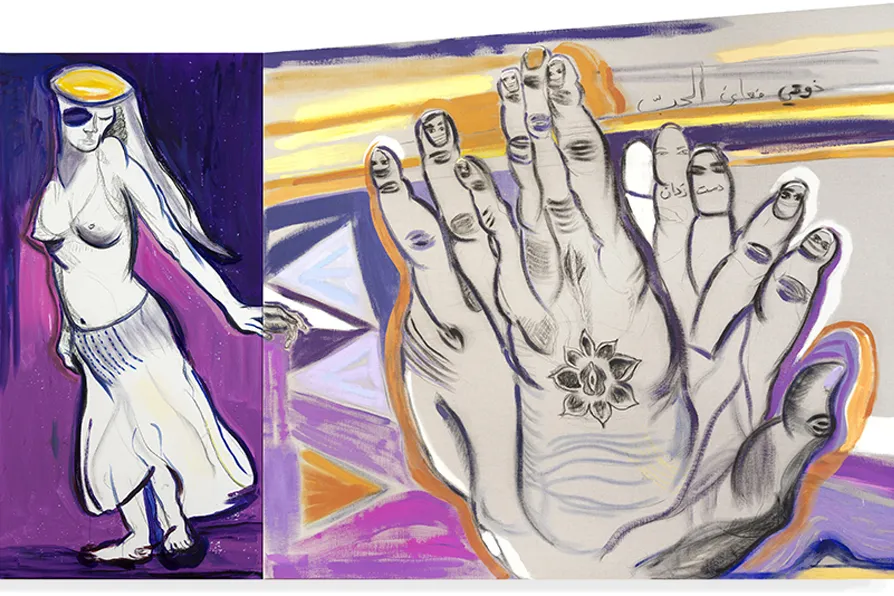
SIMON PARSONS applauds an artist who rescues and rehumanises stories of women, the victims of violence, from a feminist perspective

PETER MASON is gripped by a novel that confronts corporate callousness with those prepared to act to bring about change

ANDY HEDGECOCK recommends that these beautifully written diaries from Gaza be essential reading for thick-skinned MPs

GORDON PARSONS acknowledges the authority with which Sarah Kane’s theatrical justification for suicide has resonance today