MARIA DUARTE, FIONA O’CONNOR and ANDY HEDGECOCK review Savage House, Enzo, Madfabulous, and Erupcja


 Latest editorial
From chattel enslavement to grime
KENNY MONROSE recommends a new exhibition that highlights the significance of Black British music
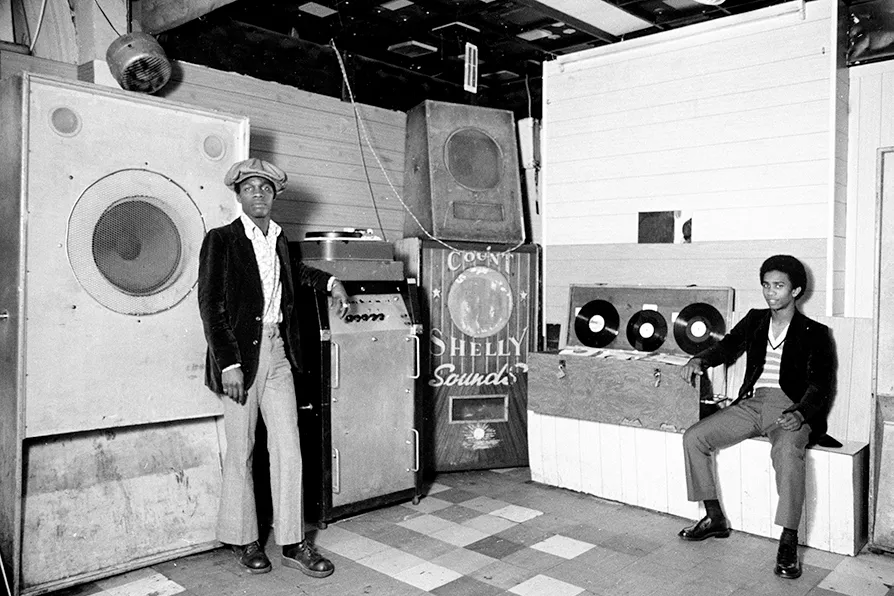 ACES OF BASS: Aces Club, Count Shelly Sound System, Hackney, 1974 [Pic: © Dennis Morris, Courtesy Victoria and Albert Museum, London]
CHRIS SEARLE recommends a work of love and deep admiration for a great musician
KENNY MacASKILL relishes a fictionalised account of the life and death of the principled Irish anti-colonialist, executed for betraying his English imperial masters
FIONA O’CONNOR admires an ambitious first novel that loosens South Africa’s rainbow collective to examine the racial tensions within
Aussie mining corporation murder, Liverpudlian ex-cop amnesia, a naive vigilante tries to reset capitalism, and the riddle of the dead psychoanalyst
SYLVIA HIKINS is persuaded by an entertaining play that the true miracle of Lourdes would be for attitudes toward disability to change


I CAN only marvel when I consider that the footprint upon which the newly erected V&A East museum now stands was, for many decades, characterised by hard labour and heavy industry.
The area, once full of factories, warehouses and poverty, was described by novelists such as Charles Dickens in deeply unflattering terms. In 1857, he wrote: “Many select such a dwelling place because they are already based below the point of enmity to filth: poorer labourers live there, because they cannot afford to go further, and there become debased.”
Today, however, this once-defamed part of east London, has been transformed into a place of culture, leisure, artistry and creativity. The opening of V&A East exemplifies this shift. Its director, Gus Casely-Hayford, describes the institution as a platform for young Britons, regardless of background or origin, to craft their own destiny.
The inaugural display at the museum is the alluring exhibition The Music Is Black: A British Story, which celebrates 125 years of black British music.
The exhibition covers the period from 1900 to 2025 and is divided into four significant historical moments: chattel enslavement, the Black Atlantic, New Commonwealth migration and the dynamic identity formation of so-called black British culture. Entrenched within this historical timeline are the related themes of religion, class, location, power, gender and, of course, race.
Importantly, this is not a “kitchen sink” exhibition in which items are thrown together. Instead, it is carefully crafted, considered and curated. It is little wonder that the exhibition took over four years to complete. It comprises more than 200 artefacts, including outfits, sheet music, artwork, instruments and rare cinematic footage. These are underscored by a carefully designed soundscape delivered through headsets given to attendees, making navigation through the exhibition a fully immersive experience.
Among my favourite pieces was Natty Bongo, a bronze sculpture created by Fowokan George Kelly of the British funk band Cymande. I was also drawn to the “other” piano owned by Winifred Atwell, the first black British woman to top the charts with the ragtime hit Let’s Have Another Party in 1954.
Image
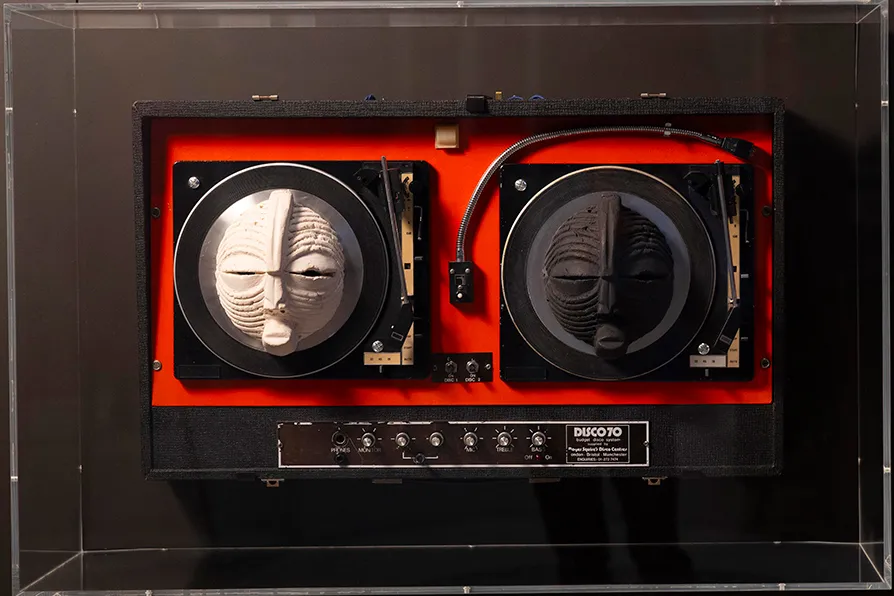
Equally interesting were sound system operator and record producer, Sir Lloyd Coxsone’s record box and an extraordinary photograph by Charlie Phillips of activist Kwame Ture at the Cue Club in 1967.
I also thought the correspondence between renaissance man Paul Robeson and British opera singer Amanda Aldridge was a worthy inclusion. Another significant moment is the official statement from Buckingham Palace confirming the appointment of composer Errollyn Wallen as Master of the King’s Music in 2024.
Some of the exhibition’s most striking artefacts include the “clit rock” outfit, worn by Skunk Anansie frontwoman Skin when she became the first black British woman to headline the festival in 1999. Equally compelling is the juxtaposition between an ancient musical bow made from a calabash shell and modern instruments such as the Oberheim DMX sampling drum machine and the Roland JD-800 synthesiser.
Also on display is one of Shirley Bassey’s iconic outfits, celebrating her contribution to the sound of the James Bond franchise through Goldfinger in 1964.
The exhibition concludes by presenting the most recent and globally recognised form of black British music: grime, which draws upon many of the musical traditions that preceded it. As my colleague and fellow sociologist Joy White recently pointed out to me, it is especially important that grime is included because it was born on the very periphery where V&A East now stands.
What the exhibition’s curator, Jacqueline Springer, does particularly well is foreground artefacts that demonstrate how black British music has consistently functioned as a vehicle for communication. Throughout its history, it has fused spirituality and worship with resistance, rebellion and merriment. These themes, forged through the legacy of chattel enslavement, remain constant throughout the music’s development.
As a result, the exhibition becomes an emotional, multigenerational and multiracial journey that fully engages the senses of its audience. More importantly, it highlights black British music as a vital component of British artistic and cultural life.
The Music Is Black does not claim to deliver the definitive story of black British music. Rather, as the title itself suggests, it offers a story of black British music — and it delivers that story with excellence, sophistication and rigour.
The Music Is Black: A British Story runs until January 3 2027. For more information see: vam.ac.uk.
Kenny Monrose is a researcher at the Department of Sociology, University of Cambridge.
This article is republished from TheConversation.com under a Creative Commons licence.


Similar stories
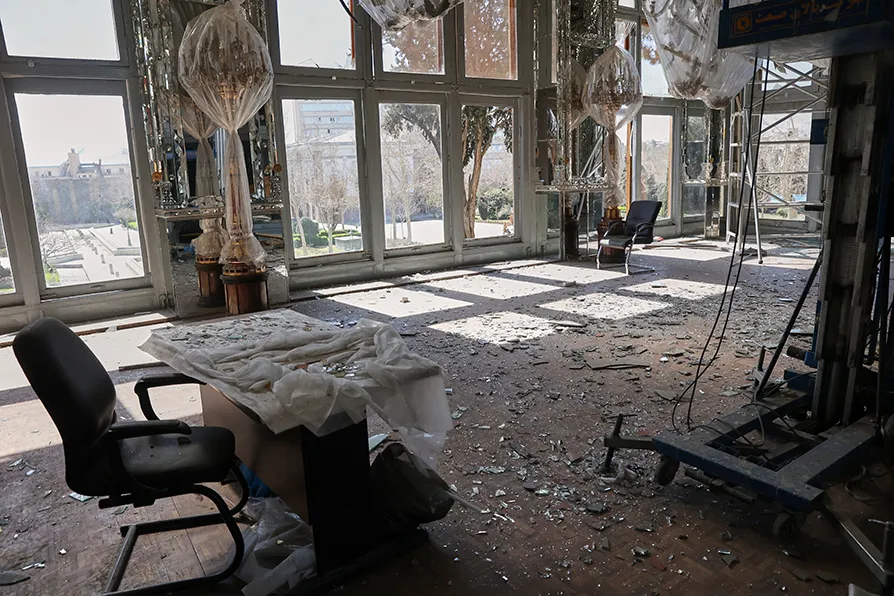
KATAYOUN SHAHANDEH surveys Iran’s cultural heritage and explains what has been damaged and what could be lost
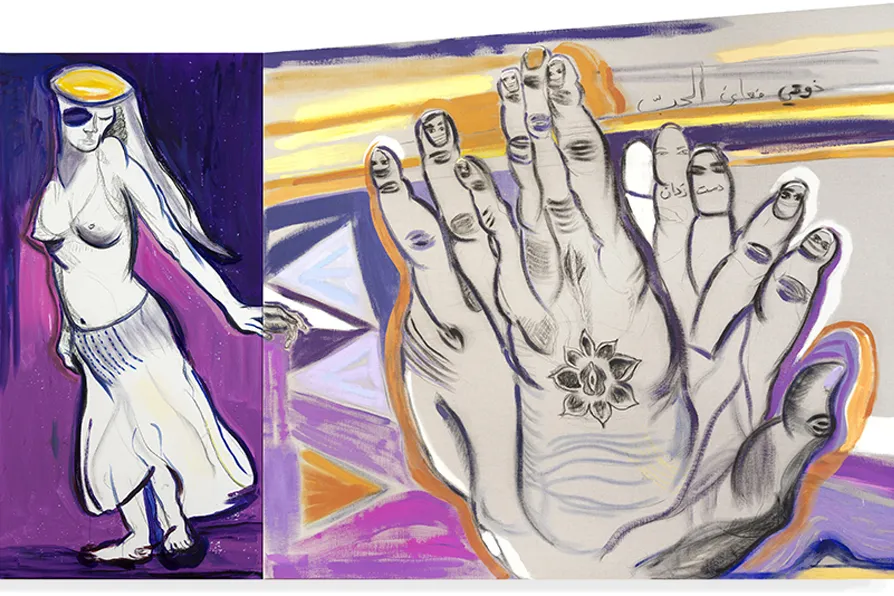
SIMON PARSONS applauds an artist who rescues and rehumanises stories of women, the victims of violence, from a feminist perspective
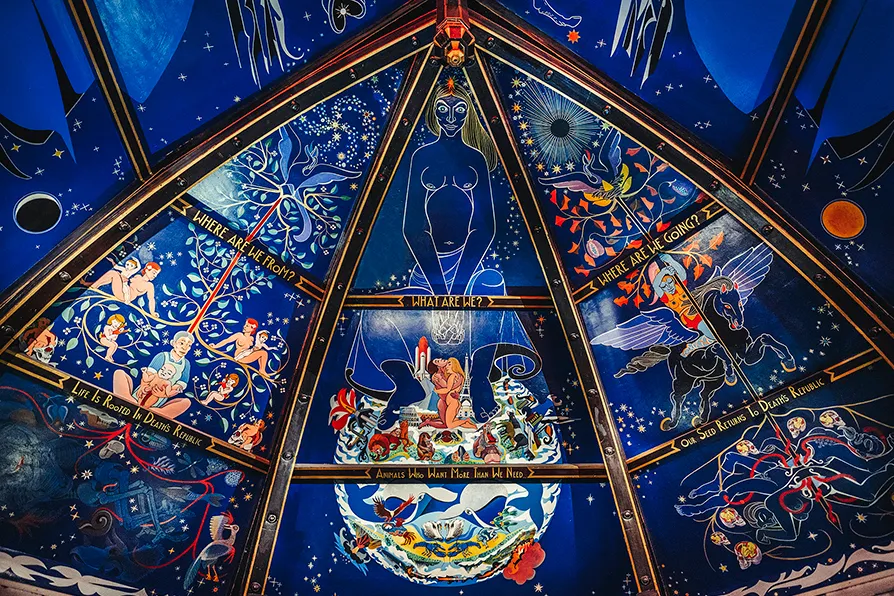
BLANE SAVAGE recommends the display of nine previously unseen works by the Glaswegian artist, novelist and playwright
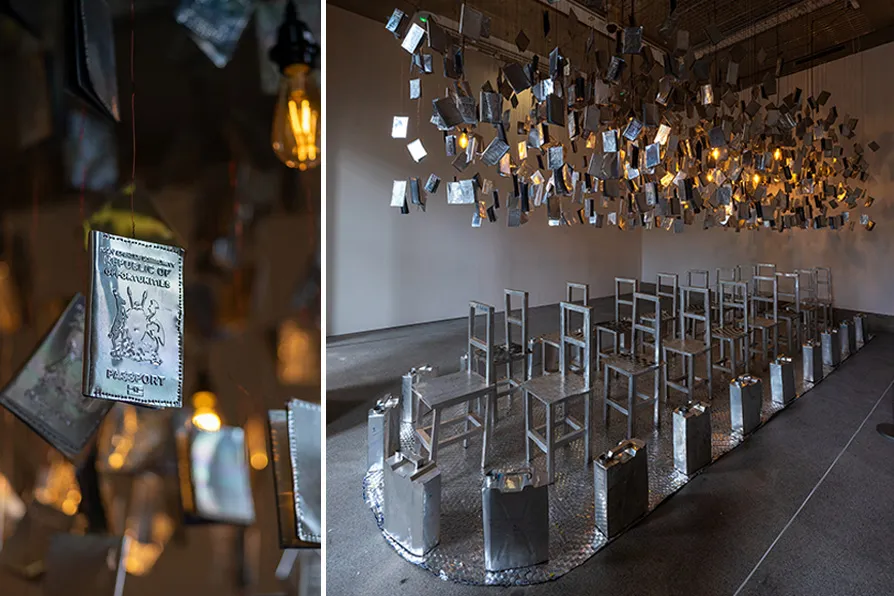
SYLVIA HIKINS casts an eye across the contemporary art brought to a city founded on colonialism and empire