

 Latest editorial
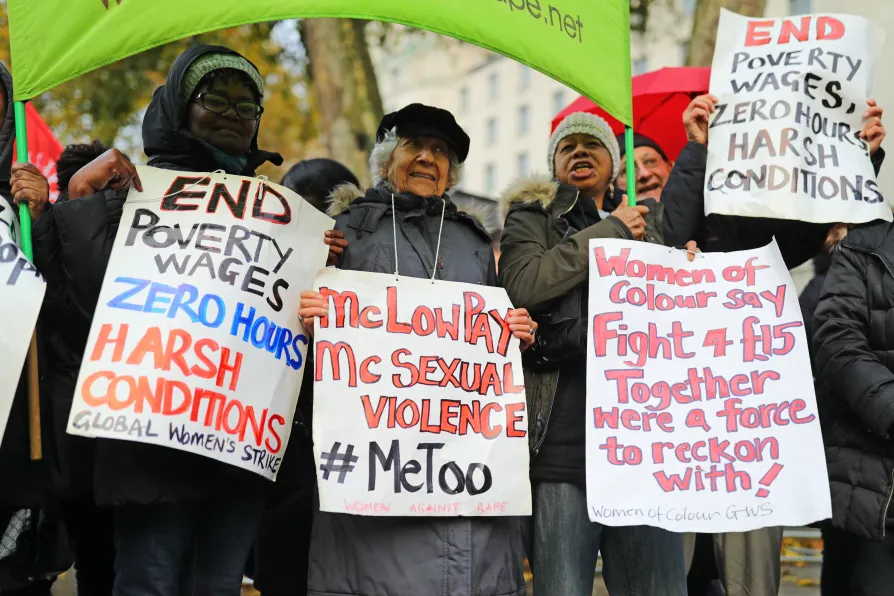 McDonald's workers and demonstrators take part in a protest outside Downing Street in Westminster, London, as they call for wages of £15 an hour, in November 2019


TRADE union determination to “generate industrial power in the workplace” is the correct approach to attacks on our rights from the Boris Johnson government.
Discussions on the impact of leaving the EU on our rights have generated more heat than light.
A misplaced faith in the EU to protect workers’ rights has seen energies misdirected into lobbying on behalf of the supranational organisation rather than building a movement formidable enough to defend and extend rights.
This belief has remained widespread despite a dearth of evidence to back it up.
When it comes to projected trade agreements — which Labour is right to warn could come at the expense of workers’ and consumers’ rights, as well as of environmental protections — mobilisation against any and all treaties privileging corporate interests over public ones has been muddied by a focus on “post-Brexit trade deals” which ignore the equally anti-democratic and anti-worker character of the trade deals sought by the EU, such as Ceta, the “cows for cars” Mercosur pact or the Transatlantic Trade and Investment Partnership, which was ironically ultimately sunk by Donald Trump.
Narratives about Britain being too small to stand up to the US unless we negotiate as part of the EU undermine a class conscious approach to politics, implying that nation is bargaining with nation when trade agreements from GATS to the North American Free Trade Agreement (Nafta) have been negotiated in the interests of capital and not labour — which explains why decades of evidence show Nafta’s impact on job quality and wages was negative for workers from Mexico and the United States alike, rather than representing a win for one country over the other.
Likewise, the “jobs are at risk from Brexit” narrative seems immune from any consideration of the destruction of British manufacturing by successive governments while we remained in the EU.
As the late RMT leader Bob Crow pointed out, “EU legislation has not saved one job.”
In fact EU rules have acted to prevent governments keeping manufacturing and construction contracts in the country to protect jobs.
The same applies to workers’ rights. Trade unions in particular have been systematically stripped of their rights over the past 40 years.
Thatcher’s ban on solidarity action, David Cameron’s assault on the right to strike — the sweeping extent of which was demonstrated by the High Court ruling against Royal Mail workers’ right to strike despite a 97 per cent vote to do so on a 76 per cent turnout — and Boris Johnson’s planned attack on rail workers’ walkouts form links in a chain of sustained assaults on organised labour by British governments irrespective of our membership of the EU.
Workers’ right to take action collectively has been deliberately targeted by the EU, especially in the wake of the bankers’ crash.
The number of workers covered by collective bargaining agreements in Portugal fell from 1.9 million in 2008 to 300,000 by 2012.
Collective bargaining agreements collapsed from near-total coverage of the workforce in Romania to 35 per cent in the same period and from over 80 per cent to under 20 per cent in Greece.
The EU actively pushed attacks on collective bargaining on member state governments.
Even when it comes to the individual rights contained in the famed “social chapter,” the EU’s protections can be more tokenistic than effective.
Britain’s legal minimum of 52 weeks’ paid maternity leave contrasts with the mere 14 weeks guaranteed by the EU. Britain opted out of maximum working hours arrangements.
The replacement of secure, properly paid jobs by precarious gig economy alternatives has proceeded apace within and across the EU.
One welcome result of Britain’s departure should therefore be abandoning the myth — laughable given the momentous struggle against attacks on pension rights currently raging in France — that the labour movement can look to the EU for protection. Workers’ rights can only be secured by the working class itself.

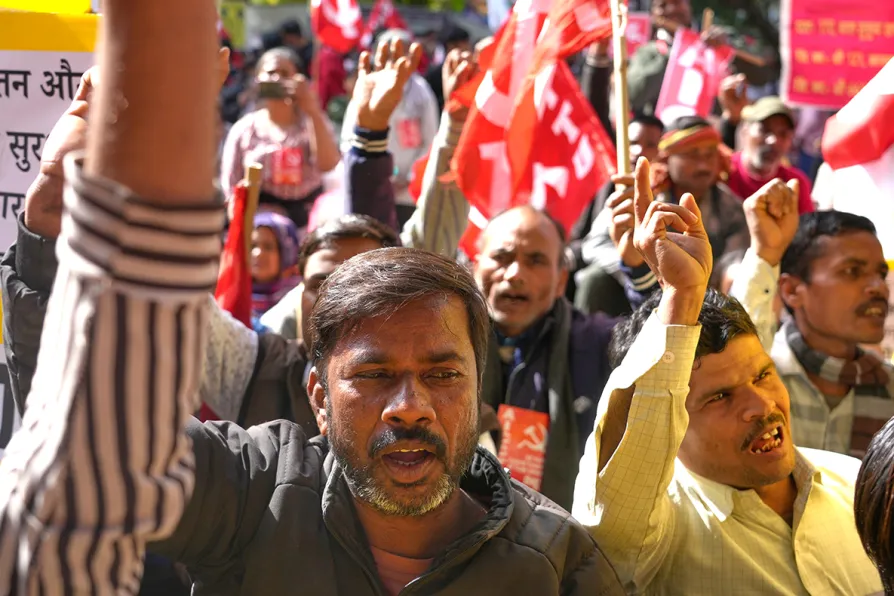
The biggest strike in global history is a template for our future. The silence tells you all you need to know, writes CLAUDIA WEBBE

A past confrontation permanently shaped the methods the state will use to protect employers against any claims by their employees, writes MATT WRACK, but unions are readying to face the challenge
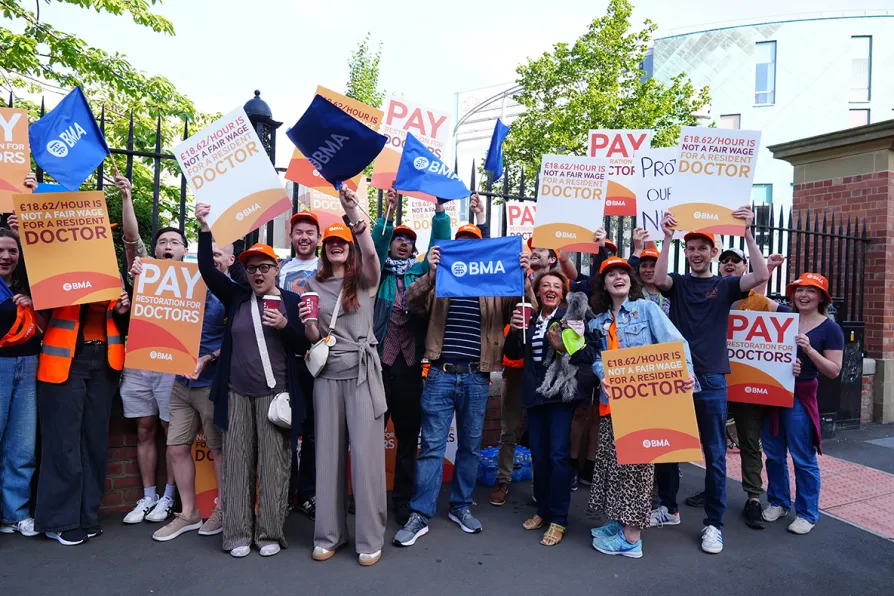
Labour’s watered-down legislation won’t protect us from unfair dismissal or ban some zero-hours contracts until 2027 — leaving millions of young people vulnerable to the populist right’s appeal, warns TUC young workers chair FRASER MCGUIRE

Starmer sabotaged Labour with his second referendum campaign, mobilising a liberal backlash that sincerely felt progressive ideals were at stake — but the EU was then and is now an entity Britain should have nothing to do with, explains NICK WRIGHT