The Tories introduced the 50% strike ballot threshold to make industrial action harder. MATT WRACK argues that a Labour government has no justification for leaving it on the statute book


 Latest editorial
Why we’re campaigning for a third option on any second referendum ballot paper
Any future vote on Scotland’s constitutional future must present more than just a Yes/No choice between independence and the status quo, argue NEIL FINDLAY and PAULINE BRYAN
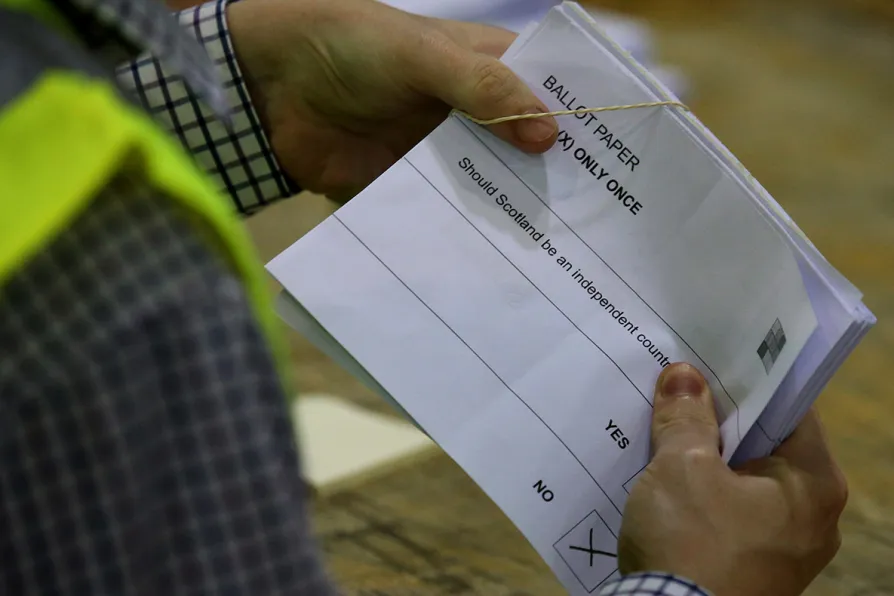 Ballot papers are counted through the night after votes were cast in the Scottish independence referendum in 2014

In the wake of Ann Widdecombe’s murder, JOHN GREEN wonders whether the government will really get to grips with the root cause of these attacks on our MPs
The new PM’s opening addresses offered hope, council homes and reform — but little detail on how any of it will be delivered, warns CLAUDIA WEBBE
Despite the screeching from the right-wing media, Burnham’s speech chimed with the public mood - and socialists should take advantage, says Morning Star editor BEN CHACKO
Scotland's Labour leader cannot continue to evade responsibility for the party's decline, argues LAUREN HARPER
Nature as well as society works dialectically, asserts the Marx Memorial Library and Workers’ School


THE UK’s economic, political and constitutional status quo is broken. The Westminster system is failing the people of Scotland. But so too is Holyrood.
Both Westminster and Holyrood governments have centralised services, enriched private interests, imposed heavy cuts on local government and presided over a decade of plant closures and deindustrialisation.
The call for an “independent” Scotland to immediately rejoin an EU shackled to its neoliberal agenda would rob it of precisely those sovereign powers that we all want; the power to intervene democratically in our own economy. We must also escape the Tories Internal Market Act which inhibits state aid.

Similar stories

The future does not have to be climate chaos and social breakdown. MARC VANDEPITTE looks at the alternatives offered by the Global Justice Report, co-authored by Thomas Piketty


Deep disillusionment with the Westminster cross-party consensus means rupture with the status quo is on the cards – bringing not only opportunities but also dangers, says NICK WRIGHT