

 Latest editorial
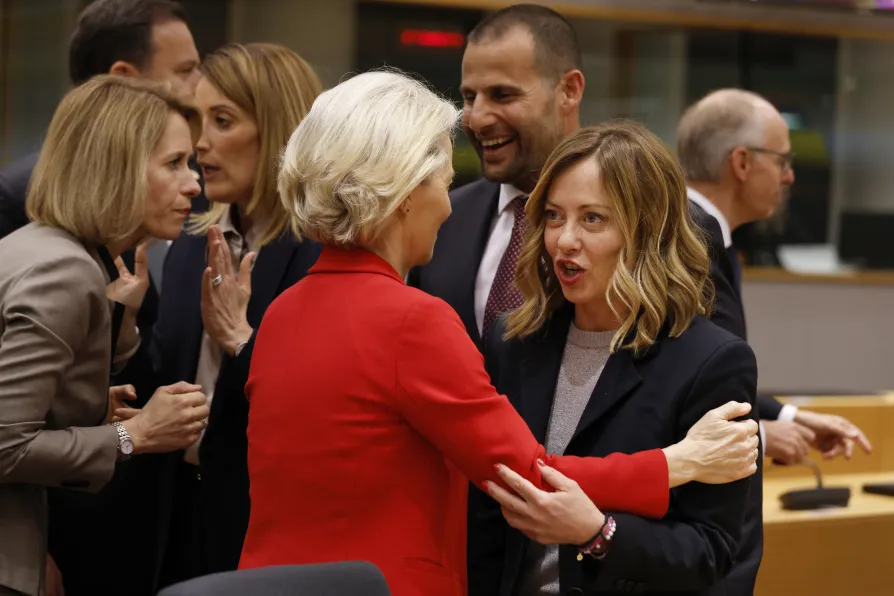 Italy's Prime Minister Giorgia Meloni, right, speaks with European Commission President Ursula von der Leyen during a round table meeting at an EU summit in Brussels, on April 17, 2024
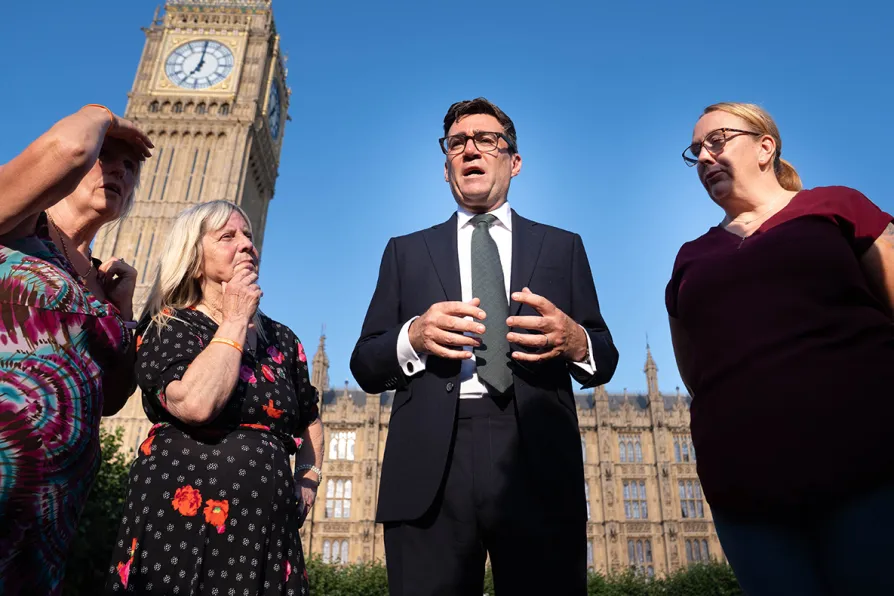


THE EU election poses challenges to the working-class movement everywhere. The advance of the far right has changed the political balance in the world’s third-biggest economic bloc.
The social democrats have been squeezed. The more genuine left has not advanced. The centre-right is now scrambling to do deals with sections of the far right to shore up its grip on EU’s policy levers — but the centre right is also itself seriously divided.
The first question is how to understand the rise of populist, largely anti-immigrant parties. Is this a repeat of the 1930s? The second question follows. Should this prompt us to popular-front policies: much broader alliances encompassing all defenders of democracy — or not? And what lessons are there for the left in Britain where similar forces are at work?
On the first question the answer would, in general, seem to be No. The fascist seizures of power in Italy and Germany were in face of a mobilised and dominant socialist working class. The far right used extra-legal force and was backed and financed by big business. This is not the case now. Economic and political turmoil could lead in that direction. But this is not where we are.
But if this is so, we need to understand what the current rise of the far right represents. It is indeed dangerous. But it is so in the context of a failed political project that has progressively disinherited working people across Europe of what was achieved in a century of struggle.
Its labour share of income in 1975 was 70 per cent of EU GDP, in 2003 58 per cent and last year 47 per cent — and over the past decade EU GDP has been virtually stagnant. The US’s has grown by 8.7 per cent over the past three years. China’s has doubled that. But the EU’s was just 3.4 per cent.
Worse, US growth has in part been directly at the expense of the EU, particularly Germany: by cutting Russian energy supplies and forcing the purchase of America’s more expensive oil, by introducing massive subsidies to attract new investment from Europe and blocking the 2022 peace moves in Ukraine. And it has done so through levels of federal borrowing double those of the EU and made possible by the world sovereignty of the dollar. Such is imperialism.
But the EU itself has also been crippled by its own neoliberal regulations — effectively helping the richest in the richest economies: a standard straightjacket for state spending across all states and prohibiting comprehensive state ownership. In 1992 the EU produced 27 per cent of world output. Today it is 17 per cent. Support for right-wing parties critical of the EU has a material base.
But it is also very dangerous. It is so immediately. The centre-right — effectively led by EU president Ursula von der Leyen — is seeking alliance with Giorgia Meloni in Italy, greased by an €18 billion contingent loan, around policies of EU rearmament, integration with Nato and continued war. Nothing immediately could be more dangerous.
But there is also a long-term danger, one that also faces us in Britain. It is the provision of a mass base for extreme right-wing politics, one to be manoeuvred against the organised working class.
What is needed? Not false talk about a false democracy. It must be political mobilisation spanning the trade union movement and rather than just opposing cuts individually identifying the common causes, a system now so geared to the super-rich that it can no longer generate growth.
Our trade unions have done so previously and can do so again: working as political educators across working-class communities in a way that rebuilds strength and solidarity.

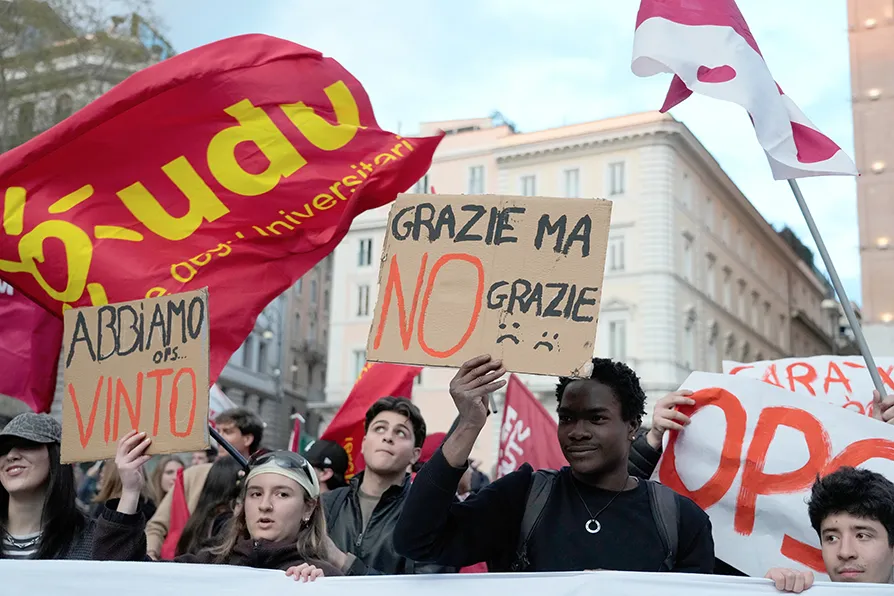
Italians reject controversial judiciary reforms in a referendum that boosts the left, reports NICK WRIGHT
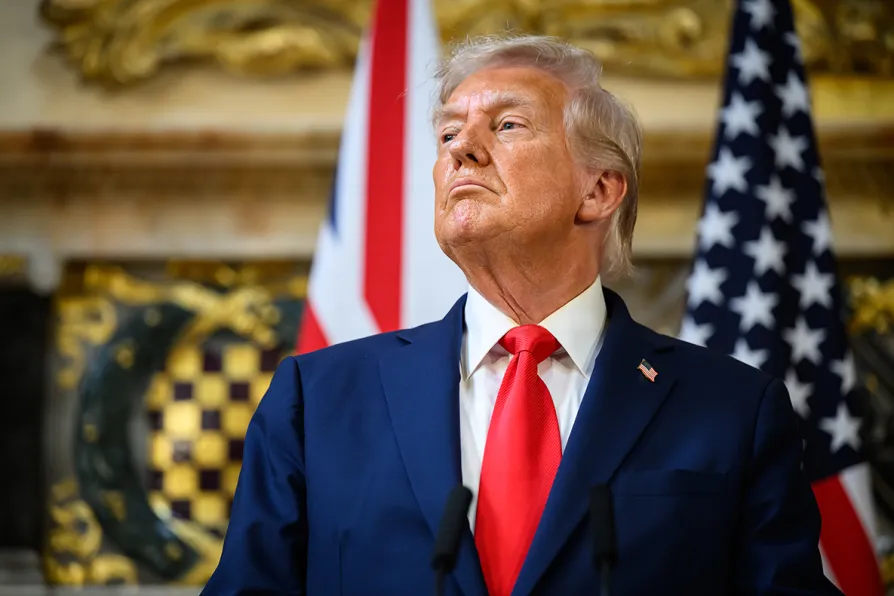
In Washington, the willingness to accept an open war with Russia is growing — at Europe’s expense. While Nato states are being drawn into confrontation, Europe risks becoming the battlefield of a potential world war, warns SEVIM DAGDELEN
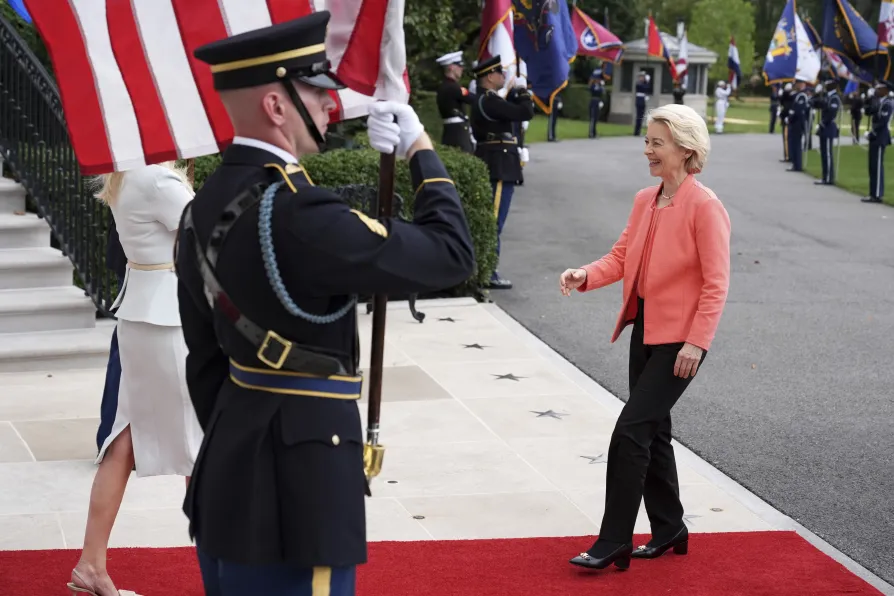
US tariffs have had Von der Leyen bowing in submission, while comments from the former European Central Bank leader call for more European political integration and less individual state sovereignty. All this adds up to more pain and austerity ahead, argues NICK WRIGHT