

 Latest editorial
 Deputy of the Hungarian Socialist Party (MSZP) Agnes Kunhalmi holds up a sheet that reads ‘You succumbed to the multinational corporations’ among other oppositional lawmakers as they block the steps leading to the rostrum at the start of the plenary session of the parliament in Budapest, Hungary, today



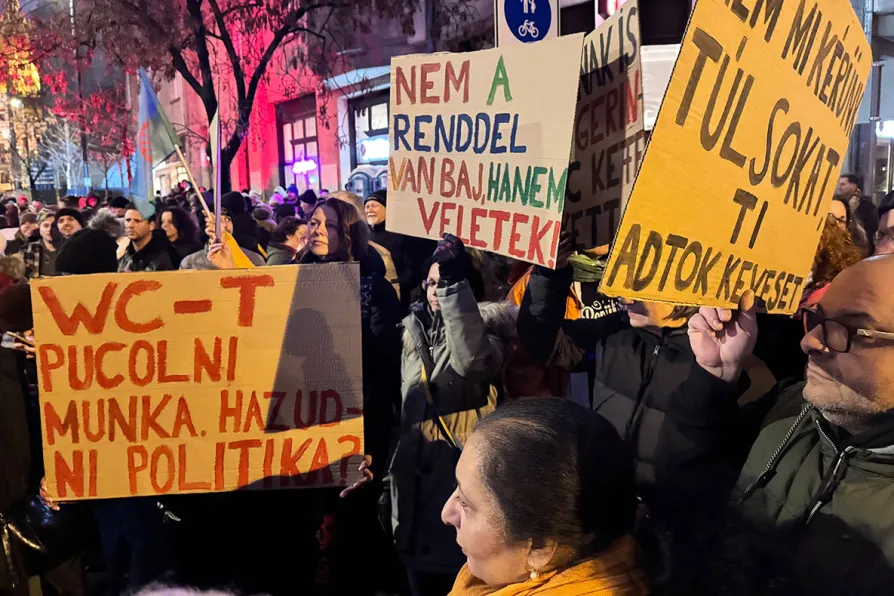
HUNGARIAN MPs approved sweeping attacks on workers’ rights today, passing a Bill denounced as the “slave labour law” by trade unions and the opposition.
The law, introduced by the ruling Fidesz party of Prime Minister Viktor Orban, raises the legal limit on overtime from 250 hours to 400 a year and extends the period management has to settle accrued overtime pay from one to three years.
Unions say the extension will allow bosses to avoid paying premium rates for overtime, as they gain more flexibility to give workers fewer hours than normal at less busy times and then claim the average over three years has been within ordinary hours. Justin Spike, writing in the Budapest Beacon earlier this year, observed that employers would gain greater power to deny employees any time off in busy periods or any work in slack periods.




The Bill addresses some exploitation but leaves trade unions heavily regulated, most workers without collective bargaining coverage, and fails to tackle the balance of power that enables constant mutation of bad practice, write KEITH EWING and LORD JOHN HENDY KC