Latest editorial
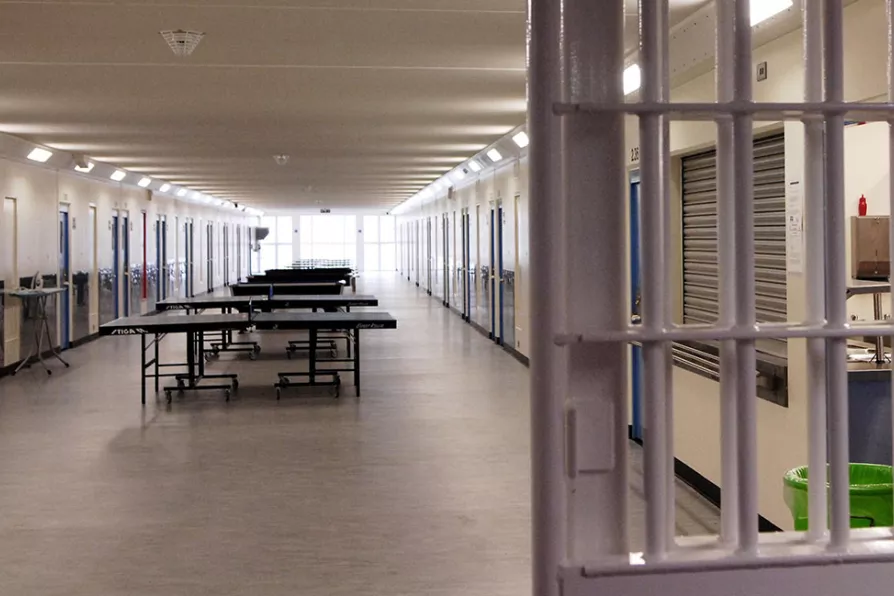 A general view of Monro Hall, a prisoner accommodation block at Polmont Young Offenders Intitution near Falkirk, Scotland, March 2007



AN INSPECTION of Low Moss Prison has highlighted the “insidious consequences of overcrowding” in Scotland’s jails, according to a new report.
His Majesty’s Inspectorate of Prisons for Scotland (HMIPS) visited the prison on the outskirts of Bishopbriggs, which opened in 2012 with a capacity to hold 784 prisoners but now holds 835 after 100 extra places were created by “overcrowding cells.”
Inspectors found that the practice had prisoners sharing single cells “that are below the minimum space standards recognised by the Council of Europe and the International Committee of the Red Cross” and the loss of a dedicated first night in custody unit.
The report detailed how the record prison population in Scotland had led to “significant management effort” being devoted to finding suitable accommodation for detainees from as far afield as Peterhead, while pressures on other staff – NHS and Scottish Prison Service (SPS) – continued to mount.
Inspectors noted one of the “most troubling aspects” of what they found was the high caseload for staff in the prison’s substance use team, with some nurses carrying a caseload of up to 86 patients and the prison’s social work team being found to be “under the most pressure”
The report highlighted a “significant backlog in risk assessments.”
A survey also found that 63 per cent of inmates said they had seen staff abusing, bullying, threatening or assaulting other prisoners, with 48 per cent reporting they had been on the receiving end.
“The inspection of HMP Low Moss represented another case study in the insidious consequences of overcrowding in Scottish prisons.”
A spokesperson from penal reform charity Howard League Scotland said: “Insidious is a good new descriptor for the consequences of overcrowding in Scottish prisons.
“We can’t ignore it, nor hide from it, and recent efforts to reduce the short-term prison population have (as expected) had little sustainable effect.
“The Scottish government is currently consulting on some significant proposals arising from the work of the Scottish Sentencing and Penal Policy Commission, which we sincerely hope has more meaningful long-term outcomes.”
A Scottish government spokesperson said: “The high prison population in Scotland continues to place pressure on staff and the regime at HMP Low Moss.
“We are committed to improving the quality of care for individuals in custody and will work with partners to address these concerns.”

United Nations experts slam Britain for ‘perpetuating serious human rights violations’