HENRY FOWLER, assistant general secretary of the General Federation of Trade Unions (GFTU), reports on Day 2 from the GFTU’s residential Summer School at the Workers’ Retreat, Quorn Grange Hotel


 Latest editorial
The long decline of Scottish Labour
Rebuilding Labour’s working-class roots and organising power is essential if the party is to recover, says MERCEDES VILLALBA
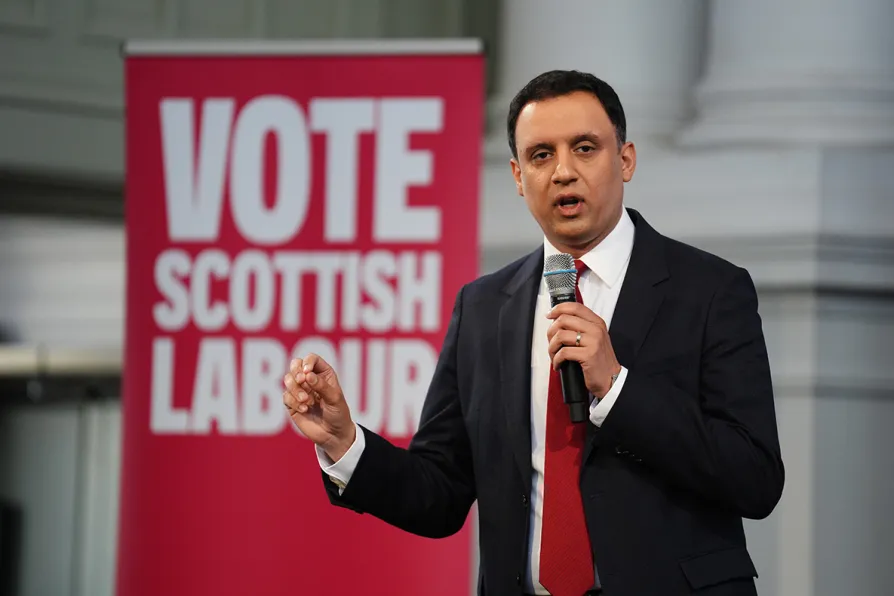 Scottish Labour leader Anas Sarwar, speaking during an eve of poll rally at Adelaide Place Baptist Church in Glasgow, on the last day of campaigning ahead of the Holyrood elections, May 6, 2026
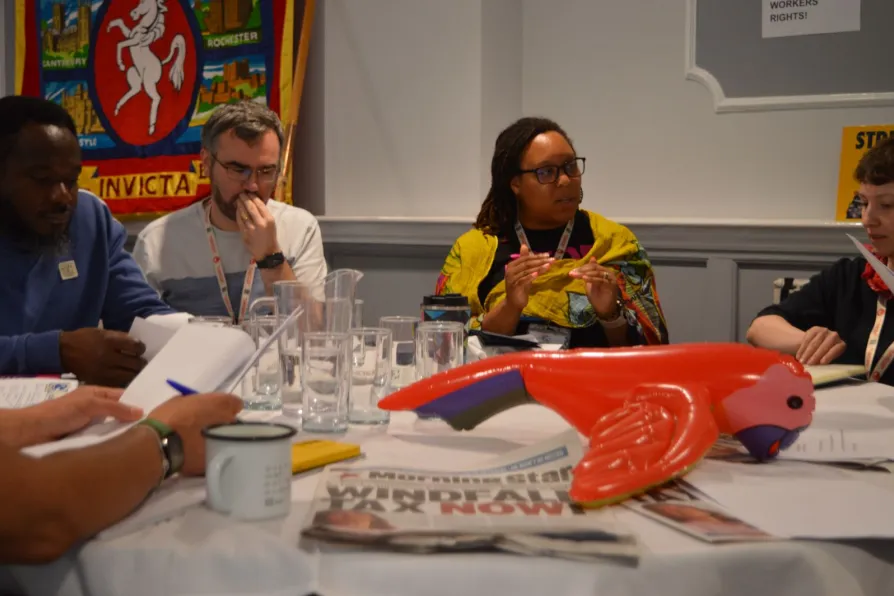
Assistant general secretary of the General Federation of Trade Unions HENRY FOWLER reports on day 1 from the GFTU’s residential Summer School at Quorn Grange Hotel
MPs and others called for the urgent release of tortured Palestinian doctor, Hussam Abu Safiya, held hostage by Israel and reportedly near death, reports LINDA PENTZ GUNTER
Strike Map co-founder HENRY FOWLER discusses the significance of today’s joint union letter to video game giant Rockstar, demanding trade union recognition for its workers. Their conversation highlights how our movement can harness its collective power to rebuild union power across the private sector
Capitalism has exploited — and polluted — our natural resources for too long, it’s time we treated our rivers as living beings, writes MIRIUM GAUNTLETT, LIAM SHAW and ROX MIDDLETON
The PM leaves office having squandered Labour’s electoral mandate and alienated its grassroots. He will not be missed, writes BRIAN LEISHMAN MP


LABOUR in Scotland is in trouble. For the sixth election running Scottish Labour has lost MSPs in the Scottish Parliament; our vote share in both the constituency and regional ballots has declined; and we have failed to make a persuasive case for the people to vote Labour.
Despite these undeniable facts, the leadership shows no signs of changing tack, preferring instead to take comfort in the specific set of circumstances that can be blamed for this most recent poor showing: an unpopular Labour Prime Minister, a rising pro-union party splitting the anti-SNP vote, and a populist Green Party boosting support for its Scottish namesake north of the border.
Of course every election has its own unique context, but leaning so heavily on such excuses in the face of an almost 30-year trend reveals the crux of the problem at the heart of Labour in Scotland: a deeply entrenched denial of the problem.
Successive leaders since 1999 have failed to make the party relevant to Labour’s historic working-class base. Focusing instead on negative campaigning against opponents and incumbents and becoming increasingly bitter about being denied what it sees as its right to rule.
This has led to us losing not just voters, but also supporters, members and activists, leaving ever-diminishing numbers of committed campaigners and dedicated party staff to get us over the line. A situation that is simply not sustainable.
Without a mass membership of activists, the party has become increasingly dependent on private funding, seeking the backing of wealthy donors and corporate sponsors for a prospectus that has little to say to the working class.
It is no surprise then that this has culminated in the election of a multimillionaire leader disconnected from the public services our class depend on, and less surprising still that such an individual, no matter how personally affable some may find him, has been unable to lead the political wing of organised labour to power.
Is the solution then so simple as changing leader, as electing a socialist, or better still, to electing someone who will advocate the socialist policies that will do so much to improve our lives? It was not so long ago that Scottish Labour had such a leader whose integrity and commitment to socialism are without question but were not in themselves enough to prevent the further erosion of the party’s base.
Yet even when attacked and marginalised, the leader of Scottish Labour retains an important role in signalling what we stand for, who we stand for, and in leading the call to action, so it is not a role we can allow to go uncontested. The campaign for the next leader must be part of a wider strategy to rebuild organised labour power within the party.
This means strengthening the bonds between our affiliated union branches and our Constituency Labour Parties, to combine our strength, pool our resources and amplify our impact in the communities we seek to represent. This is work that is most sensibly done through the party and the organising units of our affiliates, but where leadership are unwilling or unable we as ordinary members can make a start ourselves.
Making this start is more important than ever. For the first time in its history the Scottish Parliament is occupied by far-right politicians. As many Reform MSPs as Labour now sit in Holyrood and they are using their platform to promote division, suspicion and hostility among the working class.
These opportunists are exploiting examples of real injustice and struggle in our lives to further their own political careers: wage stagnation, premature death, housing crisis, disrupted education, spiralling workload — these problems are all too real but the fixes being pushed by Reform are not only false, but a danger to us all.
Encouraging frustrated desperate people to blame those with the least power and agency in society can only harm our class as a whole, not advance it. We saw this in Belfast.
These false solutions must be exposed and the real culprits held accountable. When our public services fail us, it is our governments who we must protest. When our politicians do not represent our class, it is they who we must reject at the ballot box, and when our economy is not working for us, the very workers whose labour maintains it, it is that which we must bring to a halt.
There is no shortage of ability, of ideas, of desire for change in our class. The only step left is to organise.
Mercedes Villalba was member of the Scottish Parliament for North East Scotland from 2021 to 2026.
