

 Latest editorial
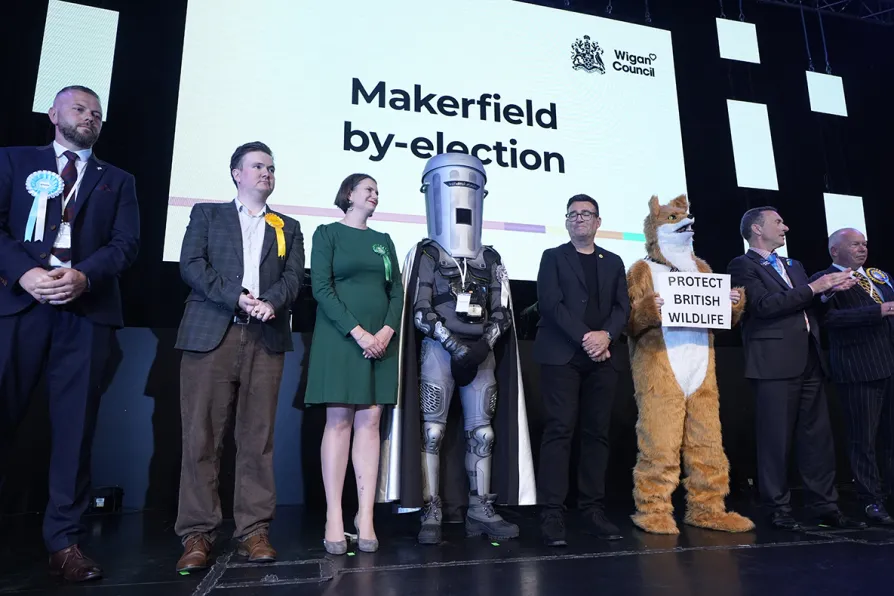 Labour party candidate Andy Burnham is declared the winner of the Makerfield by-election which was triggered by the resignation of Josh Simons, June 19, 2026



ANDY BURNHAM’S emphatic win in Makerfield is welcome both as a repudiation of Reform UK and as the trigger to end Keir Starmer’s premiership.
Like the Caerphilly and Gorton & Denton results, it shows the left can outvote Reform when it rallies behind one standard bearer. Burnham won an absolute majority of the vote, a stronger showing than Plaid Cymru or the Greens in those contests — no doubt because of his unusually high profile but also because this was a vote to change the prime minister, something almost the whole country can get behind.
Two factors should guard against any complacency here. One is that Reform’s vote is remarkably consistent. About a third of voters back it in contest after contest: no other party in Britain is managing that across such varied political terrain.
The second is that deciding who the “stop Reform” candidate is will not always be as straightforward as it was on Thursday. Unless we can start to shrink the Reform vote, it is still in a position to win huge numbers of seats at a general election.
As recent race riots show, even large-minority status for the far right is normalising racism and putting whole communities in danger.
It has also led to copycat anti-immigrant hostility from the Labour government, reflected in nasty and self-defeating changes to immigration policy, making life intolerable for many who come to work or study here. That in turn contributes to a crisis across our universities sector and will seriously hinder efforts to improve public services: surely crucial to any Labour recovery.
That underlines the need for a sea change in Labour’s approach which is not evident in Burnham’s prospectus.
This political chameleon will not tear up the Westminster consensus from conviction. Everything rests on pressure from the left for change overcoming pressure from the ruling class to keep everything the same.
Powerful forces are determined to uphold an economic model that makes grotesque fortunes for a few while the country goes to rack and ruin.
They were on manoeuvres throughout the by-election campaign: unlike too many in the labour movement, they do not wait to see what the new boss will do before reacting.
The most obvious example was John Healey’s resignation as defence secretary: aimed at ensuring that the huge increases in military spending already planned by Starmer are a floor not a ceiling and any leadership contenders are under pressure to offer the obscenely corrupt and wasteful armaments industry everything it wants, while doubling down on a warmongering foreign policy based on close alliance with the world’s most dangerous country, Donald Trump’s United States.
But the pressure on Burnham to show he is “serious” — that he won’t challenge the assumptions of a completely discredited political and media elite — has borne fruit too in his accommodation to Shabana Mahmood’s anti-immigrant policies and to Rachel Reeves’s fiscal rules.
Our political masters are as short-termist as the asset-strippers who buy up, bleed dry and discard our industries and services.
They promise anything — an end to austerity under Theresa May, a new era of state-led investment under Boris Johnson, public ownership and a green industrial revolution under Keir Starmer — to see off threats like Brexit or Jeremy Corbyn, then imagine they can revert to type once the vote is over.
It won’t wash any more. Labour MPs must be made to face reality: if Burnham bows to the bond markets, if he won’t expropriate the water privateers and end the great NHS sell-off, if he won’t raise wages and tax profits and wealth — then he will be as hated as Starmer in a couple of years.
And as he says himself, this is their last chance.
