All the evidence shows voters want Labour to shift to the left — but initial signs from Andy Burnham are worrying on that front, cautions DIANE ABBOTT


 Latest editorial
A new PM will need to act fast to turn round a Britain in decline — here’s where to start
ANDY McDONALD MP says Labour must show it is capable of delivering real improvements in people’s lives — bold action is required
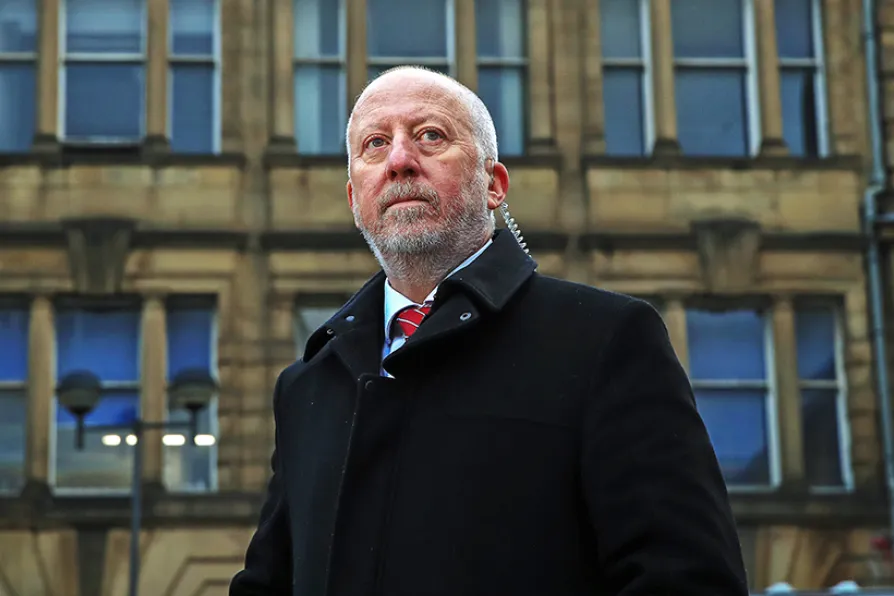 Andy McDonald MP
ANGUS REID and ANDREW JOHNSTONE report on an initiative that we must take this summer
ALLISON FEWTRELL on what Plaid Cymru's historic election victory means for the communities being failed by Wales’s housing crisis, and four things the new government can do right now
France Insoumise MP JEROME LEGAVRE speaks to Christophe Domec on building the Europe-wide peace movement that came together in the International Conference Against War last weekend
At last weekend’s International Conference Against War, LINDA PENTZ GUNTER talks to the Palestinian physician and politician about the struggles ahead to achieve a truly free Palestine


BRITAIN may be entering a new chapter in Labour politics, but for many voters it still feels trapped in the same chapter of national decline.
With Andy Burnham returning to Westminster after his victory in Makerfield and widely regarded as the frontrunner to become Labour leader and Prime Minister, attention is naturally focused on who leads Labour next. The more important question, however, is what that leadership is for.
Labour has now been back in government for two years, yet many voters do not feel they are living in a fundamentally different Britain. For millions, the past 16 years have meant falling living standards, weakened public services and fewer opportunities. Governments have changed, but daily life still feels harder, more expensive and less secure.
The central challenge facing the next Labour leader is therefore not simply to manage government more effectively, it is to demonstrate that government can still transform peoples’ lives.
The Britain many people experience today is a country where wages have struggled to keep pace with costs, where secure employment has become harder to find, where public services are stretched beyond recognition and where communities increasingly feel neglected.
In too many towns and cities people are embarrassed by the condition of public infrastructure, frustrated by deteriorating services and worried that their children may enjoy fewer opportunities than they did.
That sense of decline cannot simply be wished away through better communications or more competent administration. It requires political action on a scale that matches the challenge.
Time is also short. With only around two years before the next election, the next Labour leader must demonstrate that the government can once again deliver visible improvements to everyday life.
Living standards
The first priority must be living standards.
The test of economic success should not simply be whether economic growth appears on a Treasury spreadsheet. It should be whether ordinary households have more money left at the end of the month.
Labour must therefore focus relentlessly on raising incomes while reducing the cost of essentials. Real wages must increase, including a clear path to pay restoration for public-sector workers who have suffered years of real-terms cuts, alongside stronger collective bargaining.
The debate around wealth taxation is also becoming more mainstream. Equalising capital gains tax with income tax would be a straightforward early reform, but Britain also needs a broader conversation about more progressive taxation of wealth to fund public services and improve living standards.
Public ownership
Hand-in-hand with higher incomes is the need to reduce the key costs facing working people. That means confronting the failure of private profit to serve public needs and popularising the case for public ownership.
The marketisation of essential services has too often prioritised profit extraction over investment. Privatised water supply and energy transmission means customers are paying for billions in dividends instead of fixing crumbling infrastructure or lowering bills. Households are exposed to rising costs while a significant share of income is channelled into underwriting private monopolies.
A renewed commitment to public ownership and public control is therefore essential.
Andy Burnham’s record in Greater Manchester shows that public intervention can improve services while prioritising users over shareholders, with bus franchising through the Bee Network offering a model that can be extended nationally.
In sectors such as water and energy — as we have seen for passenger rail — the case for public ownership is increasingly one of common sense: essential services should be organised around public need rather than private extraction, lowering financing costs, supporting long-term investment and ensuring infrastructure works for the public.
Opportunity
On welfare, too much policy has been built around sanctions and compulsion, as though unemployment were primarily a problem of motivation rather than opportunity.
Most people want decent work and economic security. The challenge is creating opportunities through industrial strategy, skills, apprenticeships and regional investment—not making life harder for those already struggling.
Employment Rights
The Employment Rights Act represented an important step forward, but like too many other pieces of legislation under Starmer’s leadership, a watering down of commitments has limited impact and popularity.
Gone are the bold simple commitments to completely end fire-and-rehire, abolish zero-hours contracts, and institute a new era of collective bargaining across sectors.
Railways
The Railways Act re-establishes the controlling mind for rail with Great British Railways, but Labour should go further by bringing more of the railway system into integrated public control, including addressing the issue of directly commissioning rolling stock, rather than taxpayers continuing to fund profit for privately owned trains.
Rights
Labour should not treat rights as technical reforms. They should become central to its political story.
The right to dignity at work. The right to security in rented housing. The right to fair treatment regardless of where someone was born.
For too long the left has often defended rights reactively. Instead, Labour should popularise them as practical freedoms that improve people’s lives. Employment rights, renters’ rights and a humane migration policy are not competing priorities. They are all part of creating a society where people enjoy greater security, freedom and dignity.
Devolution
A Burnham leadership should combine greater public ownership with deeper devolution, giving mayors and local authorities greater powers over transport, housing, skills and economic development while matching those responsibilities with sustained national investment.
But devolution must not become an excuse for central government to avoid investment. The north of England requires infrastructure investment on a scale comparable to that routinely delivered in London.
No serious strategy for national renewal can ignore the disparity between projects such as Crossrail and the repeated failure to deliver equivalent transport investment across northern regions.
Party
And a message regarding the party and the administration of government: a new Prime Minister must also demonstrate that Labour has renewed itself, drawing talent from across the party rather than relying predominantly on familiar figures from the New Labour era. For many younger voters, New Labour is remembered less for its electoral success than for the political disappointments that preceded Labour’s long period in opposition.
Ultimately, Labour’s challenge is not simply electoral. It is to prove once again that politics can improve everyday life.
Higher incomes, lower bills, stronger rights, better jobs, public ownership and deeper devolution are not separate objectives.
Together they form the programme of national renewal that voters were promised—and which a Burnham leadership would need to deliver.
Andy McDonald is Labour MP for Middlesbrough and Thornaby East.
