

 Latest editorial
ASIF BURHAN explores why England v Argentina remains football’s most politically and culturally charged fixture in his new book
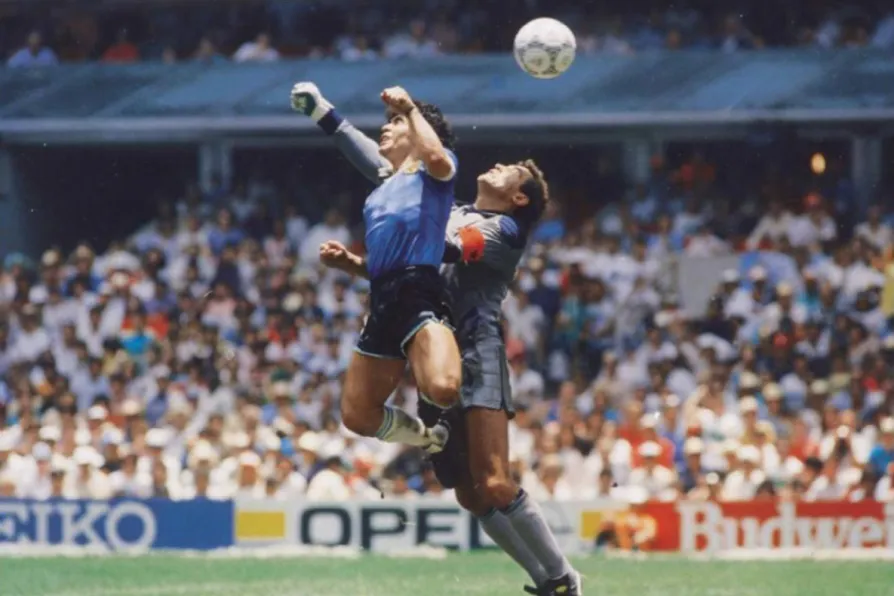 Maradona flicks the ball with his hand past the outstretched arm of Peter Shilton, also known as the ‘Hand of God’ [Pic: El Gráfico]



THERE is no ordinary football match between England and Argentina. Since their first meeting at Wembley in 1951, when the home side played in red shirts for the very first time, each of their matches have been imbued with political and cultural significance.
Forty years have passed since the fabled 1986 World Cup quarter-final — which is the subject of my new book, The Other Side of the Hand of God — that Gary Lineker labelled “the most famous football game ever played.”
For the book, I spoke to the majority of the 1986 England World Cup squad. For many, it was the sliding doors moment of their career and an afternoon from which Diego Maradona’s subsequent notoriety and legend has never allowed them to escape. For Argentina, any victory over the English supersedes any other triumph, their favourite terrace chant of unity celebrates their otherness from their fiercest rivals — El Que No Salta Es Un Ingles (He Who Doesn’t Jump is an Englishman).
Argentina is the only leading football nation who have never been invited to play at the new Wembley Stadium. England have not played in the South American nation since a 1977 match at the Bombonera in Buenos Aires, which featured two sending-offs after an on-field fight between Trevor Cherry and Daniel Bertoni. Each passing year has only increased the mystique and significance of the earlier encounters.
Ahead of the 1986 match, the erudite Argentina forward Jorge Valdano, pre-empting the world we now live in, said the game “is ideal for confusing the idiots who do not realise that we do not need political conflicts to give a special flavour to the game.” Many years later he admitted “it’s very clear to me that the idiot was me, because from then, until now, they’ve done nothing but confuse actions within the game, as if they were a political act, rather than part of a football match.”
The two nations have previously met five times at the World Cup — as many times as England have played their other historical rivals Germany — each one seemingly more significant than the last. As well as the political history between the two countries, the nations always bring to any tournament two of the largest and vociferous travelling fan bases in the world who have been brought up on stories of the Falklands war, Diego Maradona and David Beckham. The 1986 World Cup quarter-final was witnessed by an attendance of 114,580 at the Estadio Azteca in Mexico City, the largest-ever World Cup crowd for any match outside the final or not involving the host nation.
In 1986, all the pre-match talk was centred around how England would stop Argentina’s number 10, Diego Maradona, widely acknowledged as the best player in the world. Similarly, English fans wondered if their own ascendant number 10 and match-winner in their previous two games, Gary Lineker could outscore Argentina’s on the biggest stage.
Due to that victory over England in a makeshift navy blue away shirt, the unusual kit has been since perceived as lucky by the South Americans, who opted to wear the same strip in the 1990 quarter-final against Yugoslavia and again eliminated England wearing navy blue in 1998. To cement the superstition, when they lost 1-0 to England in 1966 and 2002, they were sporting their usual albiceleste (white and sky blue) stripes.
The prelude to the match in 1986, just four years after the end of the Falklands war, was dominated by inquisition over the political backdrop to the game. A terse England manager Bobby Robson told journalists “don’t waste my time with questions like that.” His Argentina counterpart Carlos Bilardo learned enough English to reply “only, only football.”
Twenty-one years have passed since the teams last met in a thrilling “friendly” in Geneva, but videos continually circulate of Argentinian supporters and players singing songs claiming their rights over what they call Las Malvinas. This in turn has led to the inevitable social media backlash from England fans, most of whom were born long after the Falklands war ended.
Whatever the off-field history, it is undeniable that the last four World Cup encounters in 1966, 1986, 1998 and 2002 have all revolved around incidents notable for accusations of on-field cheating — Antonio Rattin’s sending off, Diego Maradona’s Hand of God, Diego Simeone’s provocation of David Beckham, Michael Owen’s simulation to earn two soft penalties.
Speaking to me about Maradona’s handball, then England captain Bryan Robson was honest enough to say “people say he cheated, but it’s not really cheating, you get away with what you can get away with in major games and you want to win them. That’s part and parcel of the game. I think all top players, when you’re playing at that level, that’s what you do. You more or less do anything to try and win the game.”
Therefore, there will be never be any Corinthian spirit displayed when the two teams play each other. Anything will go, and even the modern presence of video assistant referees will not prevent the losing side making allegations of conspiracy after the fact, such will be the high-stakes of any future encounter.

England survived a thrilling Azteca encounter, but the stadium and its supporters created one of the tournament’s defining nights, writes JAMES NALTON
Football may not solve the working class’s problems, but it does matter — and politicians know it, writes BERT SHOUWENBURG
JAMES NALTON previews the Three Lions' round of 16 clash against the co-hosts in Mexico City
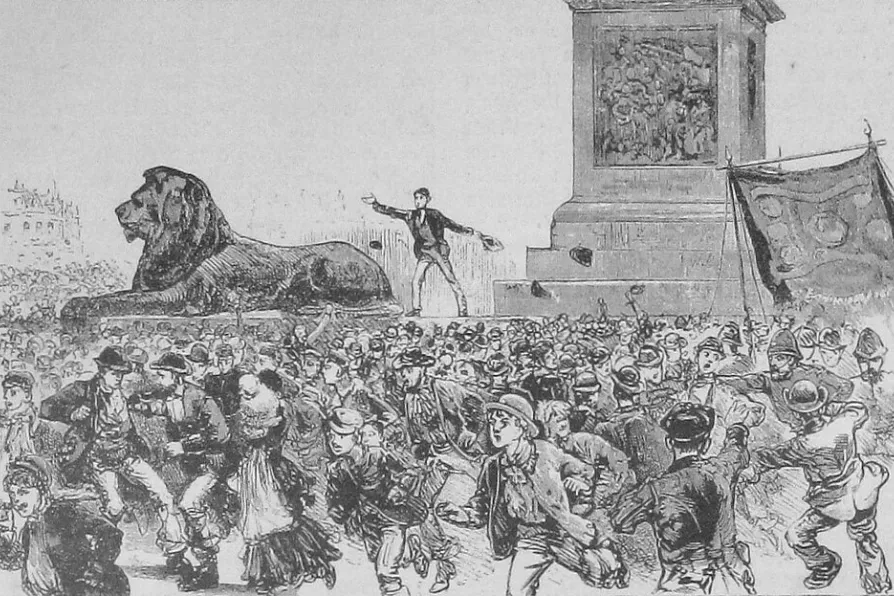
STEPHEN ARNELL looks back to when protesters took to the streets in London demand to Irish liberty, fair pay and free speech — and wonders what’s changed in 138 years