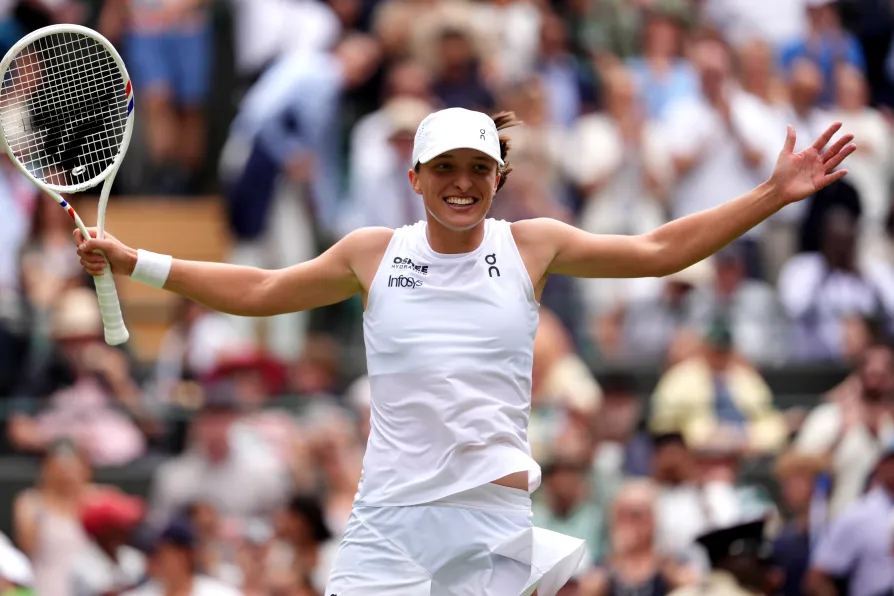
A new documentary recalls the unmatched rivalry between Chris Evert and Martina Navratilova, but it is also an honest and intimate look at their unlikely off-court friendship and shared battle with cancer, writes LINDA PENTZ GUNTER
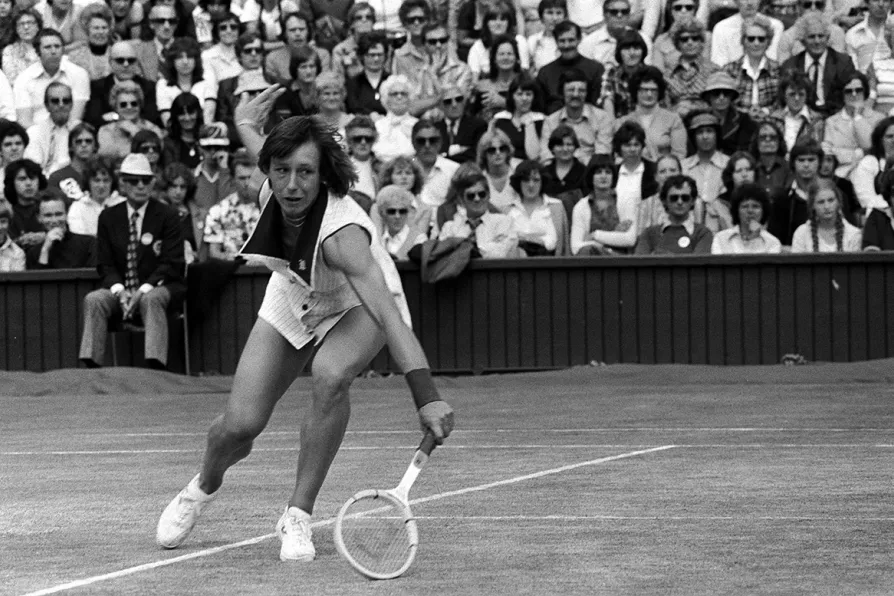
 Czechoslovakia's Martina Navratilova in action against the US's Chris Evert in the singles final on Centre Court during Wimbledon. Navratilova defeated Evert 2-6, 6-4, 7-5 to win the ladies Championship, July 1978
Snippets of news from the sporting world with JAMIE J


THE 2026 All England Lawn Tennis Championships — more popularly known simply as Wimbledon — are entering their second week, but there remains a notable void. There are no great rivalries for the ages likely to enthrall and excite as the tournament draws to a close.
Spanish star Carlos Alcaraz is still recovering from injuries, depriving fans of another possible matchup with Italian world number one Jannik Sinner. Although not yet in the panoply of Roger Federer and Rafael Nadal or Bjorn Borg and John McEnroe, they have already faced each other 17 times, with Sinner holding a 10-7 edge.
On the women’s side, Aryna Sabalenka and Elena Rybakina have also faced off 17 times, but Rybakina is already out of the running. A promising rivalry between Coco Gauff and Iga Swiatek was similarly curtailed with an early loss by Swiatek.
These modest present-day statistics, however, were swept aside as the championships began, when Netflix dropped its raw new documentary Chris and Martina: The Final Set.
Chris Evert and Martina Navratilova, two of the greatest female tennis players of all time, played each other an astonishing 80 times, a record and a rivalry that has never been matched, and likely never will be again, on either the women’s or men’s side of the sport.
At their careers’ end, their rivalry, which spanned 15 years between 1973 and 1988, stood at 43-37 in favour of Navratilova. Of their 80 encounters, 61 occurred in tournament finals. As former player Pam Shriver laments in the film, their near-complete domination left few opportunities for their contemporaries to win much at all.
The film is a deeply intimate look at their fierce on-court rivalry and, in many ways, their surprising bond off it, drawing back the curtain on two women who could not be more different, yet have shared so much. And while the film follows the trajectory of their careers and on-court matchups, it is their simultaneous off-court battle against cancer that is at the heart of the story.
Their contrasting journeys, as different as their personalities and playing styles, gradually become one, a shared ordeal as they confront cancer: ovarian a second time for Evert, throat and breast cancer simultaneously for Navratilova.
Several former players, agents and reporters contribute their observations throughout the film, but mainly the story is told by Chris and Martina themselves, as they rewatch their old matches together, chat around Evert’s kitchen counter or talk on the phone, along with plenty of archival interview footage.
Evert is introduced to the tennis world as the quintessential 16-year-old girl next door, all ribbons and feminine frocks. But the harder side of Evert quickly becomes evident, through her relentless baseline game and fierce competitiveness.
Evert’s emotionless on-court demeanour earned her the nickname the Ice Maiden, one she says in the film she welcomes. And we see flashes of that still. But Evert also admits how alone she felt in the locker room where the older players at first shunned her.
Navratilova, by contrast, bursts onto the scene with her heart on her sleeve and finds it broken time and time again by her adopted US home country, to which she defected from what was then Czechoslovakia, but whose fans for years refused to warm to her.
The serve-and-volleying left-hander also harboured a secret, eventually outed in 1981 by a New York reporter, right after receiving her US citizenship, when she told him in confidence she was bisexual. The paper published the story anyway. Navratilova later openly identified as lesbian.
Despite their on-court battles, we learn that the friendship the two enjoyed behind the scenes began remarkably early in their rivalry. Evert was one of the very few people who knew in advance that Navratilova was about to defect, in 1975, when she was just 18. That confidence made a later-but-temporary rift between them all the more painful for Evert.
The split was sparked by Navratilova’s brief partnership with former US basketball player Nancy Lieberman, who was also her coach and who persuaded the left-hander that her friendship with Evert was hurting her game.
Over the years, Evert learns to shed her armour while Navratilova grows more protective of her privacy. We are allowed inside Evert’s once guarded world as she shares searingly honest moments with us, including her son shaving off the last of her hair after another round of chemotherapy.
Navratilova still recalls how personally she took the hurt inflicted by the fans’ rejection of her. But like Evert, she also allows cameras into the medical examination room where each waits and hopes for good news.
Both of them eventually receive the all clear, and the film ends on a happy note. Sadly, however, there is a postscript. As Wimbledon was about to get under way, Evert announced that her ovarian cancer had returned for a third time.
“Ovarian cancer is relentless, but I will stay optimistic and determined in continuing to fight this battle,” Evert, 71, posted on Instagram. Her younger sister Jeannie died of the same disease in 2020 at age 62.
As a result, Evert is missing from the Wimbledon commentary box. The tennis world and beyond will be rooting for her to return. The void that her epic rivalry with Navratilova leaves behind in the women’s game, however, and possibly in tennis as a whole, may well never be matched.
Linda Pentz Gunter is a writer based in Takoma Park, Maryland, and the author of No to Nuclear. Why Nuclear Power Destroys Lives, Derails Climate Progress and Provokes War, published by Pluto Press.

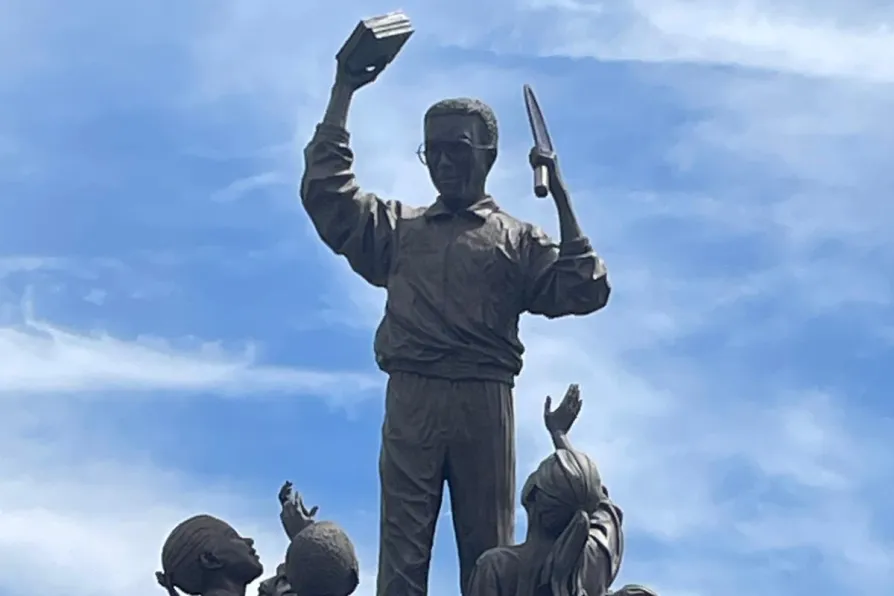
Still the only black man to win the US Open tennis title, a statue of the legendary champion, Arthur Ashe, is now the only one remaining on Monument Avenue in his Richmond, Virginia hometown, where confederate leaders of the Civil War were also once displayed, writes LINDA PENTZ GUNTER