The campaign against the Bank of England’s ongoing theft of Venezuelan gold is gaining support across the labour movement and beyond, writes MATT WILLGRESS


 Latest editorial

Scotland’s pioneering anti-apartheid movement has lessons for anti-racist organising today
ARTHUR WEST surveys the achievements of the Scottish campaign against South African apartheid and how we can draw on them to fight a rising far right
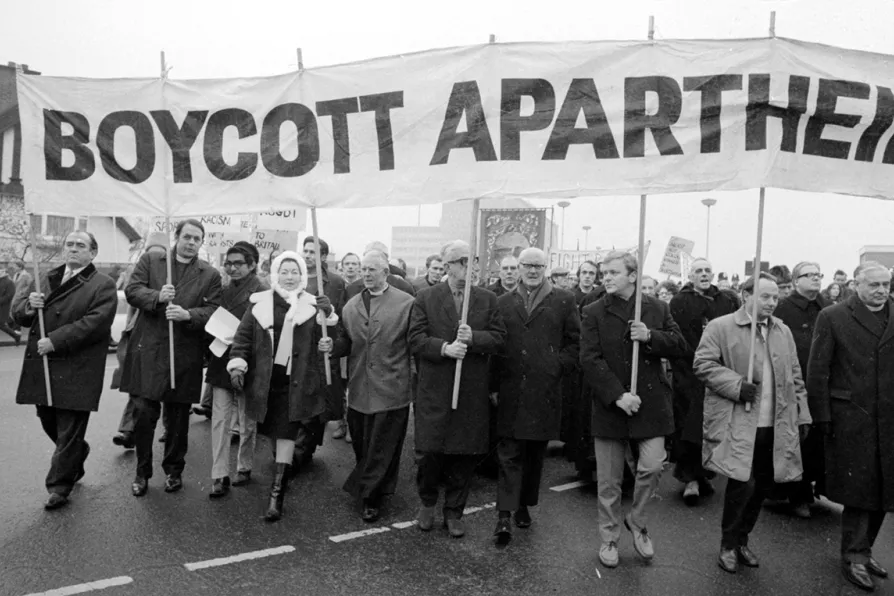 Bishops, among the leaders of a peaceful anti-apartheid demonstration, are seen heading the 2000 marchers from Twickenham Station to the Rugby ground, before the start of the England v South Africa match in December 1969

The new Prime Minister must abandon decades of automatic support for US foreign policy, which makes us all less safe, argues DIANE ABBOTT MP
Claims that Nicaragua has abolished elections followed a headline that stripped Daniel Ortega’s remarks of their historical and political context. The full speech tells a different story, says BECCA RENK FOSTER
Media Lens at 25: David Cromwell and David Edwards reflect on a quarter-century of media criticism, explaining why independent journalism is more important than ever
MAT COWARD introduces some of the electoral oddballs of the political fringe who remain one of the liveliest features of British democracy, despite efforts to abolish them
by Weyman Bennett and Maz’s family


A VERY positive example of community-based solidarity and anti-racism-based work is the campaign against apartheid South Africa in Scotland which started in the 1970s. The legacy of that work is still evident in present day activity in Scotland.
The Scottish Committee of the Anti-Apartheid Movement was the body which coordinated grassroots solidarity action and campaigning .
The committee was established in 1976 and played a solid role in mobilising public pressure against the apartheid regime in South Africa until its eventual fall in 1994.
The anti-apartheid campaign in Scotland involved consumer boycotts, divestment and pressure from local councils.
Groups and individuals were mobilised to avoid South African goods in local shops and picket branches of Barclays Bank and Shell petrol stations.
The anti-apartheid campaign also advocated support for the release of political prisoners, notably Nelson Mandela.
Strathclyde Regional Council banned goods from Apartheid South Africa in 1975 and in 1981 Glasgow became the first city worldwide to grant Nelson Mandela honorary citizenship.
He was eventually able to receive this award personally in an emotional visit to Scotland in October 1993.
The Scottish Committee of the Anti-Apartheid Movement also oversaw and encouraged the development of local anti-apartheid movement groups in various parts of Scotland. In a number of parts of the country picketing of supermarkets selling goods from apartheid South Africa took place on a regular basis.
The Scottish Anti-Apartheid Committee was succeeded in 1994 by ACTSA Scotland — Action for Southern Africa.
ACTSA Scotland has worked since it was established to develop solidarity between Scotland and all the states of the Southern African Development Community. However the closest links continue to be with South Africa.
Arising from links established between ACTSA Scotland and the Eastern Cape province in South Africa, one major area of work which developed was the sorting and collecting of books to send to school libraries in the province.
This resulted in a staggering half a million books being sent over a period of 20 years.
ACTSA Scotland has also supported the establishment of links between Glasgow City Council and Amathole District Municipality which has involved several skills exchange projects.
ACTSA Scotland also campaigns for peace, democracy, reconstruction and development in Southern Africa.
Another vital aspect of ACTSA Scotland’s work is to try to increase knowledge and understanding in Scotland of South Africa and the wider Southern Africa region — including the legacies of Apartheid and its widespread destructive consequences.
In October 2017 ACTSA Scotland set up the Nelson Mandela Scottish Memorial Foundation to raise funds to erect a statue of Nelson Mandela in Glasgow’s Nelson Mandela Place.
The project which will also involve the production of very useful anti-racism and historical materials has been very solidly supported by individuals and organisations across Scotland.
The project has also been backed by Glasgow-born celebrities such as football legends Alex Ferguson and Kenny Dalgleish and showbiz icon Billy Connolly.
The statue itself is scheduled for unveiling on October 9 2026 .
There is still time for trade union branches and organisations to support this project by using the link mandelascottishmemorial.org to connect.
The work of the Scottish Anti-Apartheid Committee and its successor ACTSA Scotland provides encouraging examples of how solidarity and support can be built for progressive actions across the trade union movement and communities and also faith communities.
For example the Church of Scotland’s Women’s Guild officially launched a campaign in 1982 targeting the boycott of South African oranges and other products.
The work of the Scottish Anti-Apartheid Committee and ACTSA has also highlighted the dangers and evils of racism and provides many lessons in relation to the issues faced by progressive organisations and individuals in the present day.
In particular the statue of Nelson Mandela in Glasgow and the educational materials being produced as part of the project will be a tangible reminder of his life and legacy. It will also hopefully act as a vehicle for encouraging people to continue struggling for a more peaceful and fairer world.
It is encouraging to see anti-racist activity taking place in communities and in Scotland’s cities in the present day. In my view the anti-apartheid campaign in Scotland highlighted the evils of racism — particularly when it is structured into a system of government. The anti-apartheid Campaign is also an important reference point for those comrades and organisations supporting the Palestinian people in their struggle for peace and justice.
An excellent example of current anti racism activity is Clydebank trades union council organising a weekly stall in Clydebank which has a consistent focus on raising awareness around anti-austerity and anti-racism issues.
In recent weeks we have also seen well attended anti-racism demonstrations in both Glasgow and Edinburgh, organised by Stand Up to Racism and supported by the STUC.
Other Scottish cities such as Dundee and Aberdeen also have solid and committed anti-racism campaigners standing up to the dangers of far-right elements peddling hatred and division in communities.
It has also been the case that in towns such as Paisley, Arbroath, Perth and Falkirk a range of campaigners including trade union activists have established a credible and useful record of opposition to the far right.
In my own area in Ayrshire, East Ayrshire trades union council recently passed a motion to embark on a programme of action days across a number of towns and villages focused on the need to defend public services and oppose racism in our communities.
All these organisations and individuals involved in current anti racism work should draw on the inspiration of the Scottish anti-apartheid movement .
I also long for the day when there is as much support in Scotland for the boycott of Israeli goods as there was for the boycott of the products of Apartheid South Africa .
As a final thought, in Nelson Mandela’s autobiography Long March To Freedom there is a passage which says: “No-one is born hating another person because of the colour of his skin , or his background , or his religion.
“People must learn to hate, and if they can learn to hate, they can be taught to love, for love comes more naturally to the human heart than its opposite.”
Do not think there could be a more appropriate message to today’s troubled world .
Arthur West is secretary of East Ayrshire trades union council and a committee member of Action for Southern Africa Scotland.

Similar stories

History suggests apartheid ends not through appeals to conscience alone but through sustained economic and political pressure, says HUGH LANNING
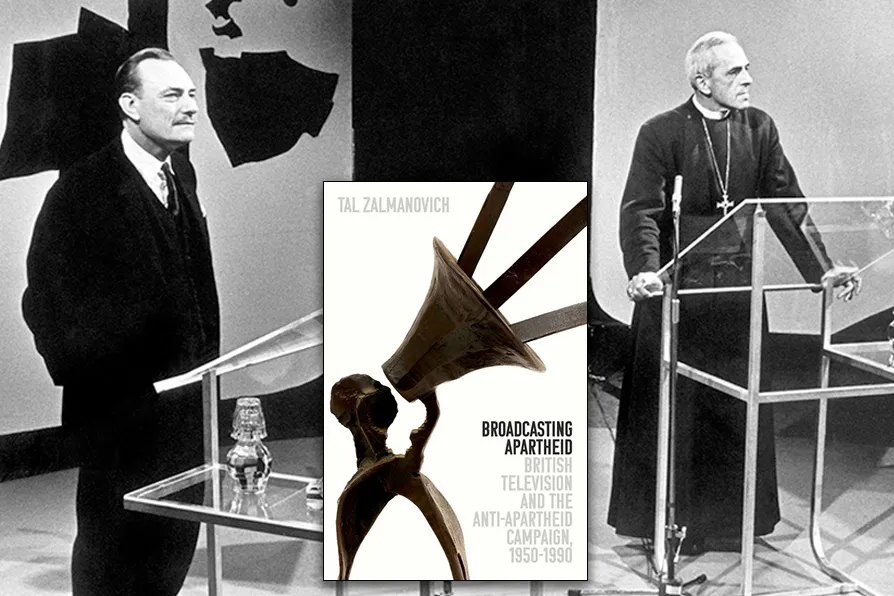
NADIA JOSEPH welcomes a survey of the role that TV played in the debate over apartheid and race relations in Britain

Campaigns against nuclear weapons on the Clyde, financial backing for arms firms and rising militarism are converging with solidarity for Palestine, as Scotland’s peace movement builds momentum ahead of the 2026 Holyrood election, says ARTHUR WEST
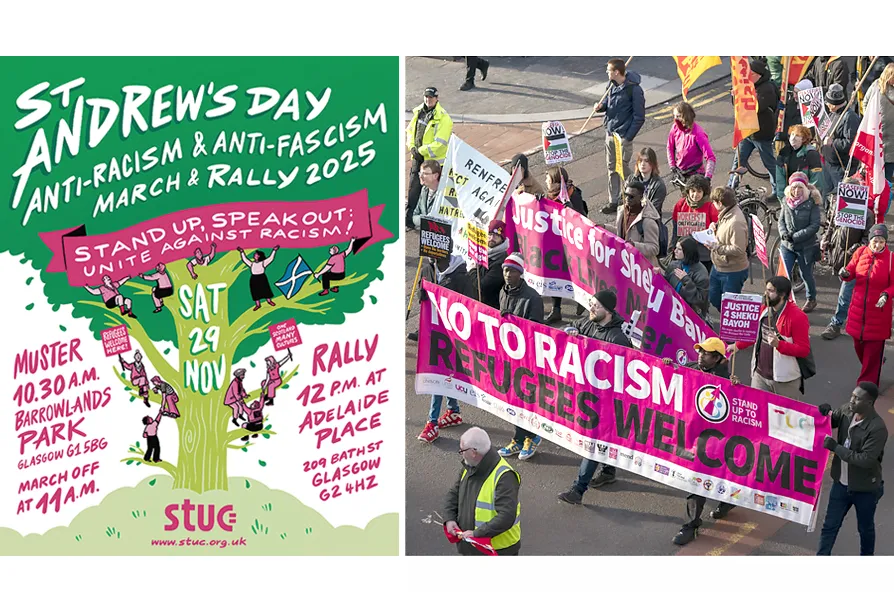
ROZ FOYER explains the significance and tradition of today’s St Andrew’s Day March and Rally