The social base of the old Tory Party has disappeared as surely as that of Labour, argues ANDREW MURRAY – today’s right are the debased offspring of a capitalism that speculates without investing and profits without producing


 Latest editorial
The Starmer-Trump NHS Betrayal
CLAUDIA WEBBE says the horrific price British patients will pay for this NHS deal is now clear — and there’s time to get out of it, if MPs will only force the issue
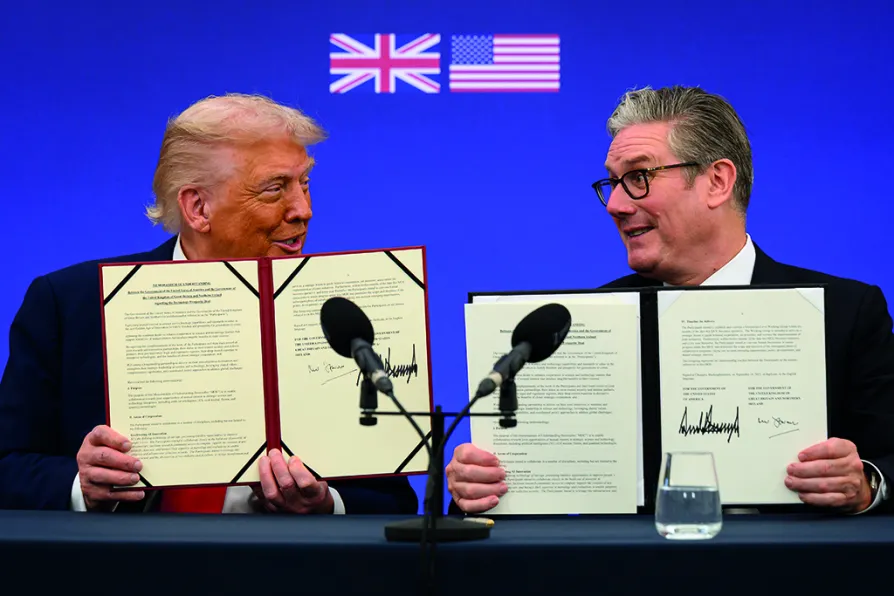 Selling us out: Keir Starmer signs a deal with Donald Trump

SEVIM DAGDELEN says European Nato states are escalating ever closer to direct conflict with a nuclear power, and sacrificing welfare states built up over a century to finance it
KENNY MacASKILL says the lines between party, government and Civil Service in Scotland have been blurred and we need a thorough investigation into how
IAN SINCLAIR examines the curious memory lapses across liberal media when it comes to British government crimes
STEPHEN ARNELL looks at some of the notorious political corruption cases from British history
ENRIQUE SANTIAGO ROMERO says the Colombian far-right’s election victory is deeply suspect — and the United States has its fingerprints all over it
History suggests apartheid ends not through appeals to conscience alone but through sustained economic and political pressure, says HUGH LANNING


IN DECEMBER 2025, Keir Starmer flew to Washington. He sat across from Donald Trump — the most openly reactionary leader of the world’s most powerful empire. And he made a deal.
On July 1 2026, the BMJ published a peer-reviewed analysis from the Universities of York and Liverpool and Christchurch Hospital that should have stopped this country cold. It found that the UK-US pharmaceutical trade deal agreed in December 2025 will divert £44.7 billion from the NHS over the next decade, producing 229,000 excess deaths by 2036. When the knock-on effect on adult social care is included, the figure rises to 291,000 preventable deaths.
That is more than twice the official death toll of the entire Covid-19 pandemic in Britain.
Effectively, the Starmer NHS deal will kill more people than Covid killed in Britain. Not by accident. Not by negligence. By knowingly diverting funds from the healthcare of working-class people to fill the coffers of pharmaceutical corporations whose shareholders are not waiting in any queue.
The mechanism is now a matter of public record. The full treaty text was published on GOV.UK on April 13 2026 — after the Easter recess, while Parliament was not sitting. Entitled “Arrangement between the United States of America and the United Kingdom on Pharmaceutical Pricing and Trade,” Section I commits Britain to doubling NHS spending on new branded medicines from 0.3 per cent of GDP to 0.6 per cent by 2036, with legally binding interim milestones: 0.35 per cent by 2028 and 0.40 per cent by 2030.
The NHS medicines budget must rise from 10 per cent to 12 per cent of total NHS spend. The BMJ researchers modelled what happens when £44.7bn is extracted from the broader NHS budget without new Treasury funding: cardiovascular services shrink, respiratory care is cut, cancer treatment is rationed.
These are the highest-volume treatment categories in the NHS. The people who will die are the people who use them most: working-class patients, older patients, racialised communities disproportionately affected by chronic disease.
The treaty also mandates, in Section II, that the rebate rate pharmaceutical companies pay back to the NHS under the Voluntary Scheme for Branded Medicines Pricing, Access and Growth is cut from 22.9 per cent in 2025 to 15 per cent. This is a reduction of nearly eight percentage points, written into a bilateral agreement with the United States, with no parliamentary vote. That is a direct, quantifiable transfer of public money to corporate shareholders, locked in by treaty.
In return for accepting this, Britain received three years of protection from US tariffs on pharmaceutical exports, running from January 2026 to January 2029. Independent analysts believe the US was unlikely to impose those tariffs in full regardless.
The deal also restructures Nice — the National Institute for Health and Care Excellence, Britain’s independent body for deciding which medicines represent value for money. The treaty mandates raising Nice’s cost-effectiveness threshold from £20,000-£30,000 to £25,000-£35,000 per quality-adjusted life year — the first increase in over 25 years, written directly into the bilateral arrangement.
Wes Streeting, as health secretary, offered three explicit public assurances before the deal was signed.
It would cost “only around £1 billion a year.” No NHS cuts would be made to fund it. And, in words that deserve to be held against the record permanently: “the NHS is not on the table.”
Every one of those assurances has proven false. The BMJ finds the annual cost will reach £8.8bn by 2036. The Department of Health, not the Treasury, confirmed it would bear the costs. The NHS is not only on the table. It has already been carved.
What makes this qualitatively distinct from ordinary political dishonesty is the method. As Guardian columnist Aditya Chakrabortty observed in his analysis published on July 2 2026: “Using a statutory instrument, they smuggled the entire thing into law.”
MPs never got to examine these changes. There was no parliamentary debate. No vote. The government refused to release its own impact assessment. The full text was published on a Thursday before Easter recess, when Parliament was not sitting.
A statutory instrument changed the law governing Nice’s cost-effectiveness determinations, granting the Health Secretary power to instruct Nice on thresholds — directly undermining the statutory independence of the body.
Thirty-one MPs signed a motion against this. Former Conservative health secretary Andrew Lansley warned in the Lords it may be illegal. Indeed, it can be argued that using secondary legislation to override the intent of primary legislation establishing Nice’s independence is unlawful.
The government’s response has been to dispute the BMJ’s figures while refusing to publish its own assessment.
So, the facts are clear, parliamentary debate was refused. MPs’ scrutiny was denied. A statutory instrument was used to rewrite Nice’s independence without a vote. Wes Streeting stood at that despatch box and promised: “The NHS is not on the table.” Yet in reality it was already sold.
This pattern of concealment has a companion story: Palantir. The US surveillance and AI company holds a £330 million contract to build the NHS Federated Data Platform, a £240m contract with the Ministry of Defence, and contracts with multiple UK police forces.
Imagine, the NHS data of every patient in England is being managed by Palantir. In the US Palantir powers Ice — the deportation machine currently hunting down migrant workers across America. Palantir also provides AI targeting capabilities to the Israeli military. This is scary enough but there is more.
In May, London Mayor Sadiq Khan blocked a £50m contract between Palantir and the Metropolitan Police, citing a “clear and serious breach” of procurement rules. Palantir threatened legal action. By late June, Khan had granted the company a 12-month pilot.
The company’s UK head is Louis Mosley, grandson of Sir Oswald Mosley, founder of the British Union of Fascists.
Palantir’s CEO Alex Karp quoted Oswald Mosley’s fascist speeches when headhunting him. This is the company that holds the health data of millions of NHS patients. It won its initial NHS foothold through emergency Covid contracts awarded without competitive tender.
What connects the NHS pharmaceutical deal, the Palantir contracts, the AI Growth Zones and the network of Freeports and Special Economic Zones quietly carving up British territory? A consistent political project: the transfer of public goods, public data and public sovereignty to private corporate actors, insulated from democratic accountability by secondary legislation, commercial confidentiality and the accelerating revolving door between government and the corporations it is meant to regulate.
There is one fact in the treaty text of the US-UK “Big Pharma” deal that the media has barely reported. Section VI, Paragraph 1 states: this arrangement may be terminated by either government by giving the other six months’ written notice.
The deal is not irreversible. It is not a structural cage. It is a political choice, and, with six months’ written notice, it can be reversed. Andy Burnham, near certain to succeed Starmer as prime minister, has not committed to giving that notice. The consequences of that silence are numbered.
The BMJ has counted them: 291,000 people in England, most with heart disease, cancer, respiratory illness, their lives cut short not by an indifferent virus but by a calculable, knowable, reversible political choice.
Cancel the treaty. Restore Nice’s statutory independence. Terminate Palantir’s public-sector contracts. Subject every future procurement of sensitive public data infrastructure to a full parliamentary vote. These are not radical demands. They are the minimum conditions for a government that governs in the interests of the people who elected it.
The people who will die under this deal are not shareholders. They are workers. They are the elderly. They are the racialised poor. The BMJ found the biggest death tolls will fall in cardiovascular disease, cancer, respiratory illness, gastrointestinal disease — these are, though not exclusively the diseases of poverty, pollution and overwork.
Six months’ written notice is what it takes to undo what has been done. It’s up to us, all of us, to demand this and say it loud and clear — Our NHS is not for sale.
Claudia Webbe was the Member of Parliament for Leicester East (2019 –2024).You can follow her at https://www.facebook.com/claudiaforLE/ and https://x.com/claudiawebbe

Similar stories
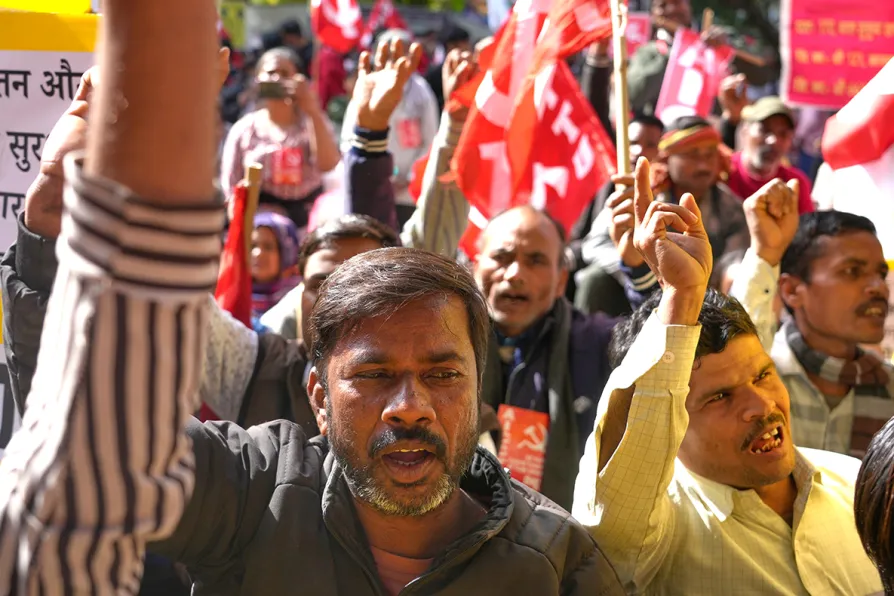
The biggest strike in global history is a template for our future. The silence tells you all you need to know, writes CLAUDIA WEBBE

1943-2025: How one man’s unfinished work reveals the lethal lie of ‘colour-blind’ medicine
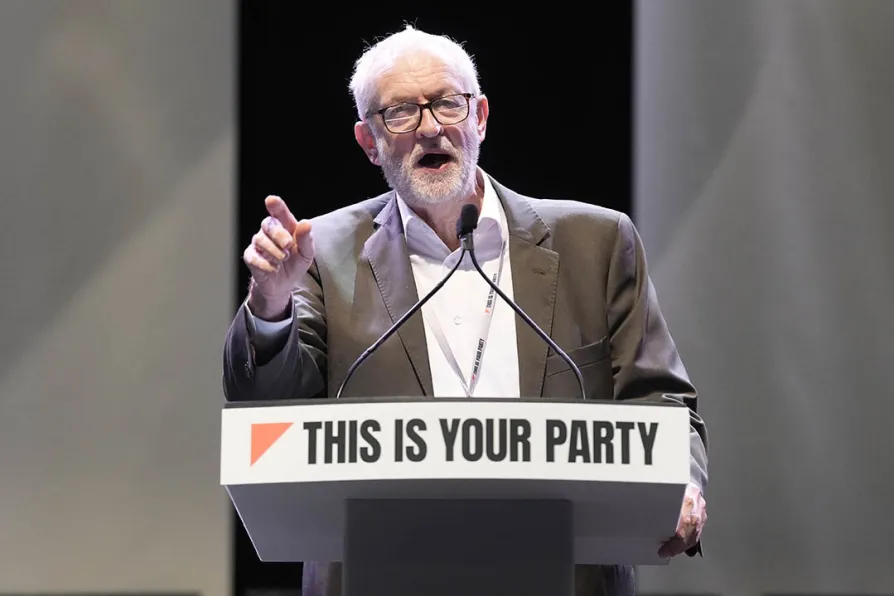
Your Party can become an antidote to Reform UK – but only by rooting itself in communities up and down the country, says CLAUDIA WEBBE
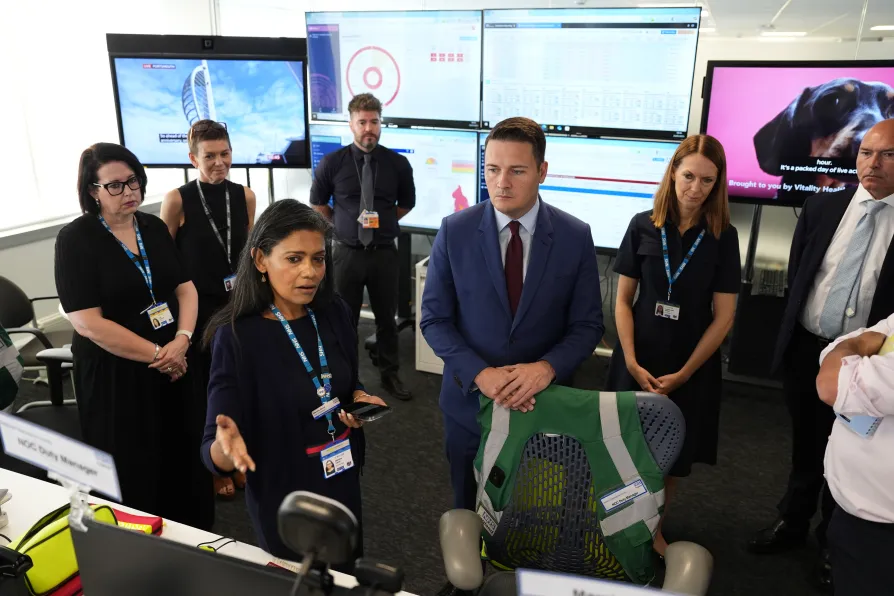
Politicians who continue to welcome contracts with US companies without considering the risks and consequences of total dependency in the years to come are undermining the raison d’etre of the NHS, argues Dr JOHN PUNTIS