

 Latest editorial
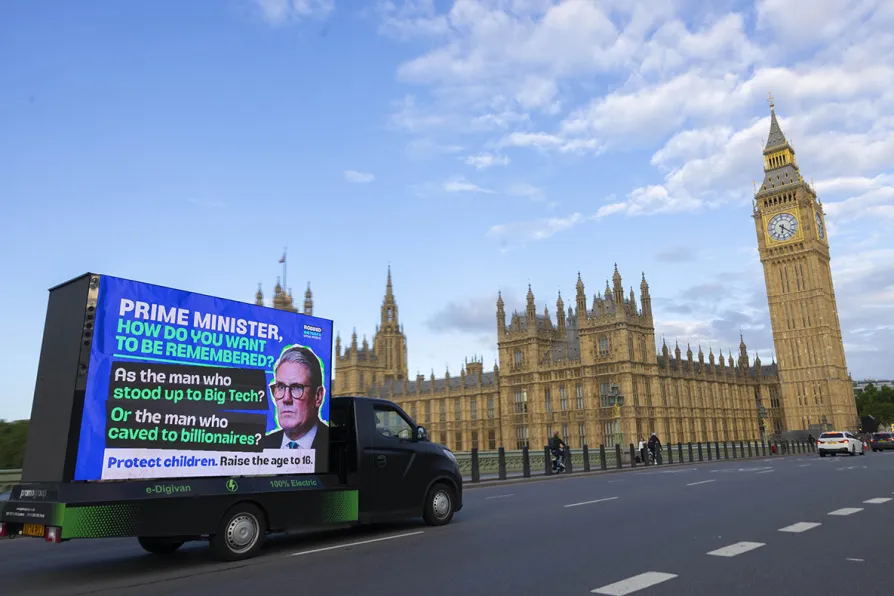 A mobile billboard outside Parliament displaying a message directed at the Prime Minister ahead of his decision on a proposed social media ban for under-16s, as part of the National Education Union's 'Big Tech's Little Victims' campaign, June 11, 2026


TEACHING unions welcomed the new under-16s social media ban today but called for the government to address big tech’s profits from harmful content.
PM Sir Keir Starmer announced the ban in response to concerns social media is unsafe, making children miserable and causing lasting damage to their mental health.
The restrictions, set to be passed by Christmas and in place by spring next year, will leave technology firms, rather than children, liable for enforcement action if they fail to comply.
There will also be measures to prevent children from chatting with adults on gaming and live-streaming platforms.
National Education Union general secretary Daniel Kebede said: “Raising the age of access on social media to 16 is the right call.
“For too long big tech companies have designed systems that hook children early, keep them online for as long as possible, and profit from their attention, even when it exposes them to harm.
“The test now is whether ministers are willing to keep standing up to big tech and enforce this properly.
“If the government is serious about putting children first, they must make this real, not allow it to become a promise that the platforms can just ignore.”
Teachers’ union NASUWT general secretary Matt Wrack warned the ban “will only be effective if it is workable and properly enforced. Schools cannot be left to police the online world or carry responsibility for failures by tech companies.”
He added: “We welcome the commitment to stronger age‑assurance requirements and tougher enforcement.
“But the government must now engage fully with the profession, parents and young people to ensure these proposals are deliverable.
“Clear guidance, proper consultation and sustained investment in digital safeguarding are essential. The government must also support a serious discussion to address the role of the tech companies making huge profits from promoting divisive, racist and misogynistic material.
“The problem is not children or schools, the problem is the design choices made by tech companies who have often prioritised engagement and views over protecting children and their wellbeing.”
Amnesty International, meanwhile, criticised the government’s decision to ban or restrict children and young people under 16 from accessing social media, warning that it risks treating children as the problem rather than addressing the platforms and business models that create online harms.
