The greatest threat to democracy may no longer come from political parties but from unelected tech oligarchs like Peter Thiel and his powerful Silicon Valley network, argues JOHN GREEN


 Latest editorial
The Timms Review: A radical blueprint for dismantling the disability lifeline
The government’s Pip review looks like a carefully managed exercise in legitimising future cuts to disability support, argues Dr DYLAN MURPHY
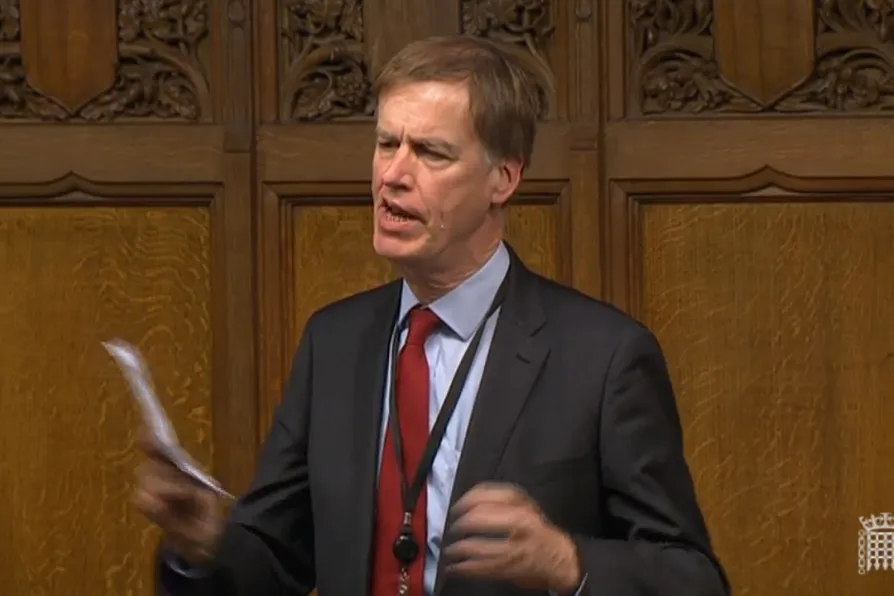 Labour Party MP Stephen Timms

Today’s interconnected conflicts are enriching the arms industry while pushing the entire world towards permanent militarisation, argues ROGER McKENZIE
by Nana Backland, Merseyside Morning Star Readers & Supporters Group
The Tories introduced the 50% strike ballot threshold to make industrial action harder. MATT WRACK argues that a Labour government has no justification for leaving it on the statute book


THE Labour government’s latest offensive against the disabled community has arrived in the form of the Timms Review of personal independence payment (Pip).
Cloaked in the language of “co-production” and “modernisation,” the interim report released on July 9 2026, represents a calculated move to prepare the ground for significant cuts to a benefit that serves as an essential lifeline for four million disabled people across the UK.
For those of us living with disabilities and in receipt of benefits, the “radical” and “bold” reforms promised by the steering group are not a cause for optimism but a signal of an impending assault on our independence and dignity.
The interim report, led by Stephen Timms and a hand-picked steering group which doesn’t include anyone in receipt of means-tested benefits, admits what disabled people have known for over a decade: the current Pip system is “dehumanising,” “overly complex,” and “unfit for purpose.”
It acknowledges that the assessment process is a source of immense trauma, particularly for those with fluctuating conditions or mental health challenges.
However, we must look past this performative empathy. The historical record of welfare “reform” in this country reveals that such admissions are often the prelude to narrowing eligibility and reducing the state’s commitment to its most vulnerable citizens.
Meanwhile, the same Labour government is committed to spending billions more on war as it gears up for a future confrontation with Russia, which has the largest nuclear arsenal on the planet.
A critical analysis by the advocacy group Benefits and Work highlights the sheer absurdity of the review’s timeline. With little time left to design and test a “new system” before the final report in the autumn, it is clear that the “radical” changes have already been decided in the corridors of the Department for Work and Pensions (DWP). This is not a genuine exercise in co-production; it is a frantic attempt to provide a veneer of legitimacy to a pre-packaged agenda of austerity.
The selective use of evidence within the interim report is particularly damning. While the report acknowledges that 90 per cent of responses regarding the process were negative, it gives disproportionate prominence to a tiny minority of voices that align with the government’s desire to slash spending. For instance, the report highlights the views of just 8 per cent of respondents who expressed concern about the “rising cost of Pip” and suggested that eligibility should be “tightly focused.”
Even more egregious is the inclusion of a “small number of responses” claiming that Pip is “overgenerous,” citing the Motability scheme and the supposed presence of “BMW or Audi cars” on disabled people’s driveways.
This is a classic tactic of the neoliberal state: amplify the voices of a prejudiced few to justify the punishment of the many. By giving weight to unevidenced accusations of “overgenerosity” and “lack of incentive to find formal work,” the Timms Review is actively cultivating a narrative of the “undeserving” disabled person.
This rhetoric is designed to manufacture public consent for a tighter, more restrictive regime that will inevitably leave millions without the support they need to manage the extra costs of their conditions.
The review’s shift in focus towards “participation” and “work” is perhaps the most dangerous development. Pip was originally designed as a non-means-tested contribution to the extra costs of living with a disability — costs that exist regardless of whether a person is in employment.
By placing a “clearer emphasis on supporting independent living and participation in society, for example through volunteering [and] work,” the government is subtly moving the goalposts.
The fear is that Pip will be transformed from a disability cost benefit into a conditional employment support tool. As many disabled activists have rightly pointed out, linking a vital lifeline to “participation” metrics is a fundamental betrayal of the social model of disability and the principles of independent living.
Furthermore, the report’s treatment of mental health and neurodivergence is deeply regressive. It chooses to highlight a minority view — held by only 2 per cent of respondents — that the increased prevalence of mental health conditions is due to “exaggeration or overdiagnosis.”
Quoting an individual who claims there are “too many people claiming for what I would call everyday anxiety problems” is a direct insult to the millions of young people and adults struggling with debilitating mental health challenges. This is not “radical thinking” — it is the recycling of Victorian-era attitudes toward “malingering” and the “undeserving poor’’updated for the 21st century austerity state.
The reality is that Pip is an essential pillar of the welfare state, one that allows disabled people to participate in a society that is often hostile to their needs. The extra costs of disability — from specialised transport and equipment to higher energy bills and care — are not “discretionary.” They are the price of survival in a capitalist system that fails to provide adequate public services.
By seeking to “tighten” eligibility and “refine” the assessment process within a short time-frame window, the Timms Review is preparing to pull the rug out from under four million people.
We must also view this review within the broader context of the government’s economic strategy. Just as the Starmer administration continued to prioritise military spending and the interests of the financial elite, it sought to balance the books on the backs of the disabled.
The “radical” reforms promised by Timms are symptomatic of a government that has abandoned any pretence of protecting the social contract. Instead, it is doubling down on a system that views disabled people as a fiscal burden to be managed rather than as citizens with rights and dignity.
For the disabled community, the message is clear: we are entering a new and dangerous phase of the war on welfare. The Timms Review is not a path to a more humane system; it is a blueprint for a more efficient machine for making cuts. We must reject the false choice between a “dehumanising” current system and a “radical” new one that promises only more hardship.
True reform would mean an end to the hostile environment of the DWP which has sanctioned over 600,000 people since Labour came to power, an unconditional commitment to the extra costs of disability, and a system built on the genuine expertise of disabled people — not a rush to satisfy the Treasury.
Anything less is a betrayal of the four million people for whom Pip is the only thing standing between independence and destitution. The trade unions must oppose this class war on a central pillar of the welfare state. They must start defending the rights of disabled claimants instead of clinging to the coat-tails of a morally bankrupt Labour Party.
Dr Dylan Murphy is a labour movement historian and member of Unite Community and Disabled People Against Cuts.

Similar stories



Plans to delay access to the universal credit health element until age 22 have triggered fierce opposition from disabled people’s groups, who warn it would deepen poverty and entrench discrimination against young disabled people under the guise of ‘encouraging work.’ DYLAN MURPHY reports

A new report from the Citizens Advice destroys the government narrative about disabled people ‘choosing’ not to work, showing the £3,000 annual cuts will create a two-tiered system based on claim dates rather than needs, writes DYLAN MURPHY