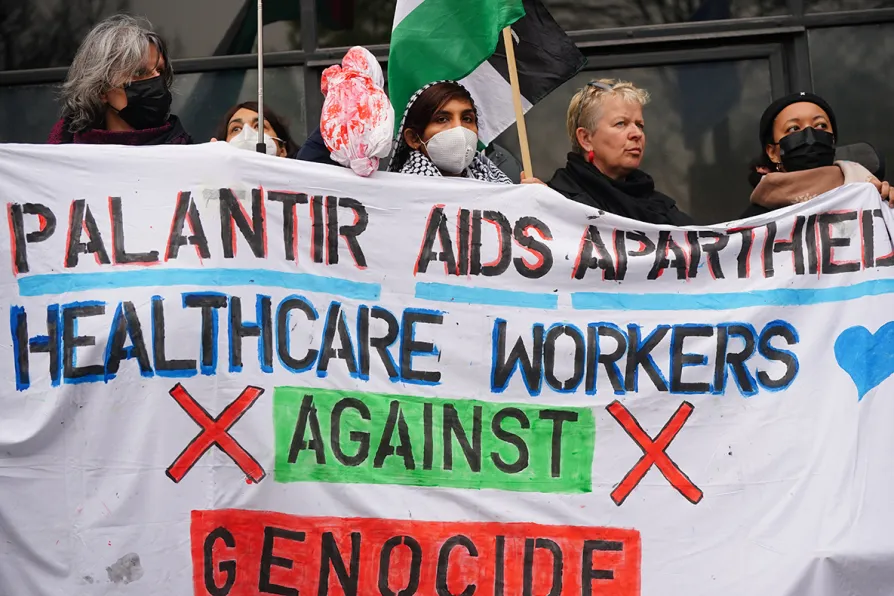
While international actors discuss governance and reconstruction, Netanyahu has made it clear that Israel has no intention of ending its military occupation, says RAMZY BAROUD

The Tolpuddle Martyrs showed it’s ordinary people who change the world, not new prime ministers
JENN FORBES of Your Party says many will welcome the end of Keir Starmer’s leadership, but it’s time we stopped leaving politics to the politicians

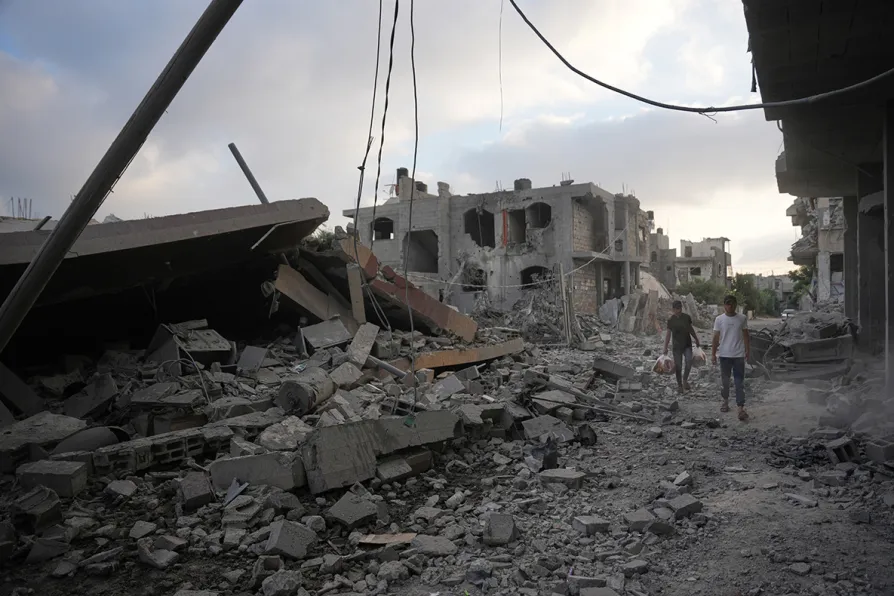
NICK WRIGHT continues his series analysing the trends in European politics
We have the alternative economics, histories of our struggles and the confidence to change the world
General Federation of Trade Unions assistant general secretary HENRY FOWLER reports on the final day from the GFTU’s residential Summer School at the Workers’ Retreat, Quorn Grange Hotel
Capitalism has exploited — and polluted — our natural resources for too long, it’s time we treated our rivers as living beings, writes MIRIUM GAUNTLETT, LIAM SHAW and ROX MIDDLETON
Treating the Clacton by-election as a joke risks reinforcing the Reform leader’s claim to be the victim of an out-of-touch Establishment, argues JOHN McINALLY
MPs and others called for the urgent release of tortured Palestinian doctor, Hussam Abu Safiya, held hostage by Israel and reportedly near death, reports LINDA PENTZ GUNTER


EACH year at Tolpuddle, we return to a small Dorset village to remember an extraordinary act of collective courage.
The Tolpuddle Martyrs remind us that the rights we enjoy today were not inevitable, nor were they gifted by those who held power. They were fought for, organised for and won by ordinary people who dared to imagine that democracy could mean more than deference to those above them.
Their struggle was never simply about wages or working conditions. It was about who gets to shape the society we live in.
It was a demand not merely to be represented, but to participate, to organise and to exercise power collectively.
In that sense, Tolpuddle is not simply a commemoration of our past, but a reminder that democracy is always unfinished work.
Nearly two centuries later, the questions they asked remain strikingly familiar. Who holds power? Who gets to exercise it? And who is left standing outside the room when the most consequential decisions about our collective future are made?
These are not abstract questions. They lie at the heart of the political moment we find ourselves living through today.
Keir Starmer’s resignation marks the end of one political chapter and the beginning of another.
Yet before he has even left office, it appears Britain is heading towards a de facto coronation rather than a genuine democratic contest of ideas. Andy Burnham will become Prime Minister without a leadership election, without members casting a vote and without the kind of national conversation that might have allowed us to ask bigger questions about the political direction of our country.
Many will welcome his appointment and where progressive change is delivered it should be welcomed and fought for.
Governments matter because political choices matter. They shape millions of lives every single day. But if the last decade has taught us anything, it is that our political priorities cannot begin and end with who happens to occupy Number 10.
For too long, British politics has encouraged us to think that change happens from the top down. We are asked to invest our hopes in leaders, parties and electoral cycles as though justice is something that arrives every five years with the right result at the ballot box. When those hopes are disappointed, disillusionment follows close behind. We move from one leadership contest to another, one political moment to the next, while the harder, slower and more enduring work of building democratic power remains unfinished.
Keir Starmer did not create Britain’s political crisis, nor will his resignation bring it to an end. Yet his leadership came to embody something much larger than one political project or one political party: the growing tendency to reduce politics itself to management rather than transformation. Politics has increasingly become something that is done to people rather than something they actively shape together. Citizens become voters, voters become consumers and democracy becomes something that happens at election time before power retreats once again behind the walls of Westminster.
Has Labour been changed irreversibly by the Starmer years? In many respects, yes. Political parties are shaped by the choices they make and the periods they live through. Labour’s political culture, its relationship with the broader left and its understanding of what government is for have all been profoundly altered over recent years. No future leader will simply turn back the clock.
But perhaps we should stop asking whether politics can return to where it once was and instead ask where it must go next.
The political priorities of our time are much bigger than the future of any one political party. Living standards continue to stagnate while wealth becomes increasingly concentrated. Workers are expected to accept insecurity as the price of economic success. Across Europe and here at home, the far-right is exploiting legitimate anger born of inequality and political exclusion.
Democratic freedoms, including the right to protest and organise collectively, are increasingly constrained. Internationally, we continue to witness humanitarian catastrophes unfold while peace and solidarity are too often treated as matters of political convenience rather than moral principle.
These challenges demand more than better management from Westminster, whoever happens to sit around the Cabinet table. They demand that we begin rebuilding democratic life itself.
That means rebuilding workers’ power through our trade unions, strengthening community organising and investing once again in the institutions and movements that have always driven progressive change. It means recognising that democracy is not simply an event but a practice, something that should be lived every day in our workplaces, our communities and our political movements.
The Tolpuddle Martyrs did not organise because they believed the right prime minister would eventually arrive.
They organised because they understood that political power is never gifted from above. It is built patiently, imperfectly and collectively by ordinary people acting together in pursuit of something better.
That remains as true today as it was in 1834.
Jenn Forbes is chair of the Your Party central executive committee.

Similar stories