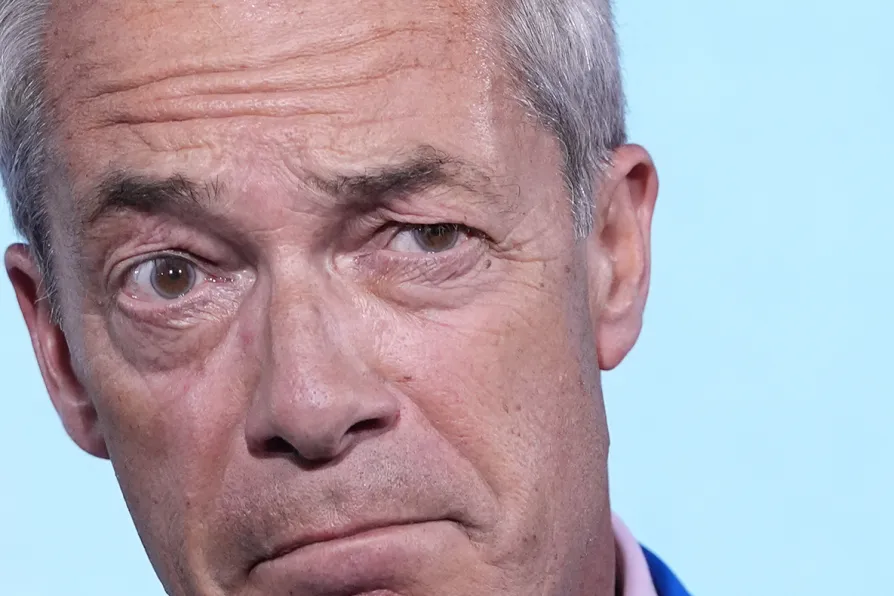
A new generation of right-wing politicians have shifted from promoting deregulation to championing anti-migrant politics warns SOLOMON HUGHES


 Latest editorial

Twelve lives against fascism
Thousands of remarkable Britons left ordinary lives behind to join the struggle against Franco. Here is a snapshot of those who answered the call
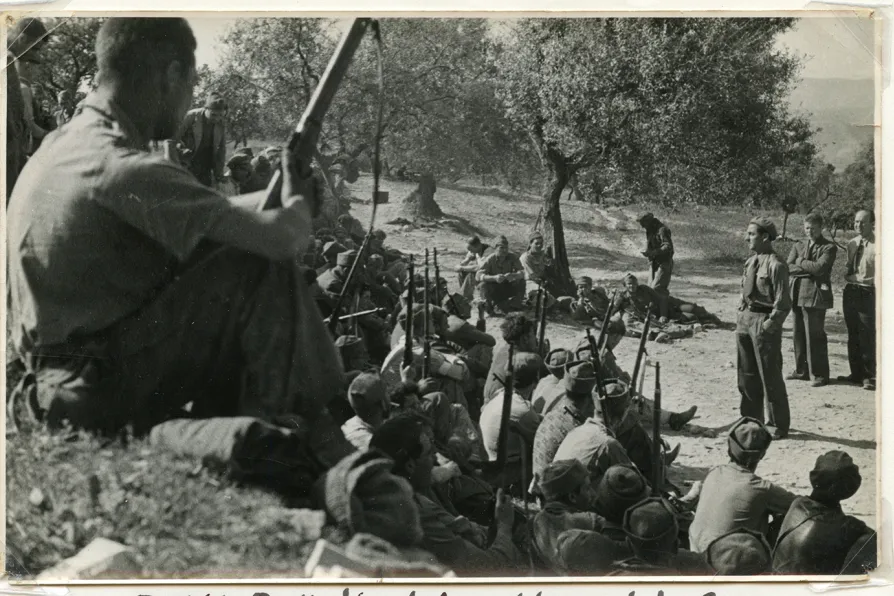 Sam Wild addresses the British Battalion
[Marx Memorial Library]
Sam Wild addresses the British Battalion
[Marx Memorial Library]
by the Greater Manchester Workers’ and Tenants’ Association
The US relationship with Israel has evolved into a strategic liability, argues RAMZY BAROUD
A champion motorcyclist, trade union organiser and communist, Clem Beckett went from Britain’s speedway tracks to the battlefields of Spain, where he gave his life resisting Franco’s forces at Jarama. GEOFF BOTTOMS pays tribute to this remarkable anti-fascist
The greatest threat to democracy may no longer come from political parties but from unelected tech oligarchs like Peter Thiel and his powerful Silicon Valley network, argues JOHN GREEN
Claiming to ease a fertiliser shortage, the Trump administration has suspended tariffs on Moroccan phosphate imports – deepening US support for the Morocco’s control over Sahrawi territory, writes LUKE ROTELLO


Bob Cooney (1907-84) was born in Sunderland to Scottish parents. Raised in Aberdeen, he cut his teeth disrupting Blackshirt meetings, which on one occasion led to his arrest and imprisonment. He served in Spain from October 1937 to December 1938, becoming the British Battalion’s highly regarded political commissar. After the war he was blacklisted from the building trades, forcing him to move to Birmingham to work as a crane driver. All the while he wrote songs and played in folk clubs.
Felicia Browne (1904-36) was the first British casualty of the Spanish civil war. As a member of a communist militia she was killed on August 22/23 1936 while on a mission to blow up an enemy munitions train in Aragon.
“I am a member of the London Communists and can fight as well as any man,” she declared beforehand. Born in Thames Ditton, Surrey, she was a talented artist, having trained at the Slade art school. She joined the Communist Party in 1933 following a visit to Berlin.
John Cornford (1915-36) was a brilliant poet, born in Cambridge into an academic and literary family. He was one of the first volunteers to arrive in Spain, joining the POUM militia and later the International Brigades. He died while fighting at Lopera, near Cordoba, with his friend and fellow communist, the writer Ralph Fox. Cornford’s last poem, written to his girlfriend Margot Heinemann, begins: Heart of the heartless world / Dear heart, the thought of you / Is the pain at my side / The shadow that chills my view.
Len Crome (1909-2001) was born Lazar Krom in Latvia, then part of imperial Russia. He studied medicine at Edinburgh and was a junior doctor in Blackburn when he volunteered to go to Spain in January 1937. He rose to become head of medical services in the 35th Division, which included the International Brigades, serving until October 1938. In the second world war he was a captain in the Royal Army Medical Corps and was awarded the Military Cross for his “courage and example” during the Allied advance through Italy.
Harry Dobson (1907-38) was a south Wales miner and prominent communist and union activist before joining the International Brigades in June 1937. Seriously wounded in the Battle of the Ebro, he died in a cave hospital at Bisbal de Falset. One of his carers was visiting former Labour MP Leah Manning. Her memoir recalled: “I recognised him as a comrade whom I had met at a by-election in south Wales, a miner from Tonypandy … so I determined to stay by him until the end.”
Bert Fletcher (1909-64), a railway worker born in Nuneaton but living in Birmingham, was captured by Italian troops in Aragon in March 1938, only a few weeks after joining the British Battalion. He spent nearly a year in the notorious San Pedro de Cardena prison camp near Burgos before being exchanged for Italian prisoners or war. Active in the NUR rail union, he was assistant secretary of the Midlands region when he was killed in a workplace accident at a depot in Birmingham.
Charlie Hutchison (1918-93) was one of the youngest volunteers, aged only 18 when he arrived in Spain in November 1936. Of African-English heritage, he was a lorry driver and chaired his Young Communist League branch in Fulham. He served on the Cordoba, Madrid, Teruel, Aragon and Ebro fronts, much of the time as an ambulance driver, returning home in December 1938. Interviewed later in life about why he went to Spain, he said: “Fascism meant hunger and war.”
Wilf Jobling (1909-37) was a leading political and union activist in north-east England, where he was born in Chopwell, near Newcastle. After studying at the Lenin School in Moscow, he worked full time for the Communist Party, organising hunger marches — he was arrested on one of them and jailed — and clashing with the British Union of Fascists. He travelled to Spain in January 1937 and as a company commander in the British Battalion was killed on February 27 in fighting at Jarama.
Jack Jones (1913-2009) was a Liverpool docker who in 1968 was elected general secretary of the Transport & General Workers’ Union, now part of Unite. A Labour councillor, he travelled to Spain in 1938 and was wounded while fighting at the Battle of the Ebro. He married Evelyn Taylor, the widow of his friend George Brown, who had been killed with the British Battalion at Brunete in 1937. As a TGWU official he championed the rights of shop stewards and in 1974 helped formulate the Labour government’s Health and Safety at Work Act.
Annie Murray (1906-96) served as a nurse from September 1936 until the end of the war in 1939. She was born into a farming family in Tornaveen, Aberdeenshire, one of eight children, and joined the Communist Party while training at Edinburgh Royal Infirmary. Brothers George and Tom Murray were volunteers in the British Battalion. Both were injured during the Battle of the Ebro and she helped nurse them to recovery.
Thora Silverthorne (1910-99) was born in Abertillery, the daughter of a coalminer. She trained as a nurse at Oxford’s Radcliffe Infirmary and went to Spain in August 1936, where she worked as a front-line nurse until September 1937. On her return she set up the National Association of Nurses, the first trade union for nurses, later to merge with the National Union of Public Employees, now part of Unison. As secretary of the Socialist Medical Association she advised Clem Attlee on the creation of the NHS.
Sam Wild (1908-83), a labourer and former merchant seaman from Manchester, was regarded as the British Battalion’s finest commander. Decorated with the Medal of Valour for his actions during the Battle of the Ebro in the summer of 1938, Sam was, according to Glaswegian volunteer Garry McCartney, “a great person and the battalion would have done anything that Sam asked them to do.” He arrived in Spain in January 1937 and led the battalion home at the end of the following year, pledging to continue the fight “on other fronts” on behalf of the Spanish people.

Similar stories
![Richard Baxell speaking at the Marx Memorial Library in London [Pic: Karl Weiss]](https://morningstaronline.co.uk/sites/default/files/styles/desktop/public/2026-07/RichardBaxell22Jul23.jpeg.webp?itok=HCh8iPRb)
Driven by anti-fascism and anger at Britain’s policy of non-intervention, thousands volunteered to fight in the Spanish civil war. Historian RICHARD BAXELL reflects on their sacrifices and enduring significance
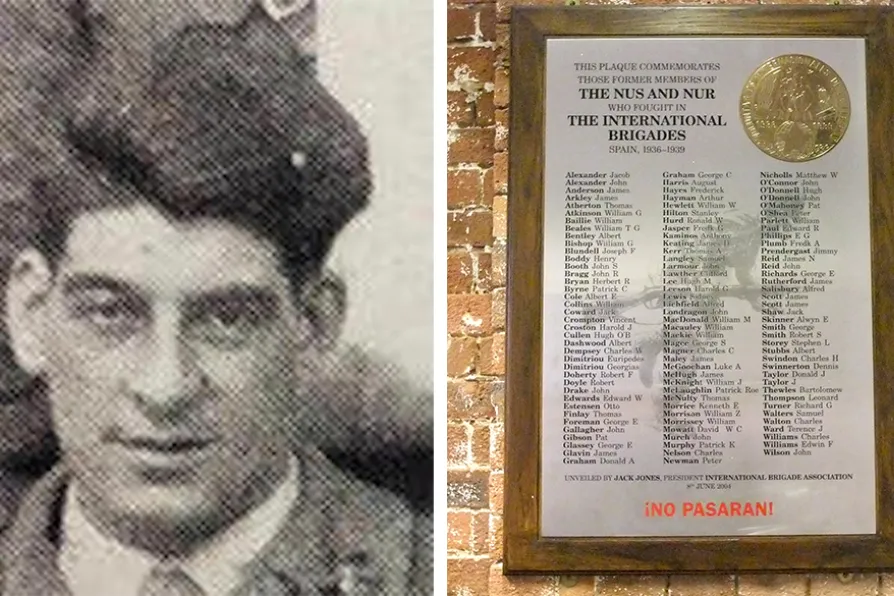
RMT general secretary Eddie Dempsey explains why his union is proud of its members who fought in Spain
![Harry Pollitt (right) with International Brigade volunteer David Guest, who was killed at the Ebro in July 1938 [Pic: Marx Memorial Library]](https://morningstaronline.co.uk/sites/default/files/styles/desktop/public/2026-07/a-2_a_50b_Harry%20Pollitt_David_Guest.jpg.webp?itok=Ag0u-8n5)
ALEX GORDON applauds the leading role played by Harry Pollitt and the Communist Party in the fight against fascism in Spain and salutes the memory of the International Brigades
![Meirian Jump with MML archivist Matt Dunne [Pic: Marx Memorial Library]](https://morningstaronline.co.uk/sites/default/files/styles/desktop/public/2026-07/image.png.webp?itok=EO4HHX_7)
The Marx Memorial Library’s Spanish Collection remains a powerful tool for the working-class movement today, writes MML director MEIRIAN JUMP