The basis for 20th-century social democracy in Britain is gone, argues ANDREW MURRAY – but there are measures a Burnham government could take that would break with neoliberalism


 Latest editorial
The Australian learning curve
Phil Katz’s book on Tom Mann, abridged for the Morning Star by CHLOE MANSOLA and JASMINE NIBLETT, carries a message of solidarity from the coal miners and energy union of New South Wales, Australia. Read on to find out why
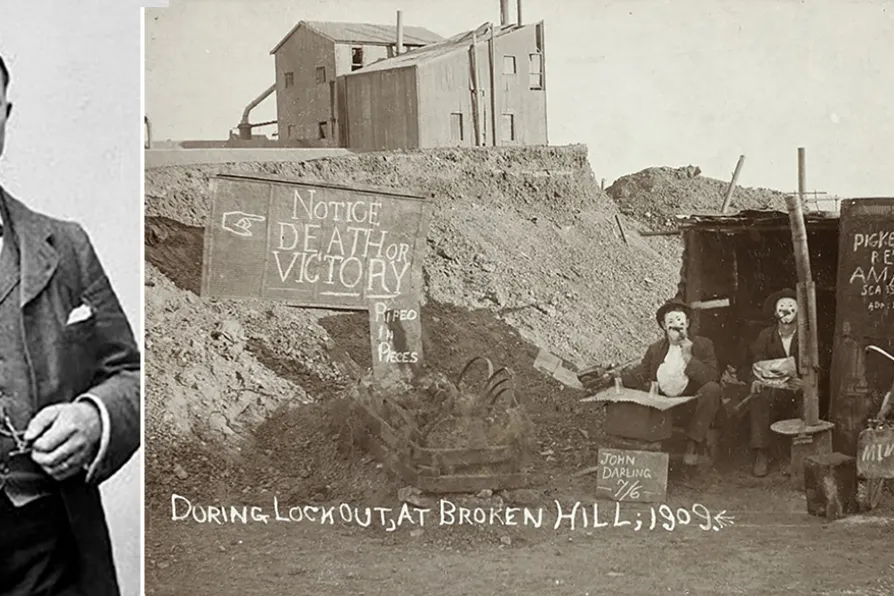 ALL FOR ONE ONE FOR ALL: (L to R) Tom Mann; Strikers during lockout, at Broken Hill, 1909, note masks were worn to impede identification
[(L to R) Public domain and State Library of New South Wales/Public domain]
ALL FOR ONE ONE FOR ALL: (L to R) Tom Mann; Strikers during lockout, at Broken Hill, 1909, note masks were worn to impede identification
[(L to R) Public domain and State Library of New South Wales/Public domain]
TONY BURKE pays tribute to a dedicated trade unionist and true internationalist who helped organise workers from Britain to Bangladesh
NASUWT leader MATT WRACK says schools are crying out for serious investment — and there are other immediate changes a new prime minister could and should enact
Keir Starmer’s resignation speech seemed to be coming from a different universe, or maybe it was just a fanfaronade of falsehoods, writes LINDA PENTZ GUNTER
Starmer will be judged on his record, but it would be wrong to view him in isolation from the crisis of the British political establishment, says the COMMUNIST PARTY in its official statement on the PM’s resignation
Over 1,000 hostile US sanctions remain in place on Venezuela, while Britain continues its colonial theft of gold, writes MATT WILLGRESS


TOM MANN travelled to Australia from September 1902. His union membership was now transferred to the Melbourne branch of the engineering union.
He had at the core of his thinking, class organisation in the form of trade unions. With unions at the centre of strategy, workers would exert growing power and establish influence in municipal government, co-operatives, and in legislation, through limited parliamentary action.
How could it be, he asked, in a time when wealth was greater than ever, that poverty had become endemic?

Similar stories
In the final part of a serialisation of his new book, JOHN McINALLY explains how in 2018, after years spent rebuilding the PCS into a leading force against austerity, a damaging rupture emerged from within the union’s own left wing
In part IV of a serialisation of his new book, JOHN McINALLY tells how austerity minister Francis Maude’s attempt to destroy the PCS Civil Service union totally backfired

In part II of a serialisation of his new book, JOHN McINALLY explores how witch-hunting drives took hold in the Civil Service as the cold war emerged in the wake of WWII
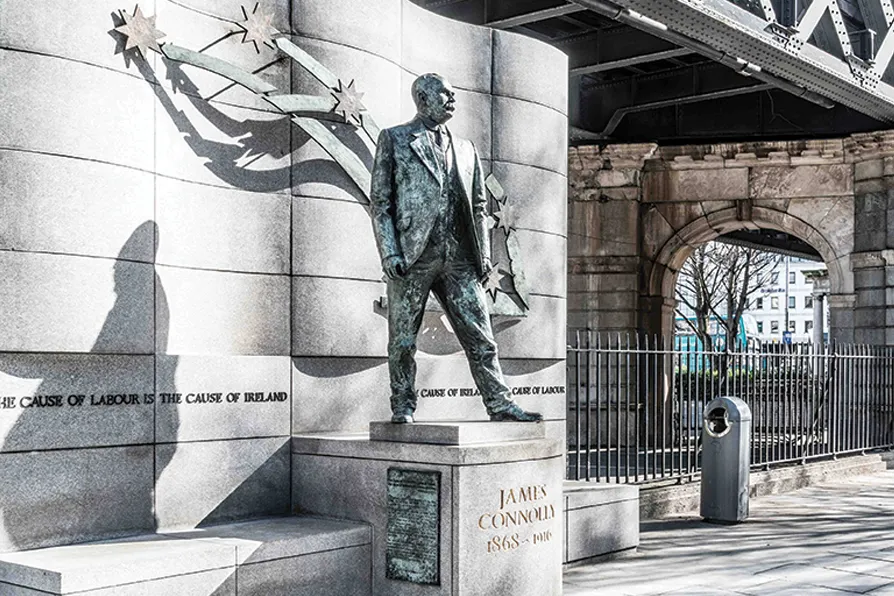
A new group within the NEU is preparing the labour movement for a conversation on Irish unity by arguing that true liberation must be rooted in working-class solidarity and anti-sectarianism, writes ROBERT POOLE