The new Prime Minister must abandon decades of automatic support for US foreign policy, which makes us all less safe, argues DIANE ABBOTT MP


 Latest editorial

How the West ‘sanctions’ China
PRABHAT PATNAIK looks at how China has become a global competitor to be thwarted at all costs
 AHEAD OF THE WEST: China Energy Engineering Corporation project, 2022
[Csp.guru/CC]
AHEAD OF THE WEST: China Energy Engineering Corporation project, 2022
[Csp.guru/CC]

Media Lens at 25: David Cromwell and David Edwards reflect on a quarter-century of media criticism, explaining why independent journalism is more important than ever
by Weyman Bennett and Maz’s family
The International Court of Justice has delivered its clearest ruling yet that the right to strike is protected under international law, write Professor TONIA NOVITZ, Professor KEITH EWING and Lord JOHN HENDY KC
Emergency phone alerts could help Britain respond to rising wildfire risk, but Australia’s experience suggests they work best as part of a broader strategy, write ELLIOT CONVERY-FISHER and KATE PARKINS
A champion motorcyclist, trade union organiser and communist, Clem Beckett went from Britain’s speedway tracks to the battlefields of Spain, where he gave his life resisting Franco’s forces at Jarama. GEOFF BOTTOMS pays tribute to this remarkable anti-fascist


MANY economists these days talk of a process of “de-globalisation” taking place; some others talk of the neoliberal regime of yesteryear no longer existing.
Of course, nothing remains the same forever: as the Greek philosopher Heraclitus said, “you cannot step into the same river twice.” Some change in the neoliberal order is inevitable with the passage of time.
But the real point is: has the analytical frame used for understanding the economic reality of the contemporary world, with a view to changing it, become obsolete and hence in need of serious revision?

Similar stories
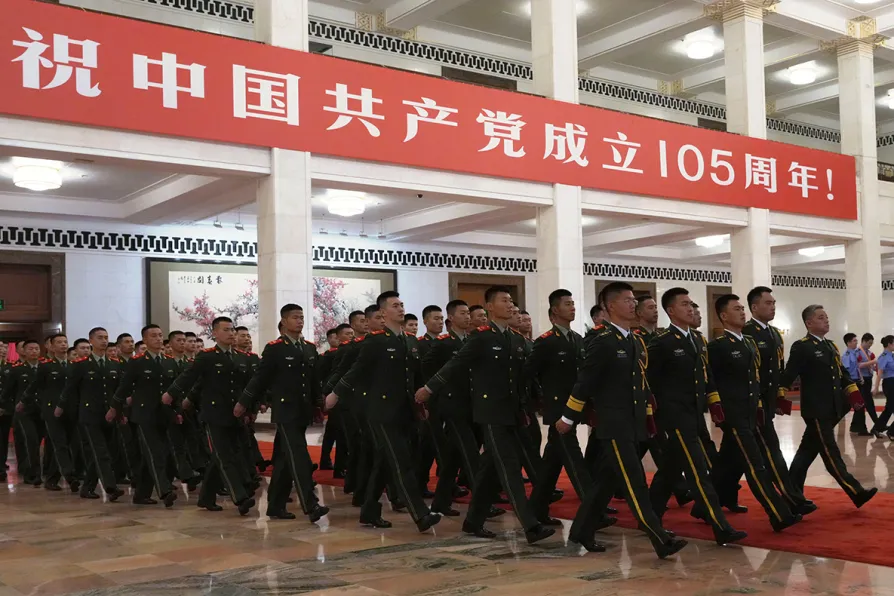
Marking milestones in the histories of China and the United States, this week offers a chance to examine two very different visions of the international order, says CARLOS MARTINEZ

Friedrich Merz’s call for a new Plaza Accord ignores how Washington’s 1985 currency ambush destroyed Japan without fixing US deficits — China, a sovereign socialist state with 1.4 billion consumers, cannot be bullied the same way, writes CARLOS MARTINEZ

Western nations’ increasingly aggressive stance is not prompted by any increase in security threats against these countries — rather, it is caused by a desire to bring about regime changes against governments that pose a threat to the hegemony of imperialism, writes PRABHAT PATNAIK

FRANCISCO DOMINGUEZ says the US’s bullying conduct in what it considers its backyard is a bid to reassert imperial primacy over a rising China — but it faces huge resistance