

 Latest editorial
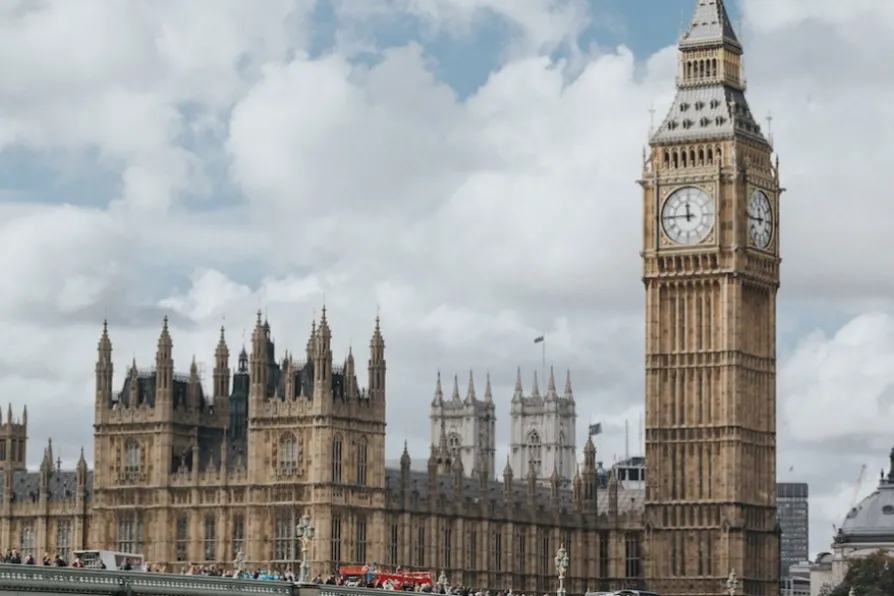 [Marcin Nowak / Creative Commons]


WHAT a sorry picture parliamentary politics presents right now. Consider the last week alone:
The man who was a year ago prime minister has fled Parliament rather than face charges relating to his mendacity and law-breaking. Two of Boris Johnson’s acolytes have also quit in apparent solidarity with the sybaritic swindler.
Nicola Sturgeon, the woman who led the Scottish government until earlier this year, has been arrested in the course of a police probe into financial corruption in the SNP. She was later released without charge in a continuing investigation.
And two Labour MPs were suspended, in one case indefinitely on charges relating to sexual harassment, while in the other rumours swirl. Again, neither have yet been convicted of anything.
Allegations of sexual misconduct have now been raised against dozens of serving parliamentarians altogether, many of them getting off scot-free.
This, it seems, is the new normal. The days when elected politicians were assumed to be respectable, however deplorable their performance in office, are long gone.
Of course, none of the vices depicted in this squalid tableau are new. Lying, venality and sexual misconduct pre-date neoliberalism by millennia.
Nevertheless, the present swamp relates to the decline of parliamentarism in the age of neoliberal capitalism.
Firstly, it speaks to the isolation of parliamentary representatives and their parties from the mass of the people. Actual accountability is replaced by demagogy and personality politics — the pioneer of this internationally was Silvio Berlusconi, the media magnate and former Italian prime minister, who died yesterday.
The parties, detached from the masses, are increasingly forced to depend on a handful of rich donors to fund political operations which themselves are increasingly driven by remote techniques and strategies isolated from activists in communities.
MPs themselves operate surrounded by lobbyists and senior civil servants eyeing up more remunerative work in the private sector. Parliamentarians have little role beyond enabling the policies which promote the accumulation of capital and rampant inequality.
This is a scenario which indulges rather than constricts all manner of abuse of power and breeds an elite of entitled politicians who do not believe themselves bound by any regular rules of conduct. Johnson is just the most lurid example.
So to treat these swirling scandals as isolated aberrations misses the menace they pose to democracy.
We are seeing the brazen development of an in-it-for-myself parliamentary clique connected to money-machine parties, marketing themselves either by sophisticated methods of populist propaganda or as merely managerial operatives.
They are not agents of change, nor even motivated by public service. The height of their ambitions appears to be to build a sufficient reputation with big money to move on to greener pastures in the direct service of monopoly capital, ideally before they get their collars felt.
Democracy in Britain is above all the product of popular struggle, and its main guardian is the labour movement. Yet the movement pays too little attention to the attritional threats to democracy — it is straightforward and correct to challenge overt authoritarianism by the right, of which examples abound, yet it is also necessary to dig deeper.
A much stronger right of recall might help, as would a serious effort to drive money out of politics. But the key is to find the means to organically connect the exercise of power with the people themselves, including mechanisms for the far more regular and potent supervision of delegated representatives.
Such measures would not eliminate human weakness. But they could uproot the nexus of money and abuse corrupting democracy. Ultimately they depend on breaking with capitalist class power, of which parliamentarism is merely a now-degraded expression.


Our political sphere, stripped of its popular component by decades of neoliberalism, sits apart from the public, writes COLL MCCAIL citing a telling parallel with the writings of French revolutionary Abbe Sieyes
ANSELM ELDERGILL is a member of Your Party and he suggests how the new party should reform Britain’s constitution

In the run-up to the Communist Party congress in November ROB GRIFFITHS outlines a few ideas regarding its participation in the elections of May 2026