Latest editorial
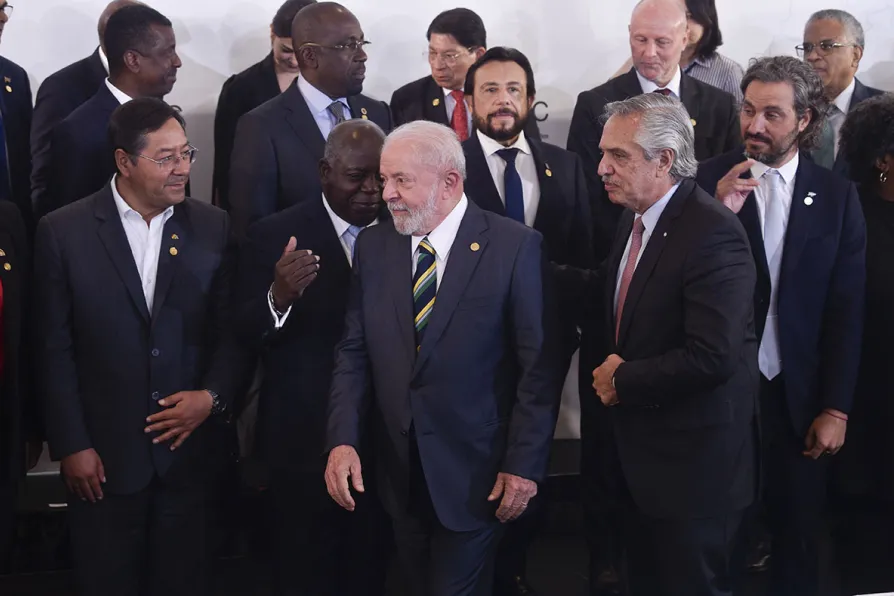 Leaders, front row from left: Bolivia's President Luis Arce, Brazil's President Luiz Inacio Lula da Silva and Argentina's President Alberto Fernandez, arrive for a group photo during the Community of Latin American and Caribbean States (CELAC) Summit in Buenos Aires, Argentina, Tuesday, Jan. 24, 2023


COUNTRIES from Latin America and the Caribbean called on Tuesday for more international funding in the region following economic and climate crises, in a final declaration after a landmark summit held in Argentina.
The document from the summit held in the Argentinian capital of Buenos Aires said: “We stressed the need for international regional financial institutions, such as the multilateral development banks, to improve credit facilities through clean, fair, transparent and accessible mechanisms.”
The 111-point Declaration of Buenos Aires from the Community of Latin American and Caribbean States (Celac) seventh summit described how effects of Covid-19, climate change and the war in Ukraine had rippled across the region.

Far-right forces are rising across Latin America and the Caribbean, armed with a common agenda of anti-communism, the culture war, and neoliberal economics, writes VIJAY PRASHAD

FRANCISCO DOMINGUEZ says the US’s bullying conduct in what it considers its backyard is a bid to reassert imperial primacy over a rising China — but it faces huge resistance