Latest editorial
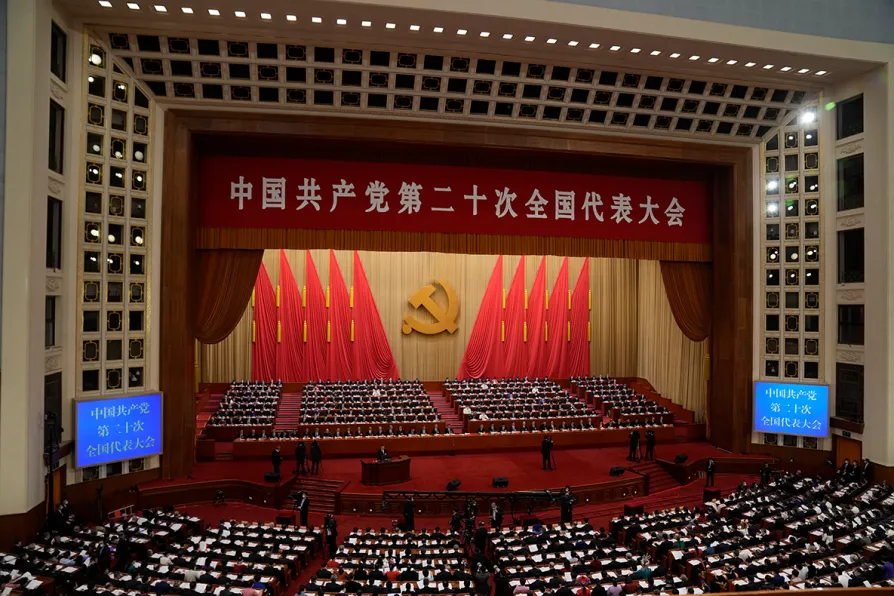 Chinese President Xi Jinping delivers a speech at the opening ceremony of the 20th National Congress of China's ruling Communist Party held at the Great Hall of the People in Beijing, China, Sunday, Oct. 16, 2022.



RISING prices, falling living standards, a government in turmoil although united around its anti-union, anti-democratic and anti-environment agenda — but at least we don’t live in China.
That’s been the message of an amplifying propaganda discourse against Beijing in the run-up to its 20th Communist Party congress, which opened today.
Read Martin Wolf or Gideon Rachman in the Financial Times, and China’s economic policies are disastrous, even if they have delivered (as Rachman notes) “thousands of miles of new motorways and high-speed rail over the past 20 years” and made “Western executives sigh in envy at China’s ability to plan for the long term.”
British workers, who have endured more than a decade of falling pay, might envy China’s record (average wages have risen at over 10 per cent a year since 2010, leading the median wage to rise from 37,147 yuan in 2010 to 97,379 in 2020, a 162 per cent increase).
Of course, it is from a poorer base. But China’s GDP grew by 120 per cent between 2010 and 2020. So wages have outpaced GDP growth in China, while in Britain wages flatlined even while the economy was growing.
Western media ridicules China’s zero-Covid policy. Yet China has continued to outpace Western countries economically throughout the coronavirus crisis, and avoided the extremely high mortality figures of the West. Chinese people have been 270 times less likely to die from Covid than British people. By any rational measure its approach should be regarded as more successful than ours.
While China is developing mass rapid transit systems and leading the world in green technology, Britain’s government is actively degrading its transport network and subsidising fossil fuel profits.
The US’s economic war on China is disrupting global supply networks, stymying scientific co-operation and costing jobs. In Britain it has seriously delayed major infrastructure projects like 5G. Liz Truss’s plan to declare China an official threat will only worsen these trends.
Challenging the anti-China narrative is important for several reasons.
It’s prompted by hostility to an alternative to Western institutions like the World Bank or International Monetary Fund, with China increasingly offering development loans and assistance not tied to the neoliberal reforms these organisations insist on.
No leftwinger should endorse the framework of international trade and investment regulations established and policed by Washington and its allies, which is hugely exploitative and has held back the global South, not assisted its development.
Yet maintaining this system is the motive for hostility to China. Western governments are clearly not sincere in their professed concern over alleged human rights abuses or authoritarianism: these do not preclude cosy ties with Narendra Modi’s India or Mohammed bin Salman’s Saudi Arabia or Jair Bolsonaro’s Brazil.
The new cold war is also bad news for ordinary people in this country. It justifies increased arms spending when public services are under attack and militaristic showboating that risks catastrophic war.
It provides a line of defence for a Westminster system that is otherwise largely discredited and, on “national security” grounds, undermines opposition to increasingly authoritarian legislation in Britain.
Nobody is advocating a Chinese-style political system in Britain: it has evolved according to that country’s particular history and experience.
But there is much that could be learned from China.
Its success with high-speed rail (which has measurably reduced more polluting domestic flights) should encourage demands for similar projects here. So too should its huge investment in renewable technologies.
And the role of planning in its economy more broadly contrasts with the chaos and immiseration resulting from Britain’s market-first approach.
Swallowing the anti-China propaganda blinds Britain’s left to these realities.
It is time socialists adopted greater scepticism towards our rulers’ claims about China. They are aimed at enrolling us in the defence of US and British imperialism — and undermining our systemic challenge to capitalism at home.


The HS2 debacle exposes what happens when public infrastructure is handed to private contractors – especially when set against China’s state-led high-speed rail success, says CARLOS MARTINEZ
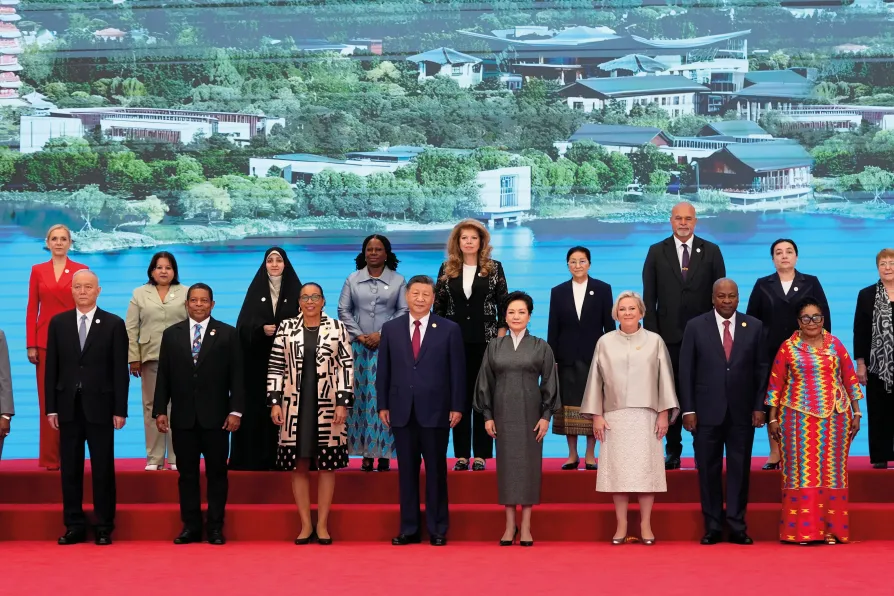
As the Global Leaders’ Meeting on Women begins in Beijing, it’s clear that China has fulfilled its commitments set 30 years ago and delivered amazing progress in women's education and equality, writes YU BOKUN

From 35,000 troops in Talisman Sabre war games to HMS Spey provocations in the Taiwan Strait, Labour continues Tory militarisation — all while claiming to uphold ‘one China’ diplomatic agreements from 1972, reports KENNY COYLE