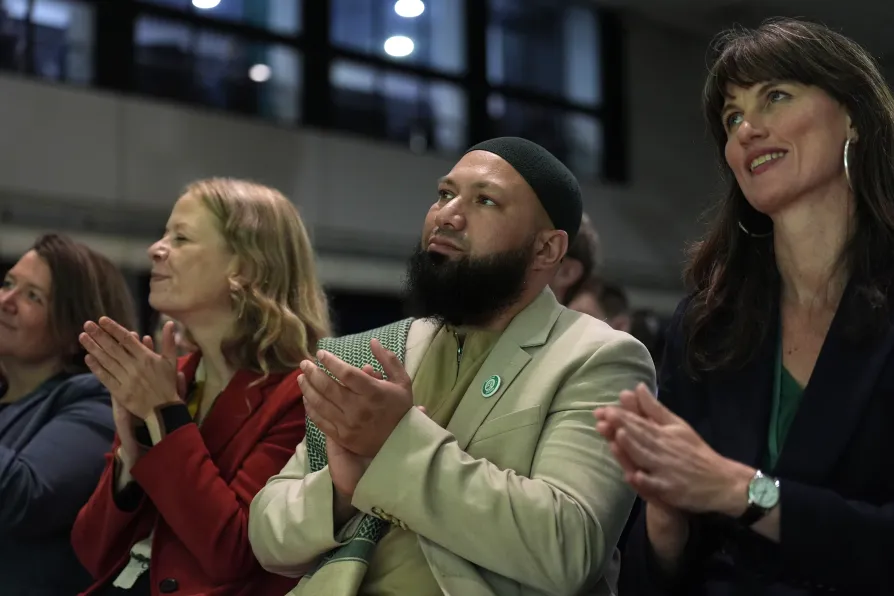
Green Party deputy leader MOTHIN ALI, who will speak at the International Anti-War Conference in London on June 20, says Britain needs to rethink its priorities – and its allies


 Latest editorial
A painful march to freedom: the triumphant legacy of Palestinian prisoners
By demonstrating that even at your weakest you can still fight back, the resistance behind bars has always been a uniquely powerful part of the overall national liberation movement, explains RAMZY BAROUD
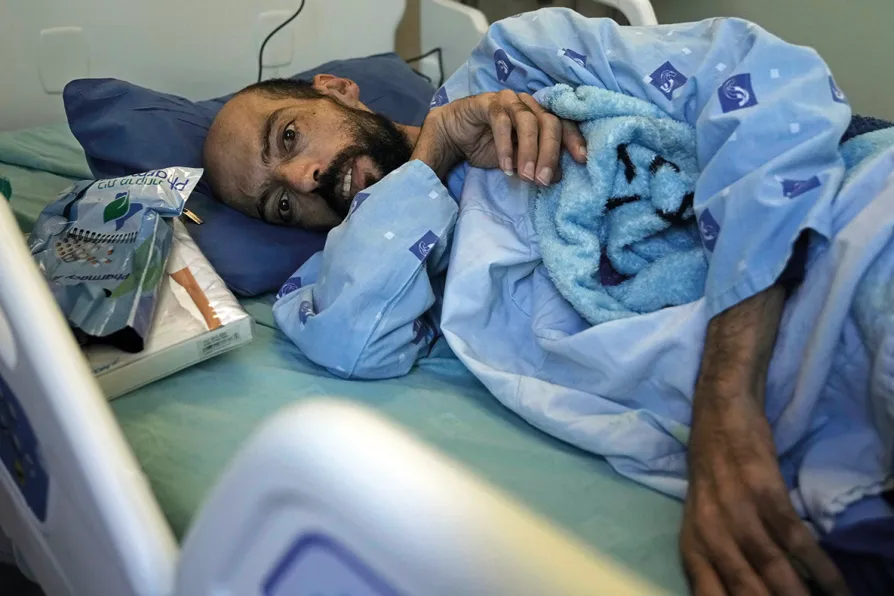 UNBOWED: Imprisoned Palestinian hunger striker Khalil Awawdeh lies in bed at Asaf Harofeh Hospital in Be’er Ya’akov, Israel, August 2022
From Global Counsel to Arden, SOLOMON HUGHES finds firms linked to discredited politicians are still calling the shots in Britain
KEVIN COURTNEY explains why Reform UK is no friend to workers or trade unions, but just another party of the super-rich
EMMA DENT COAD explains why she is stepping down from the council after 20 years and how the legacy of the fire still haunts the area
While international attention focuses on ceasefire frameworks, Israel is openly advancing plans for a permanent expansion of its control over Gaza, writes RAMZY BAROUD
Researchers PAUL HOLDEN and JESSICA MURRAY are calling for whistleblowers and documentary records to uncover how Labour Together helped build the parliamentary majority that now dominates the Labour Party


“AS soon as I left prison, I went to Nael’s grave. It is adorned with the colours of the Palestinian flag and verses from the Holy Quran. I told my little brother how much I loved and appreciated him, and that, one day, we would meet again in paradise.”
The above is part of a testimony given to me by a former Palestinian prisoner, Jalal Lutfi Saqr. It was published two years ago in the volume These Chains Will Be Broken.
As a Palestinian, born and raised in a refugee camp in Gaza, I was always familiar with the political discourse of, and concerning, political prisoners. My neighbourhood, like every neighbourhood in Gaza, is populated with a large number of former prisoners, or families whose members have experienced imprisonment in the past or present.
However, starting in 2016, my relationship with the subject took on, for the lack of a better term, a more “academic” approach. Since then, and up to now, I have interviewed scores of former prisoners and members of their families.
Some were imprisoned by Israel, others by the Palestinian Authority. I even spoke to prisoners who experienced the brutality of Middle Eastern prisons, from Iraq, to Syria, to Egypt and Lebanon.
A few particularly unlucky ones have endured multiple prison experiences and were tortured by men speaking different languages.

Similar stories
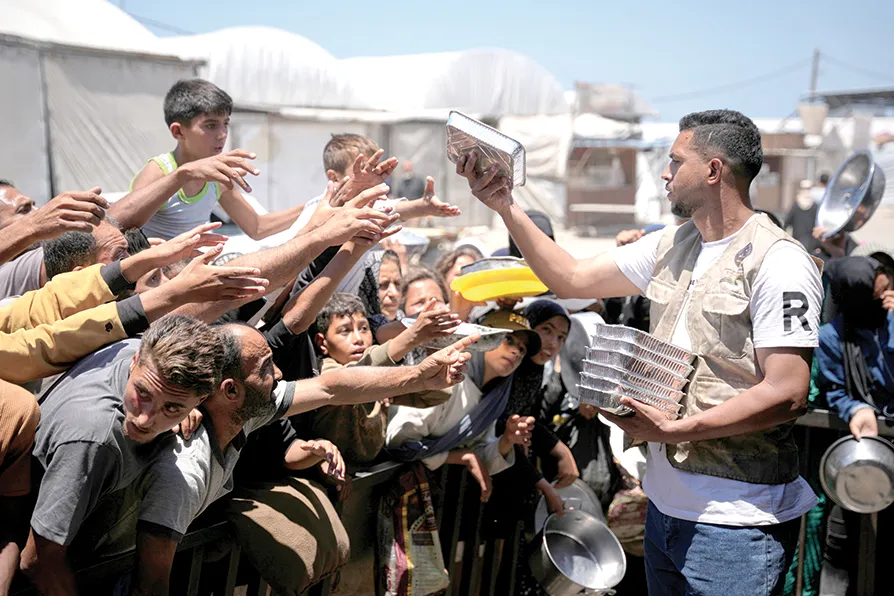
While international attention focuses on ceasefire frameworks, Israel is openly advancing plans for a permanent expansion of its control over Gaza, writes RAMZY BAROUD

RAMZY BAROUD looks at how entire West Bank communities have been shattered, their social and physical fabric deliberately dismantled by Israel to enable its formal annexation

Israel and the US talk as if they’ve won a victory, but the reality is that world opinion has turned decisively against the Israeli regime, says RAMZY BAROUD

Israel’s genocide in Palestine and wars against its neighbours would be impossible without constant Western support — so we must amplify the brave voices demanding a halt, argues DR RAMZY BAROUD