

 Latest editorial
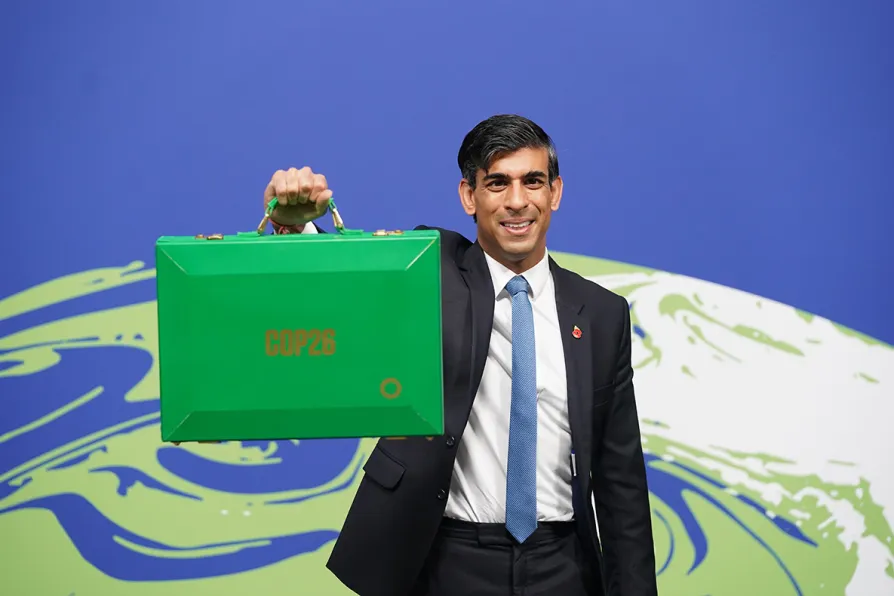 Chancellor Rishi Sunak holds his Green Box at the Cop26 summit at the Scottish Event Campus (SEC) in Glasgow, ahead of a meeting with a group of finance ministers who are backing a plan to create new global climate reporting standards


THERE’S been no shortage of hypocrisy from world leaders at the Cop26 summit.
But Chancellor Rishi Sunak posing with a green replica of the famed red Budget briefcase takes the biscuit just one week after he announced a Budget that actively subsidises polluters while offering nothing for a green transition — on energy, housing, transport or anything else.
Activists marching through Glasgow warning of companies “profiting from a disingenuous perception of themselves as ‘ethical’ or ‘green’ when the reality is the opposite” are on the money — unlike former Bank of England chief Mark Carney and his Financial Alliance for Net Zero.
But the XR campaigner who hopes the government will “make misguiding the public illegal” is somewhat optimistic given misleading the public is what the government itself does every single day.
Understandable as such demands are, they misunderstand the nature of state power in capitalist societies — that it is exercised on behalf of the capitalist class.
The British state is hand in glove with the financiers and giant corporations who have fuelled the climate crisis.
Not only does this make it unlikely that any state ban on greenwashing would target big business, it should remind the whole left that calling for additional powers for the government to police what is and what isn’t misinformation is very dangerous indeed. Such powers are more likely to be used to suppress left and alternative voices than lying corporations.
We only need to look at the summit so far to understand that the greenwashing isn’t confined to energy firms.
Sunak gushes about “a historic wall of capital for the net-zero transition,” claiming that business is now committed to cutting emissions.
His government (and the devolved administration in Scotland, for that matter) will not even withhold approval for a new oilfield in the North Sea.
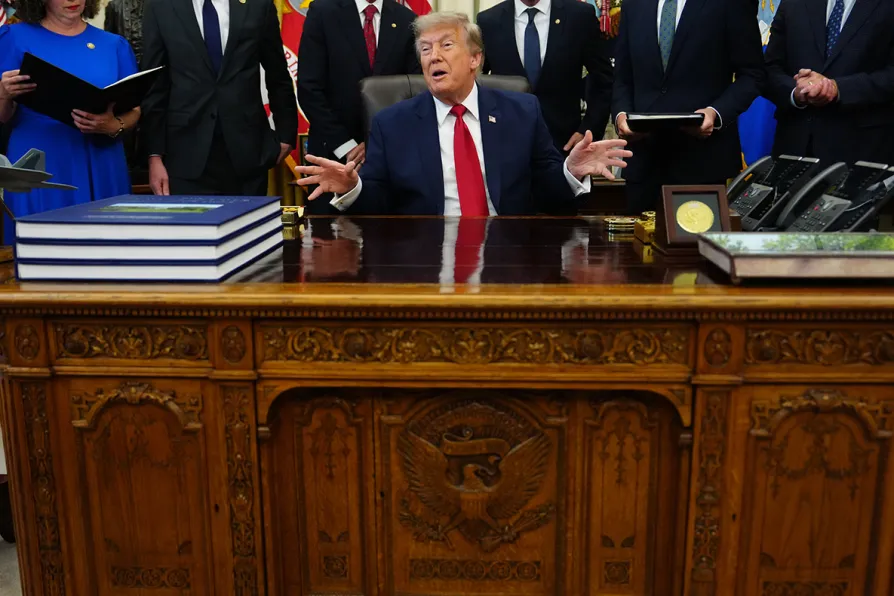
US Treasury Secretary Janet Yellen also tries to sell us the idea that environmentalism and capitalism are natural bedfellows, asserting that climate change is “the greatest economic opportunity of our time” and that “it’s simply cost-effective to go green.”
Yet despite US President Joe Biden having spent the summit taking pot shots at China — whose per capita emissions are less than half those of the United States — his own administration is finding that business interests aren’t that keen on addressing climate change after all.
Two days ago the New York Times reported that White House staff were rewriting the president’s Budget showpiece, a $150 billion clean electricity Bill that would reward companies that switch to renewables and penalise those that don’t, because it won’t get past the Senate.
That body’s deadlock means the Democrats cannot pass the Bill without every vote — and West Virginia Senator Joe Manchin says No.
Manchin has between $1 million and $5m — the share valuation is disputed — in shares in coal brokerage company Enersystems Inc, and his income from those shares last year was, at $491,000, more than double his salary as a senator.
Manchin exemplifies the problem. But the same conflict between the immense profits made from the fossil fuel industry, mining and agribusiness and governments’ climate change commitments crops up everywhere.
Indonesia signed this week’s commitment to end deforestation by 2030. Yet the main driver of deforestation in Indonesia is palm oil production; and Indonesia’s government also expects to double palm oil production by 2030.
We must call Sunak and Carney’s bluff. Corporations are not ethical actors — this is true even if their CEOs are ethical individuals, which they mostly aren’t.
Corporations exist to maximise shareholder returns. This doesn’t rule out green investments. But it means environmentally damaging investments will continue too, as long as they are profitable.
The answer is not to appeal to business’s conscience, but to assert our democratic right to control it. The green transition requires planned economic development that is not subject to the vagaries of the market.

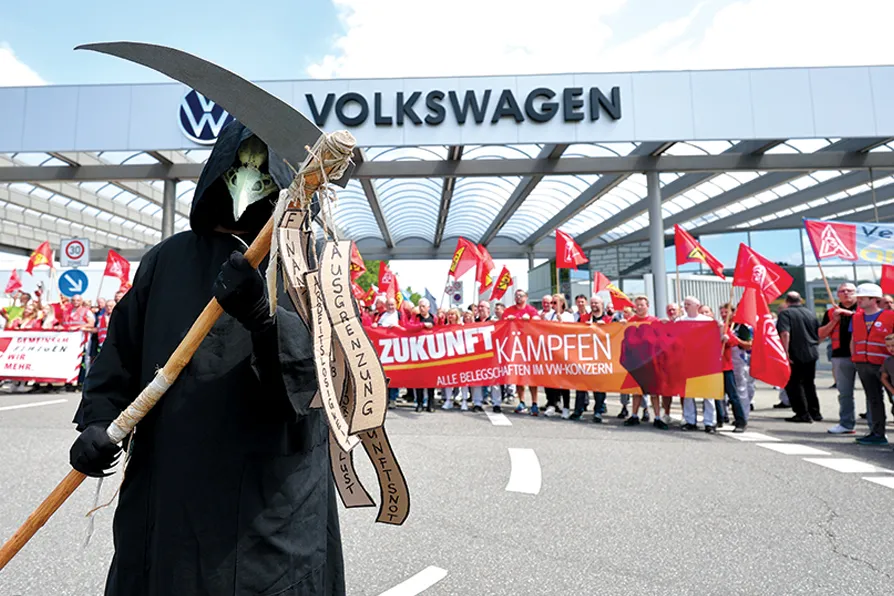
The future does not have to be climate chaos and social breakdown. MARC VANDEPITTE looks at the alternatives offered by the Global Justice Report, co-authored by Thomas Piketty
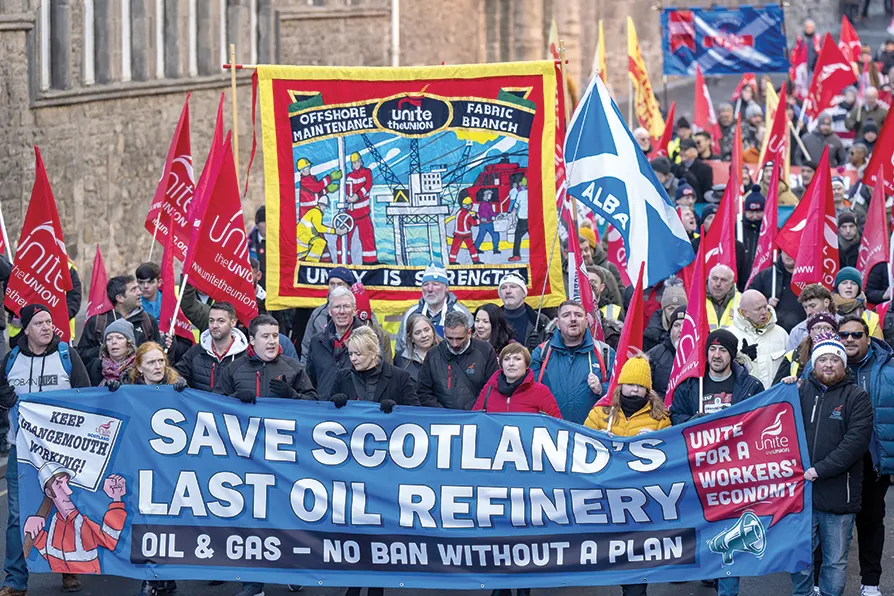
As fossil fuels have had their day, JOSIE MIZEN makes it clear that it is now the government’s responsibility to initiate the transition to alternative employment in a manner that is organised, efficient and effective
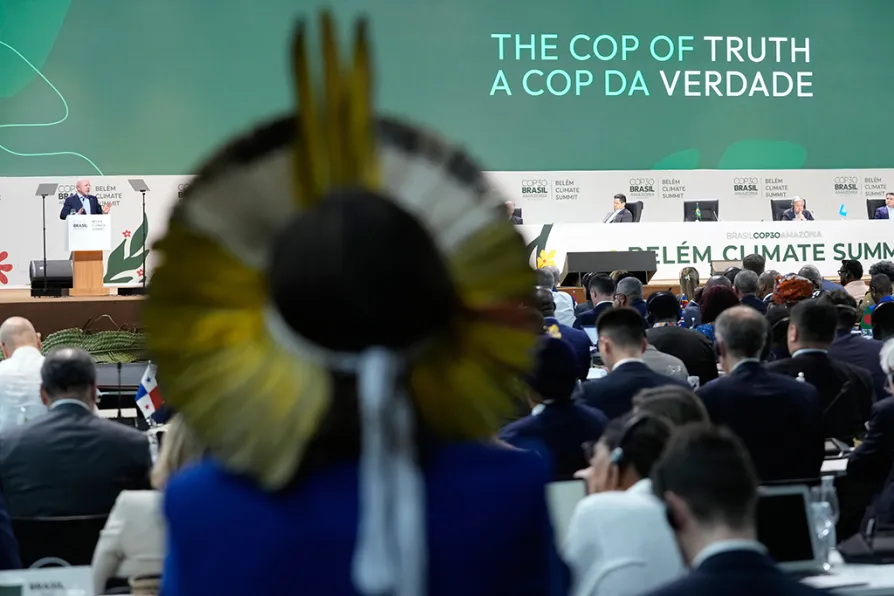
From summit to summit, imperialist companies and governments cut, delay or water down their commitments, warn the Communist Parties of Britain, France, Portugal and Spain and the Workers Party of Belgium in a joint statement on Cop30
Climate justice and workers’ rights movements are uniting to make the rich pay for our transition to a green economy, writes assistant general secretary of PCS JOHN MOLONEY, ahead of a major demonstration on September 20