MARIA DUARTE defends a solid, late-career Spielberg conspiracy flick that calls for empathy in a hostile world


 Latest editorial
Liberty cap: the surprising tale of how Europe’s magic mushroom got its name
ADRASTOS OMISSI disentangles the bizarre links between antiquity, literature, politics, revolutionary fashion and a common European mushroom


MARIA DUARTE, SCOTT ALSWORTH, ANDY HEDGECOCK and ANGUS REID review The Fall of Sir Douglas Weatherford, Detective Conan: Fallen Angel of the Highway, Time and Water, and Strictly Ballroom
STEVE JOHNSON recommends a beautiful album of songs that celebrate summer, from May Day onwards
New releases from Joe Wilkes, Honey and the Bear, and Hannah James and Toby Kuhn
Given the power of the live experience, MIK SABIERS recommends Jon Spencer’s new album
Reviews of T.P. Orchestre Poly-Rythmo, Tamikrest, and Dub Colossus


MUSHROOMS — specifically magic ones — are in the spotlight. A growing body of research is showing that psilocybin, the main psychoactive compound in magic mushrooms, has potential in treating psychological disorders like depression, addiction and PTSD.
Of the nearly 200 species of psychedelic mushrooms that have been identified worldwide, mainly in Central America, only one — Psilocybe semilanceata — grows in any abundance in northern Europe. Like many mushrooms, Psilocybe semilanceata is generally known not by its scientific designation, but by its common or folk name, the “liberty cap” mushroom.
For years, this bothered me. As a Roman historian, I know the liberty cap — the pileus, in Latin — was a hat given to a Roman slave on the occasion of their being freed. It was a conical felt cap, shaped like that of a smurf and which undeniably bears a clear resemblance to Psilocybe semilanceata’s distinctive pointy cap.

Similar stories

KATAYOUN SHAHANDEH surveys Iran’s cultural heritage and explains what has been damaged and what could be lost

SYLVIA HIKINS relishes Jeanette Winterson’s brilliant hijack of 1001 Nights to push aside the boundaries set by others

BRENT CUTLER is intrigued by the imperialist, supremacist and contradictory history of a word that is used all too easily
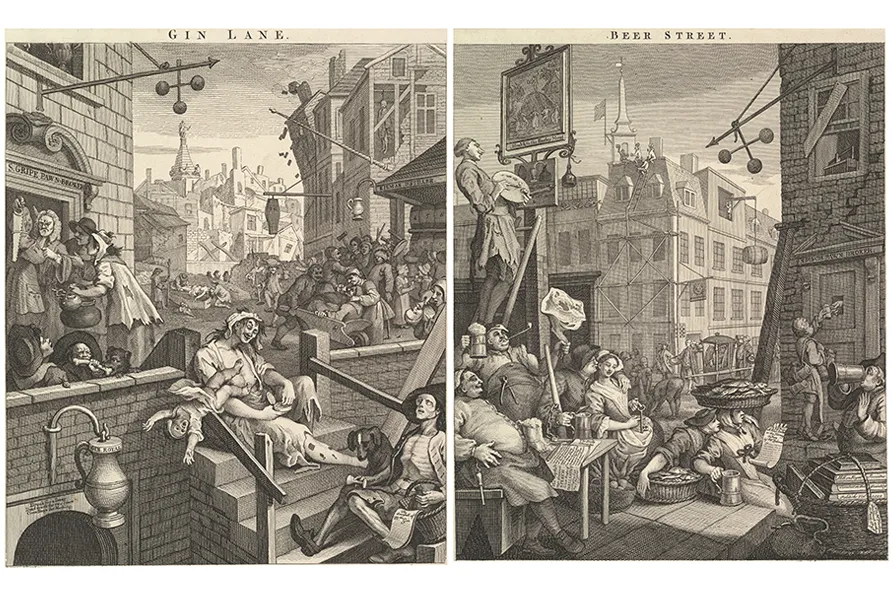
Gin Lane by William Hogarth is a critique of 18th-century London’s growing funeral trade, posits DAN O’BRIEN