While international attention focuses on ceasefire frameworks, Israel is openly advancing plans for a permanent expansion of its control over Gaza, writes RAMZY BAROUD


 Latest editorial
Fixing social security in the aftermath of Covid-19: why the UC £20 uplift is not enough
The Covid-19 pandemic has exposed the flaws and inadequacies of the benefit system and its unacceptably low payment rates, writes ANITA BELLOWS


Researchers PAUL HOLDEN and JESSICA MURRAY are calling for whistleblowers and documentary records to uncover how Labour Together helped build the parliamentary majority that now dominates the Labour Party
Cuba continues to embody a vision of internationalism that imperialism has never forgiven, argues ZOLTAN ZIGEDY
PCS general secretary FRAN HEATHCOTE explains why opposing war is inseparable from defending jobs, wages and public services – and why readers should come to the London Peace Conference on Saturday June 20
As protests erupt over Henry Nowak’s murder, ANDREW MURRAY argues that anger is being exploited to advance a wider racist and anti-immigration agenda
CARLOS MARTINEZ explains the sound case for car manufacturing co-operation with China


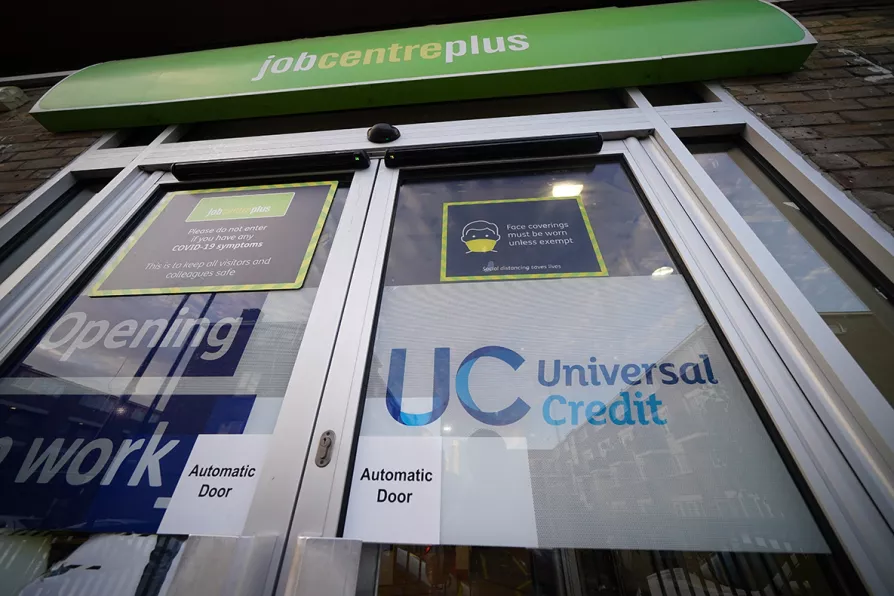
WHILE ministers have hailed Universal Credit (UC) as a success for not buckling under the unprecedented number of claimants made redundant, to make this work the DWP had to introduce a series of measures stripping UC of some of its core components such as conditionality and injecting more flexibility and generosity into the system.
This implicitly acknowledged that benefits are too low, too complex to claim and are not received in a timely manner: the UC £20 uplift, suspending the Minimum Income Floor, increasing the Local Housing Allowance Rate, expediting payments etc.
This uplift has been described as a lifeline by claimants, DPOs, charities and other organisations, but while the government is now considering withdrawing it, it has also been shown to be widely insufficient to cover the living costs borne by claimants.
According to the Resolution Foundation, of the more than three million additional claimants since last March, 31 per cent had either taken out new loans or seen their existing debts increase and 61 per cent cent expected to struggle or to fall behind on their bills in the coming three months — around double the national average.

Similar stories

DYLAN MURPHY reports that far from helping people back into work, the sanctions regime is inflicting unnecessary trauma on working-class families
A new report from the Citizens Advice destroys the government narrative about disabled people ‘choosing’ not to work, showing the £3,000 annual cuts will create a two-tiered system based on claim dates rather than needs, writes DYLAN MURPHY

The government’s retreat on PIP still leaves 150,000 new universal credit claimants facing halved benefits from April 2026, creating a discriminatory two-tier welfare system that campaigners must continue fighting, writes DR DYLAN MURPHY