


 Keir Starmer has won the Labour Party leadership



KEIR STARMER’S victory in the leadership contest represents a serious setback for the left following five years in which a socialist led the Labour Party.
At the same time, it neither erases those years nor negates the potential of Labour’s huge membership to help build the socialist movement and challenge a capitalist system in serious crisis.
Starmer’s first-round win, secured by the backing of a proportion of the party not far short of Jeremy Corbyn’s in 2015 and 2016, gives the lie to the old claims that those victories were down to Labour being “infiltrated” by revolutionary socialists alien to its traditions.
But nor did it indicate a mass flowering of socialist consciousness.
The uncomfortable truth is that tens of thousands of Labour members who backed Corbyn in both 2015 and 2016 backed Starmer this year.
But the equally uncomfortable reality for a Labour right that would like to see the Corbyn years wiped from the record is that these members aren’t expressing buyer’s regret about Corbyn and are unlikely to watch passively if it tries to reverse support for public ownership, real action on climate change (which means challenging corporate power) and the redistribution of wealth.
Starmer did not of course stand on a platform of doing anything of the kind. But his record does not suggest we should take his claims to come from the left of the party seriously.
Others have pointed to his failings when director of public prosecutions, from refusing to prosecute the police killers of Jean Charles de Menezes and Ian Tomlinson to bringing in harsh new guidelines for the punishment of “benefit cheats” at the height of Iain Duncan Smith’s war on Britain’s most vulnerable in 2013.
Within Corbyn’s shadow cabinet, he resigned during the “chicken coup” of 2016, joining colleagues seeking to remove the leader. Later, Starmer was not alone in repeatedly calling for Labour to become an unequivocally Remain party, but as shadow Brexit secretary he was a key architect of a “block Brexit” strategy that backfired disastrously at the ballot box and did more to ensure Labour’s defeat than any other.
That last illustrates the real political problem that Starmer’s win highlights. Faced with a catastrophic election defeat in which 52 of 54 seats lost to the Conservatives had voted to leave the EU, with Labour routed across much of the Midlands and northern England, members have opted for a London-based leader almost uniquely identified with the Remain cause.
This suggests too many people have learned exactly the wrong lessons from the last three years, swallowing the Labour right’s propaganda about the need for a “moderate” leader at a time of extraordinary political volatility and growing radicalism – despite the evidence from 2017 that a socialist programme does have mass appeal – yet ignoring the role the People’s Vote campaign and Labour’s drift to Remain played in 2019’s defeat.
Yet a return to pre-Brexit, pre-Corbyn “norms” looks less realistic than ever in the throes of a global pandemic that is tearing neoliberal pieties to shreds and when Britain is led by a Tory government that is itself shifting towards accepting a greater role for the state – though a state that remains an instrument of capitalist class power – in economic matters.
Even if Starmer wanted to go “back to Blair,” the world has changed too drastically for that to be possible. Still, we are no longer able to look to the Labour Party leadership as a driving force for radical change in this country.
That does not mean the labour movement’s potential to drive such change is exhausted. The Covid-19 crisis is prompting an eruption of local solidarity, community and trade union organising, new forms of collectivism which must be our focus.
Tens of thousands in Labour and out of it are engaged in these developments. The case for a socialist alternative to the current order is growing stronger. This is no time to take our foot off the pedal.


Labour’s toxic centrists have wealthy backers but there’s little to suggest they can win over MPs or party members in an open fight, writes SOLOMON HUGHES

JOHN McINALLY sees little chance of change at Westminster, and calls on the left to get serious about building a real alternative
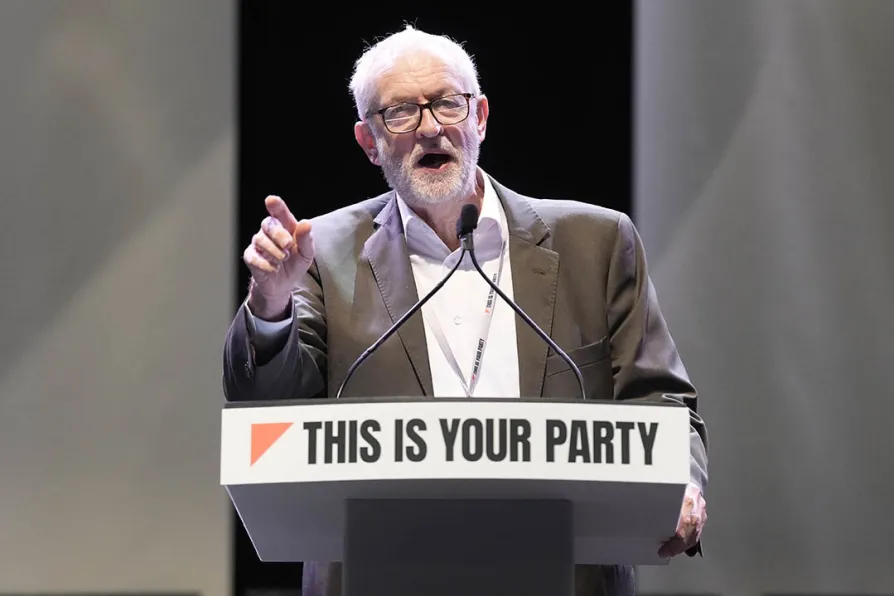
Your Party can become an antidote to Reform UK – but only by rooting itself in communities up and down the country, says CLAUDIA WEBBE

In the run-up to the Communist Party congress in November ROB GRIFFITHS outlines a few ideas regarding its participation in the elections of May 2026