Special report by PEOPLE’S WORLD


 Latest editorial
An emotional end to Britain’s coalmining era
Miners and their communities gather together in solidarity as Kellingley colliery closes its doors. PETER LAZENBY reports

NICK WRIGHT considers how the isolation of Israel and a new film on the controversial Italian communist leader are creating new reference points for Italy’s left
CARLOS MARTINEZ says Cuba’s achievements in the face of a criminal blockade are startling, but the island’s future if the United States succeeds in crushing it looks bleak
AMNON BROWNFIELD STEIN reports that far-right MPs who mobbed the event organised by Hadash may have helped raise awareness of the brutality of the Israeli right
Born on this day in 1931, the heroic revolutionary faces a dangerous new wave of White House aggression. We must treat his birthday as a rallying cry to resist the illegal siege of Cuba, writes ROGER McKENZIE
RAMZY BAROUD decries the rats of Gaza, the rodent and human type. Both abound as profiteering from tragedy reaches obscene levels


THERE were many tears shed at the Big K miners’ social club in Knottingley in Yorkshire on Saturday.
There was also pride, dignity and a solidarity characteristic of miners and their communities.
The turnout of 3,000 dwarfed previous events staged during the campaign to save Kellingley colliery, the last deep coalmine in Britain.
Twenty-four hours earlier the emergence of the last shift from the pit had received national and international media coverage.
Saturday’s event was an outpouring of anger, grief and frustration. But it was also a display and celebration of working-class unity in the face of adversity.
Teachers and other public-sector workers, train drivers and building workers marched alongside miners and their families from the town hall at Knottingley to the Big K social club.
Among those marching was 81-year-old Geoffrey Crouch, proudly declaring that he was the oldest former Kellingley miner taking part.
“I was at Kellingley as an electrical engineer for nearly 14 years up to 1987,” he said, “bar the strike.”
Some of the banners carried during the march to the Big K carried poignant messages.
A poster attached to the banner of Wakefield National Union of Teachers bore the words: “Thanks for keeping the lights on.”
The banner of Houghton Main Women’s Pit Camp was created in 1994 when women from four Yorkshire mining communities established permanent protest camps outside the gates of collieries threatened in the final round of pit closures imposed by the Tory government before privatisation of what remained of the coalmining industry.
It carries the words: “You can’t kill the spirit.”
One of the men carrying the banner of Kellingley branch of the National Union of Mineworkers (NUM) was Chris Kitchen, the union’s general secretary.
Before being elected general secretary he had worked at Kellingley where he had been NUM branch secretary.
The banner depicts a miner strangling the serpent of capitalism and a stairway with the words: “Socialism leads to prosperity.”
Train drivers’ union Aslef president Tosh McDonald marched with his union’s banner. In the 1984-5 strike against pit closures, not a single piece of coal was moved by rail, an act of enduring solidarity between train drivers and miners.
There was a remarkable reunion involving Anne Scargill, one of the founders of the Women Against Pit Closures movement, and Nicola-Jayne Ingram.
Nicky, now 38, was the seven-year-old daughter of a Barnsley miner during the 1984-5 strike against pit closures. Her two elder brothers were also striking miners.
Across Britain’s coalfields, and particularly in the biggest coalfield, Yorkshire, food kitchens were established in mining communities as the Tory government attempted to starve the miners back to work.
Miners’ support groups had been established nationwide in non-mining areas to raise money and collect food for the miners and their families.
Nicky, who is now an actor and lives in Todmorden in West Yorkshire, said: “Dad was at Barnsley Main and then at Elsecar workshops.
“During the strike we went to the food kitchen at Worsborough.”
Anne Scargill was one of the team of workers at the kitchen.
“The last time I saw her I was seven and she was serving me food,” said Nicky.
“We went to the kitchen at Christmas and Anne and Arthur were there.” (Anne is the ex-wife of Arthur Scargill who was president of the NUM during the strike.)
“Anne and Arthur were there handing out presents. Arthur gave me one and said it had been sent from Africa. I opened it and it was a pinball machine. It had a crack right down the middle.
“It still worked though, and it was the best Christmas present I’ve ever had.”
Nicky and Anne had an emotional reunion.
Present with Anne was her longtime friend and ally Betty Cook, co-founder of Women Against Pit Closures.
Betty’s son Donny was killed in a rock fall at Kellingley colliery in September 2008.
Indoors, the Big K social club’s theatre, which holds several hundred people, was packed to capacity to hear tributes to Kellingley’s miners.
The miners themselves then contributed to entertainment which followed, with songs and instrumentals, including the violin and guitar.
The two women who had organised the march and social, Kirsten Sinclair and Lisa Cheney, were presented with flowers by the branch secretary of Kellingley NUM Keith Poulson.
Kirsten and Lisa were wearing T-shirts specially made for the event. They carried the words “The last pit party” and a graphic of Kellingley colliery.

Similar stories

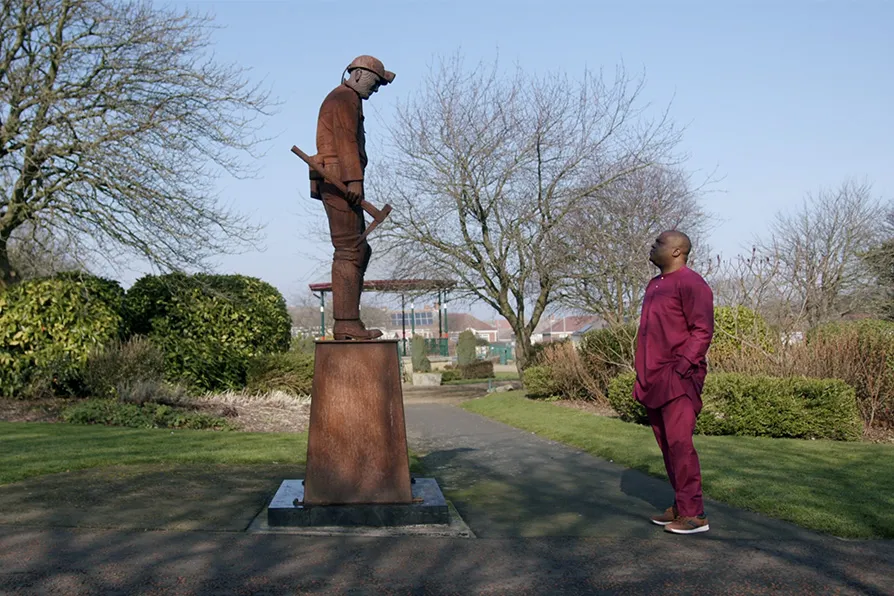
MIKE QUILLE applauds an excellent example of cultural democracy: making artworks which are a relevant, integral part of working-class lives
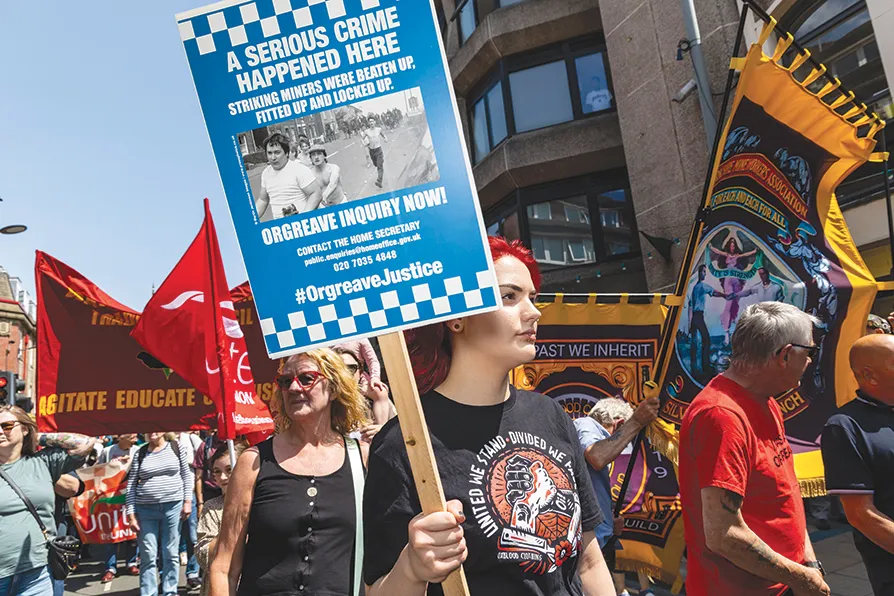
The Home Secretary’s recent letter suggests the Labour government may finally deliver on its nine-year manifesto commitment, writes KATE FLANNERY, but we must move quickly: as recently as 2024 Northumbria police destroyed miners’ strike documents
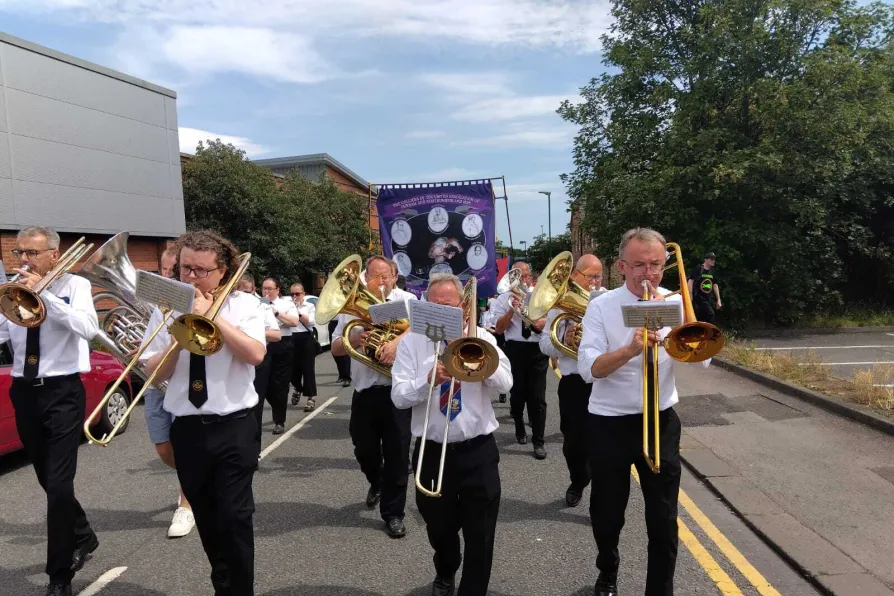
MOLLIE BROWN reports on this year’s festival in honour of the ‘seven men of Jarrow’ deported to Australia for union activity 193 years ago