

 Latest editorial

North Korea: Pyongyang slammed over ‘H-bomb’ test
Ally China joins worldwide chorus of criticism



by Our Foreign Desk
NORTH KOREA claimed yesterday to have successfully tested a hydrogen bomb, drawing worldwide condemnation.
Dubbing the weapon the “H-bomb of justice,” the country’s despotic regime said the test had been a “perfect success” that elevated the country’s “nuclear might to the next level.”
Crowds gathered in front to a giant video screen outside the capital’s main railway station to watch news reports of the test, some taking photos and videos on mobile phones.
“The [country’s] access to the H-bomb of justice, standing against the … the chieftain of aggression … is the legitimate right of a sovereign state for self-defence,” the TV presenter said.
South Korean President Park Geun Hye condemned the test as a “grave provocation” and “an act that threatens our lives and future.”
Japanese Prime Minister Shinzo Abe branded it a threat to his nation’s safety, adding: “We absolutely cannot allow this.”
Northern neighbour China opposed North Korea’s action, while Russia slammed the “flagrant violation” of international law.
In Beijing, Foreign Ministry spokeswoman Hua Chunying told a news conference: “China is steadfast in its position that the Korean peninsula should be denuclearised and nuclear proliferation should be prevented to maintain peace and stability in north-east Asia.”
“We strongly urge the [North Korea] to honour its commitment to denuclearisation and to cease any action that may deteriorate the situation.”
The International Campaign to Abolish Nuclear Weapons (ICAN) also condemned the test, saying that the “reckless and unacceptable act runs counter to the growing tide of international support for a universal treaty outlawing nuclear weapons.”
It noted that North Korea’s rhetoric echoed the arguments used by major nuclear powers — including Britain — to justify their arsenals.
“If nuclear weapons continue to be portrayed as a legitimate and a useful means to provide security, non-nuclear weapon states might aim to develop such weapons themselves,” ICAN said.
“It is beyond time for the international community to prohibit nuclear weapons just as chemical and biological weapons have been prohibited.”
Experts estimated the device to be smaller than the bombs dropped on Hiroshima and Nagasaki in 1945.
They suggested it might not be a hydrogen bomb, which uses an atomic weapon to set off a bigger reaction.

Similar stories
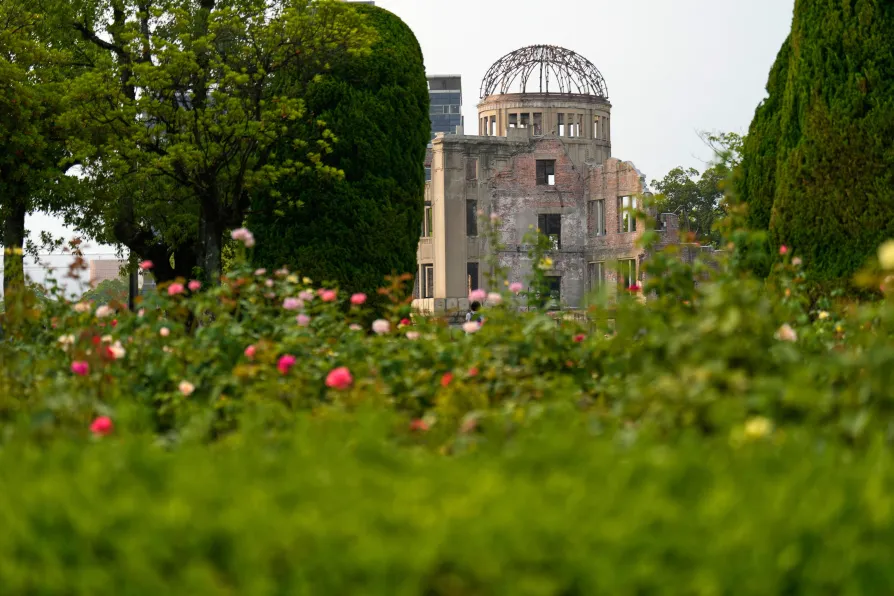
As we mark the anniversaries of the Hiroshima and Nagasaki bombings, JOHN WIGHT reflects on the enormity of the US decision to drop the atom bombs
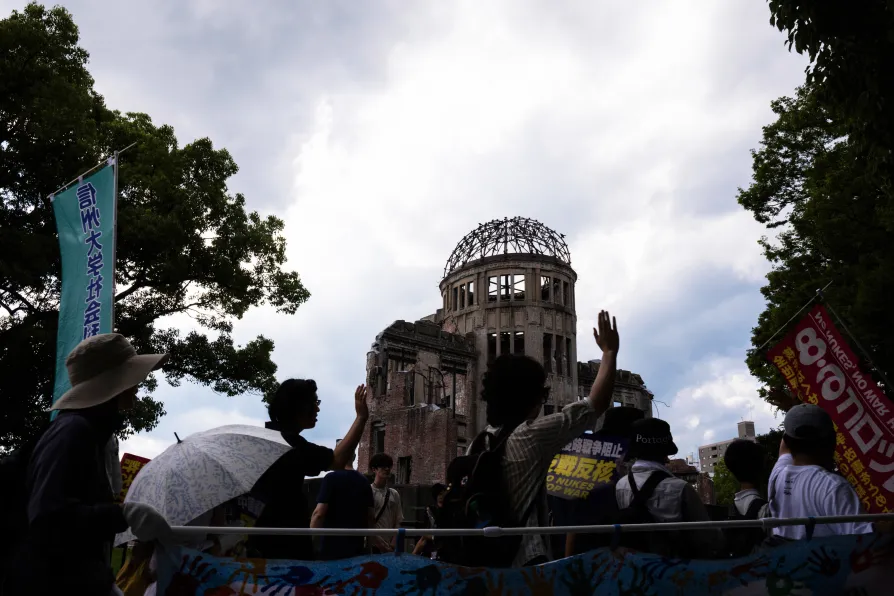
For 80 years, survivors of the Hiroshima and Nagasaki atomic bombings have pleaded “never again,” for anyone. But are we listening, asks Linda Pentz Gunter

JEREMY CORBYN reports from Hiroshima where he represented CND at the 80th anniversary of the bombing of the city by the US
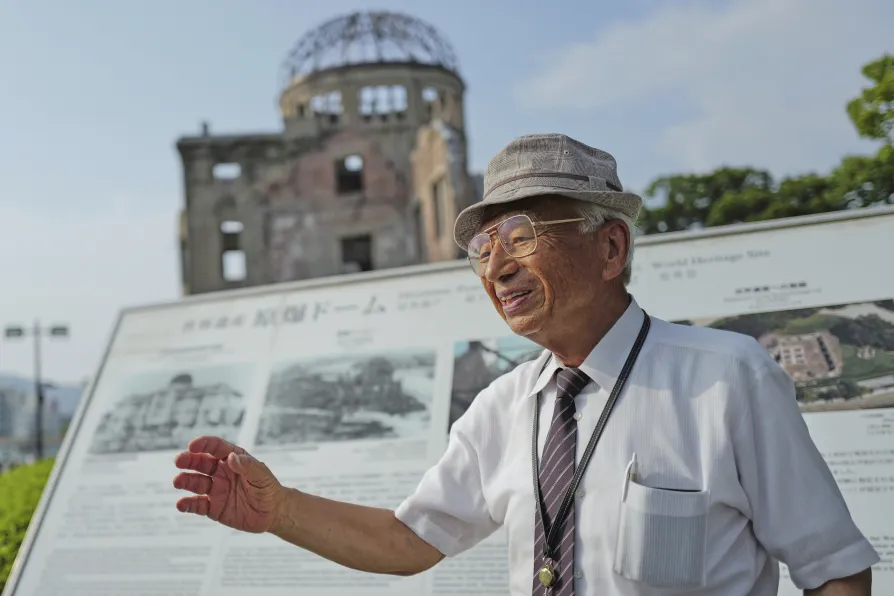
Ageing survivors of the Hiroshima and Nagasaki atomic bombings are increasingly frustrated by growing nuclear threats by global leaders