 Latest editorial
IAN LAVERY MP warns that decades of neoliberal policies have left former industrial communities behind — but a renewed Labour commitment to working people could change the political landscape


Austerity vision is of a 1930s Britain
Zoe Hennessy explores how an ideological war against the welfare state is turning the clock back on hard-won gains in employment and housing
PAOLO SANTALUCIA reports on how an Italian region defies US pressure to end a Cuban doctors programme
HENRY FOWLER outlines the GFTU’s new 2026-27 education programme and argues that investing in trade union education is essential to building worker power, developing leaders and strengthening collective action
We need a government that invests in saving lives not destroying them, argues SOPHIE BOLT
More expensive by weight than gold, saffron is surprisingly simple to grow. MAT COWARD explains
The public inquiry is the result of more than a decade of determined campaigning. Now, those who fought for justice want the full story of government involvement and police conduct to be told, says KATE FLANNERY
The Durham Miners’ Gala is a celebration of working-class culture, but also a call to action — to rebuild workers’ collective strength, says KIM JOHNSON MP


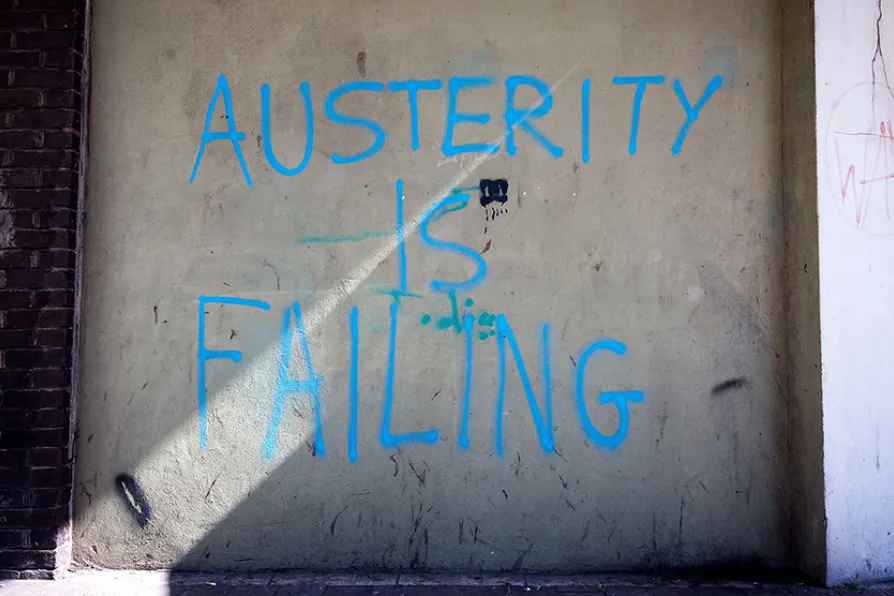
In case you hadn’t noticed, 2015 is general election year — which means another round of vandalised Tory election billboards. But hopefully it also means that we are coming to the end of the current Conservative government — a government which has used the pursuit of so-called debt reduction to wage a war against working people and shore up profits for the super-rich.
They have been successful. The wealthiest 1,000 men and women in British society have doubled their wealth in the last five years, and are now worth a combined fortune of £519 billion.
The cost for working people has been huge, and has fallen particularly heavily on the young, people with disabilities and women. In his Autumn Statement Chancellor George Osborne announced a further round of cuts beyond 2015, which will take public spending down to levels not seen since the 1930s.

Similar stories

JOHN McINALLY sees little chance of change at Westminster, and calls on the left to get serious about building a real alternative

Our charter’s demands for fair pay, affordable housing and environmental security will recruit working-class youth into the political struggle for socialism, emulating the success of the Women’s Charter, writes YCL general secretary GEORGINA ANDREWS

Our housing crisis isn’t an accident – it’s class war, trapping millions in poverty while landlords and billionaires profit. To solve it, we need comprehensive transformation, not mere tokenistic reform, writes BECK ROBERTSON