The campaign against the Bank of England’s ongoing theft of Venezuelan gold is gaining support across the labour movement and beyond, writes MATT WILLGRESS


 Latest editorial

Why we need to keep the spotlight on Qatar
World Cup workers are dying in their thousands while the world looks on, says JOHN MANN MP
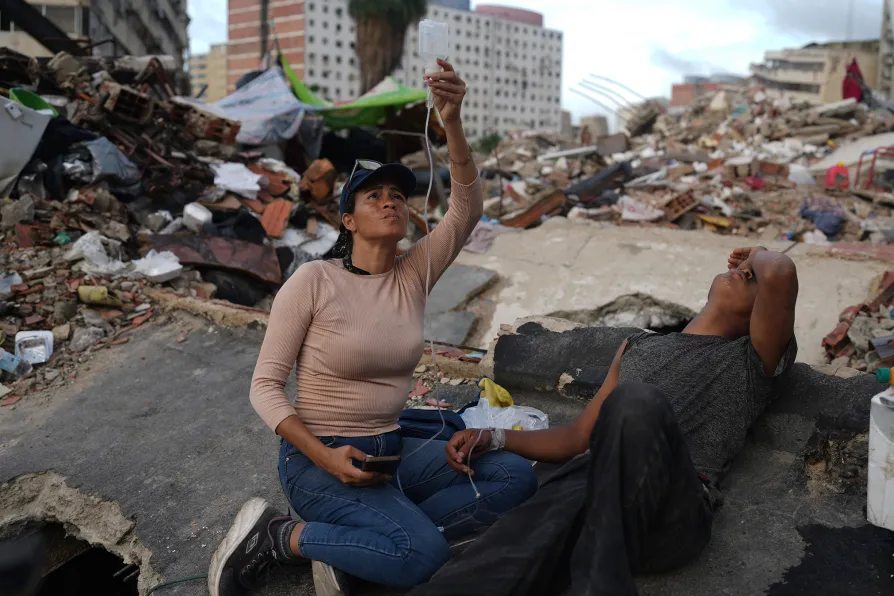
The new Prime Minister must abandon decades of automatic support for US foreign policy, which makes us all less safe, argues DIANE ABBOTT MP
Claims that Nicaragua has abolished elections followed a headline that stripped Daniel Ortega’s remarks of their historical and political context. The full speech tells a different story, says BECCA RENK FOSTER
Media Lens at 25: David Cromwell and David Edwards reflect on a quarter-century of media criticism, explaining why independent journalism is more important than ever
MAT COWARD introduces some of the electoral oddballs of the political fringe who remain one of the liveliest features of British democracy, despite efforts to abolish them
by Weyman Bennett and Maz’s family


A LITTLE over a month ago I wrote an article for the Morning Star on the exploitation of over a million migrant workers in Qatar.
They mostly come from Nepal, Pakistan and India, lured from poverty on the basis of false contractual promises and the hope of sending money home to their families.
The reality they find when they arrive in Qatar is bleak — hundreds of workers have died and many more face horrific living conditions and serious abuse.
In oil-rich Qatar, it is these workers who are paying the price for the 2022 World Cup, while Fifa and much of the rest of the world look on.
The International Trade Union Confederation estimates that if this inaction continues, 4,000 workers will die by the time the first game is played in 2022.
The scale of the problem outweighs even that gruesome prediction, because as more infrastructure is built there is little sign that the lives of the hundreds of thousands of workers who will be needed in addition to the current number will improve at all.
It seems appropriate to revisit this topic on International Workers’ Memorial Day, particularly given that the theme of the day this year is “Protecting workers around the world through strong regulation, enforcement and union rights.”
Migrant workers in Qatar are controlled by the kafala, or sponsorship, system and cannot join or form unions.
They are therefore vulnerable to the worst of working and living conditions.
This morning a group of trade unions will protest outside the Qatari embassy in London in a welcome attempt to highlight this injustice. If only workers in Qatar had that right.
Since last month more media attention has been focused on Qatar.
There have been renewed calls for the tournament to be played in winter — not an issue I see as a priority at the moment — and the news that Qatar may build fewer grounds than originally planned.
The fact that an entire city that is supposed to hold some of the final matches, Lusail, does not even exist yet demonstrates how much infrastructure Qatar still needs before 2022, and the risks that poses for the impoverished migrant workers who will build it.
The media has also been unravelling corruption within Fifa, much of it seemingly linked to Qatar’s bid for the 2022 World Cup.
Qatar’s World Cup organising committee denies all allegations, but there some very suspicious business deals that have been uncovered over the last month.
The Telegraph revealed that former Fifa vice-president Jack Warner was paid almost $2 million from a Qatari firm linked to the 2022 World Cup bid, and there are serious questions over the £2m which was paid into the account of the 10-year-old daughter of a Fifa executive who was part of the decision-making process.
Last month Ucatt, Britain’s trade union specialising in construction, carried out a fact-finding visit to Qatar and found extreme exploitation of workers who are deprived of their basic rights.
It has called on Fifa to strip Qatar of the World Cup if it does not dramatically reduce construction fatalities and improve the pay, conditions and rights of the migrant workforce within a 12-month deadline.
I completely sympathise with this approach, but worry that the World Cup is our only “bargaining chip” with Qatar.
If this is lost we will also lose our sole opportunity to help the workers already there to win crucial basic rights.
That cannot mean, however, that we let Fifa off the hook or stop efforts to highlight Qatar’s responsibility to the workers who are making its World Cup possible.
As I wrote last month, the question is how to keep the media spotlight on workers’ rights in Qatar in a way that might force them to improve working and living conditions.
There have already been signs that a media focus is forcing Qatar to act, as earlier this year it unveiled a charter of workers’ rights — albeit one that covers a minimal number of workers.
Readers can urge their member of Parliament to act by signing my parliamentary resolution calling for our government to engage Qatar and get into gear on the issue (EDM 1095), and make sure that protests such as the one this morning are well attended and get media coverage.
If improvements are not made, Ucatt will be proved right — the only option may be to remove the World Cup from Qatar or else face knowing that the tournament will continue to heap more misery and death on the growing migrant population.
At the current rate of action by Qatar, Fifa and the international community, including our own government, that looks like a distinct possibility.
However I hope that we can find a better solution, one whereby vast progress is made as a matter of urgency, and the benefits of trade union rights, not just for workers but for the country, are recognised in Qatar.
John Mann is Labour MP for Bassetlaw.

Similar stories
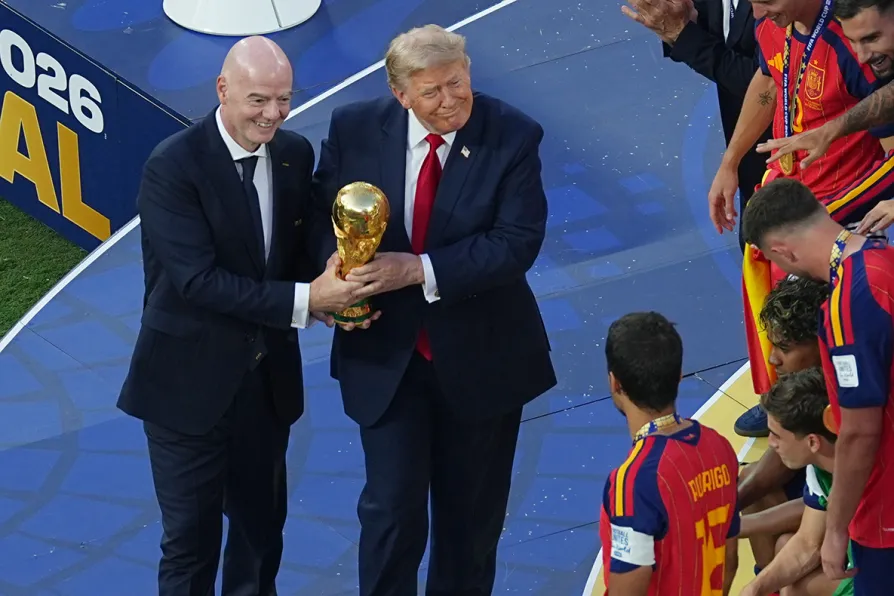
A World Cup full of memorable moments was also marked by exclusion, exploitation and unprecedented political meddling, writes JAMES NALTON
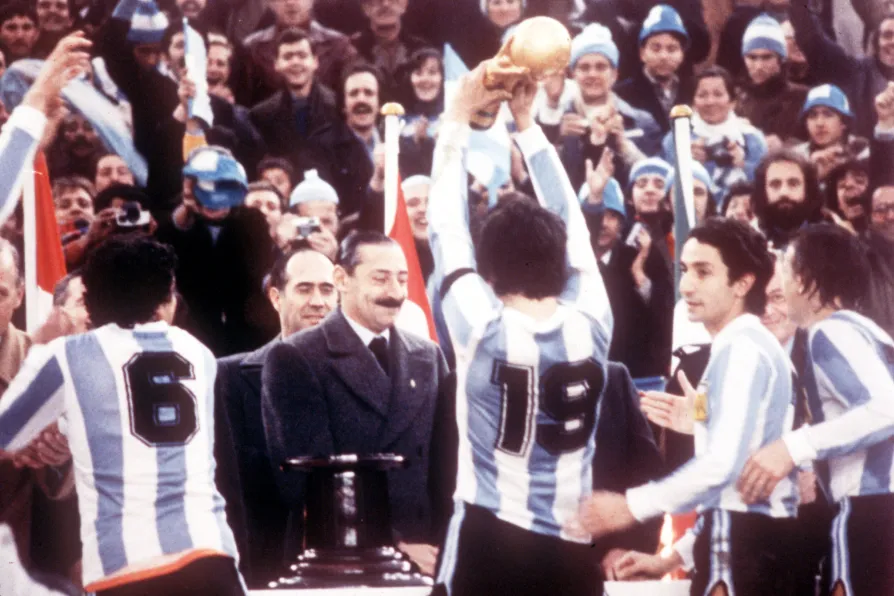
Football may not solve the working class’s problems, but it does matter — and politicians know it, writes BERT SHOUWENBURG
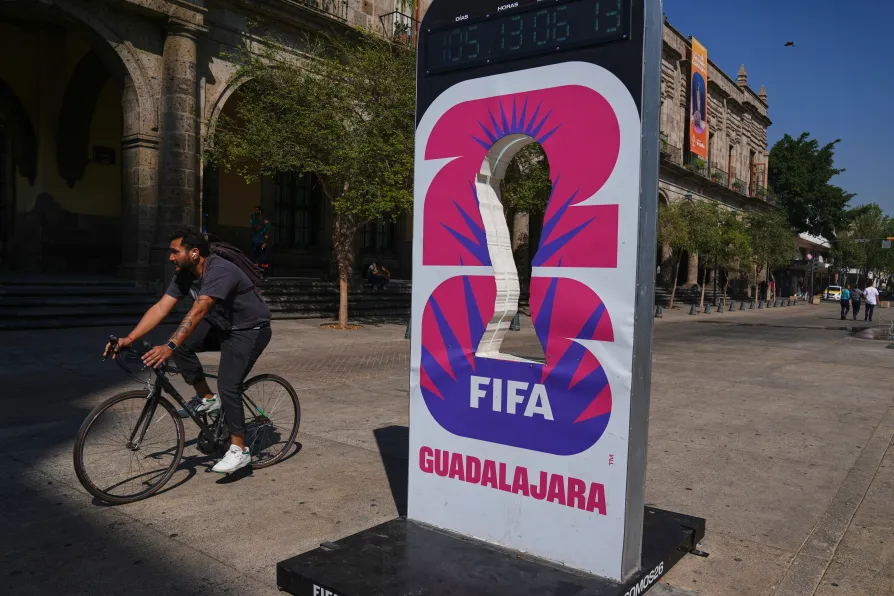
As unions sound the alarm on kafala-like dependence, FC Barcelona must decide whether their values extend beyond the pitch, writes KIVANC ELIACIK