The social base of the old Tory Party has disappeared as surely as that of Labour, argues ANDREW MURRAY – today’s right are the debased offspring of a capitalism that speculates without investing and profits without producing


 Latest editorial
An attack on one is an attack on all
Trade unions, trades councils and community organisations must work together to build lasting solidarity and resistance to the far right, argues DREW GILCHRIST
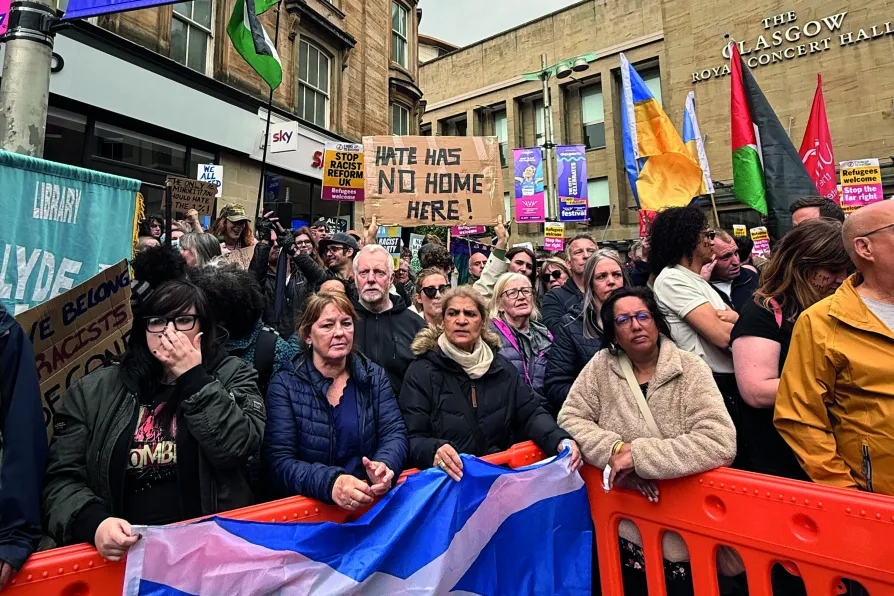 Anti-racists demonstrate in Glasgow last Saturday

SEVIM DAGDELEN says European Nato states are escalating ever closer to direct conflict with a nuclear power, and sacrificing welfare states built up over a century to finance it
KENNY MacASKILL says the lines between party, government and Civil Service in Scotland have been blurred and we need a thorough investigation into how
IAN SINCLAIR examines the curious memory lapses across liberal media when it comes to British government crimes
STEPHEN ARNELL looks at some of the notorious political corruption cases from British history
ENRIQUE SANTIAGO ROMERO says the Colombian far-right’s election victory is deeply suspect — and the United States has its fingerprints all over it
History suggests apartheid ends not through appeals to conscience alone but through sustained economic and political pressure, says HUGH LANNING


JUNE 9 presented a view into what we in the trade union and labour movement already knew, that the far right was organised and that it was prepared to act.
The electoral success of reform in Scotland was only a prelude to the growing number of extremist right-wing individuals in organisations feeling that they had popular support to take more public action. The violent scenes in Belfast of migrants and people of colour being stopped in the street, attacked and harassed had emboldened individuals in Scotland to attempt a recreation of the terror that was inflicted on marginalised communities.
Glasgow itself saw groups of masked men storming the streets attacking people of colour and the police, attempting to cause as much damage as they could.
This called for an immediate response from the trade union and labor movement leading to a rally on June 13 where far-right masked “seig heiling” thugs were drastically outnumbered by trade unionists, socialists, communists and anti-racist activists.
This show of solidarity drowned out for several hours the voices of hate and division. But when the marching and chanting are finished what then is the role that we must play to ensure that the organising being done by the far right in our communities outside the city centre is being challenged?
Unity of the working class and unity in the political, social and industrial spheres will be our greatest weapon in countering the racist, homophobic, misogynist attacks our communities face. To this end the trade union councils find themselves at the centre of the struggle.
They sit at a uniquely central position of being a focal point of all elements of the class struggle. Trades councils have a responsibility to reach out to their communities and identify the issues we face. That means we must contact and engage with minority and migrant communities to build a support network that has the ability not just to react when necessary but also to develop a relationship of mutual respect and support with the aim of building a united front against the reactionary elements in the working class, the government, and the bourgeoise.
The trades councils in Scotland have often heavily relied on the work of individual activists and members. Although great work is being done around the country it is often unco-ordinated, heavily localised.
Lack of direct communication creates gaps in our work that can be easily exploited. To this end work is now being undertaken to better co-ordinate and support the activities that are being carried out. A united strategy is required from the trades councils to tackle the issues faced in communities outside of the larger cities like Glasgow, where deindustrialisation, service cuts and growing poverty rates have created fertile ground for the far right to grow.
As we are rooted in all areas of the working class we can see directly what needs to be done as a plan must be drafted up and presented, not as a suggestion, to the STUC and the trade union leadership as they will be pivotal in this struggle to come.
The growing fear among migrant workers of deportation due to loss of their jobs means that many fear that they cannot raise issues in the workplace and shy away from trade unions and workers organisations. This creates a two-tier workforce both of which are being exploited by management and bosses. The capitalist class is the only one that benefits from the division created between workers.
Many migrant workers find themselves in precarious work, often hospitality and care, traditionally difficult sectors for trade unions to organise. This gives scope for trade councils to take part and organise grassroots campaigns highlighting workers’ rights and building class consciousness within communities and workplaces.
The relationship between trade councils and the anti-racism movement runs deep and is entrenched in our history. However, we must continue to review the work that needs done to look for new solutions to new problems, a more proactive approach to anti-racist and anti-fascist organising that focuses on building the united front. Comrades, an attack on one is an attack on all.

Similar stories
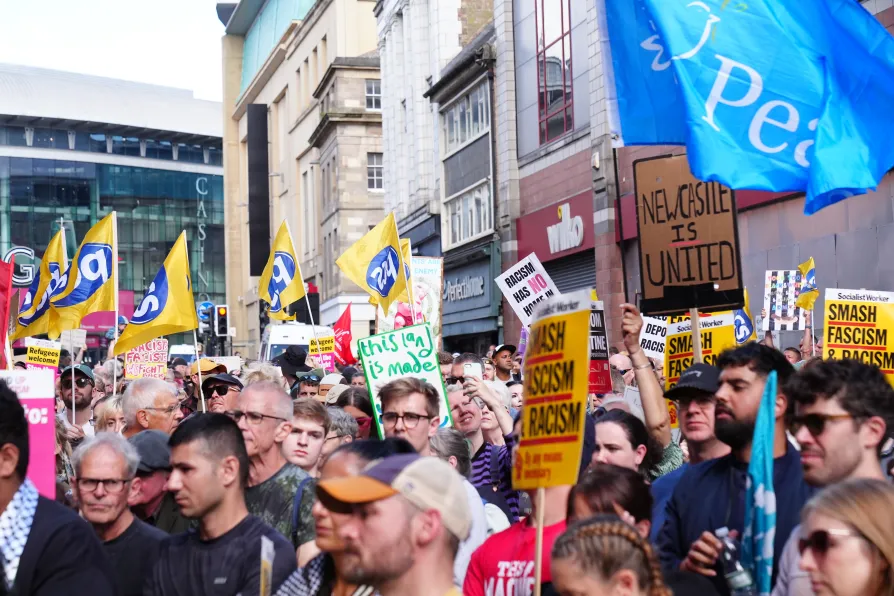
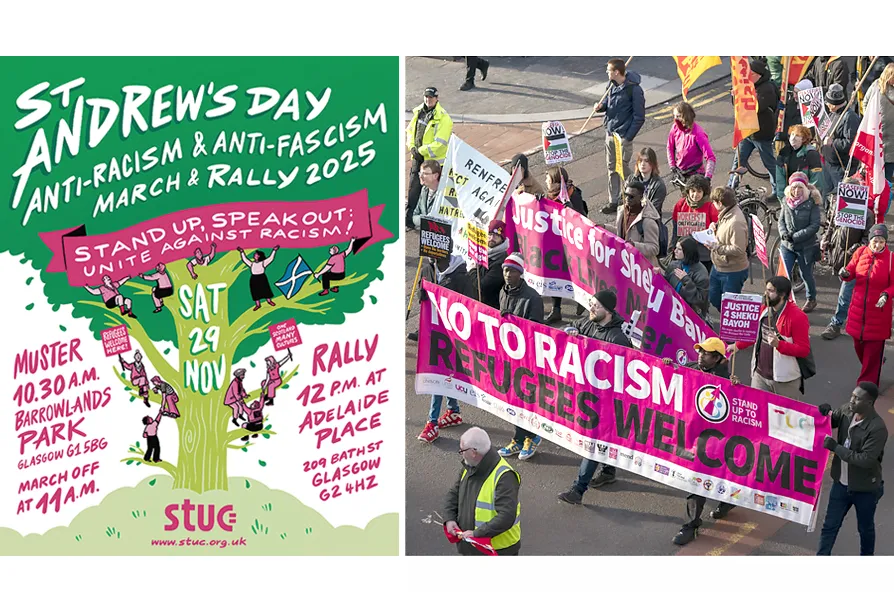
ROZ FOYER explains the significance and tradition of today’s St Andrew’s Day March and Rally
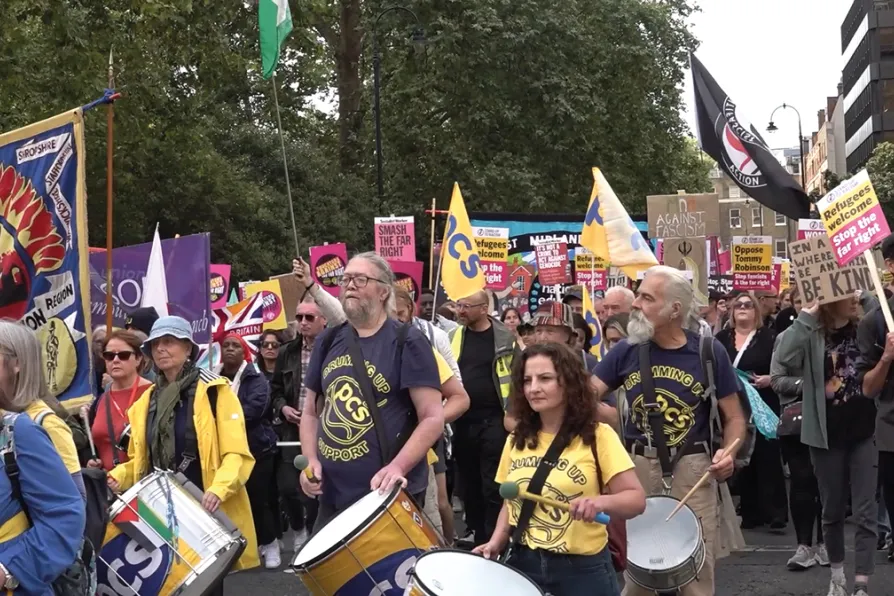
As extremist hate spreads and disillusion deepens, the labour movement must offer more than resistance — it must offer a future, writes MATT WRACK, general secretary of NASUWT – The Teachers’ Union

Listening to our own communities and organising within them holds the key to stopping the advance of Reform UK and other far-right initiatives, posits TONY CONWAY