

 Latest editorial
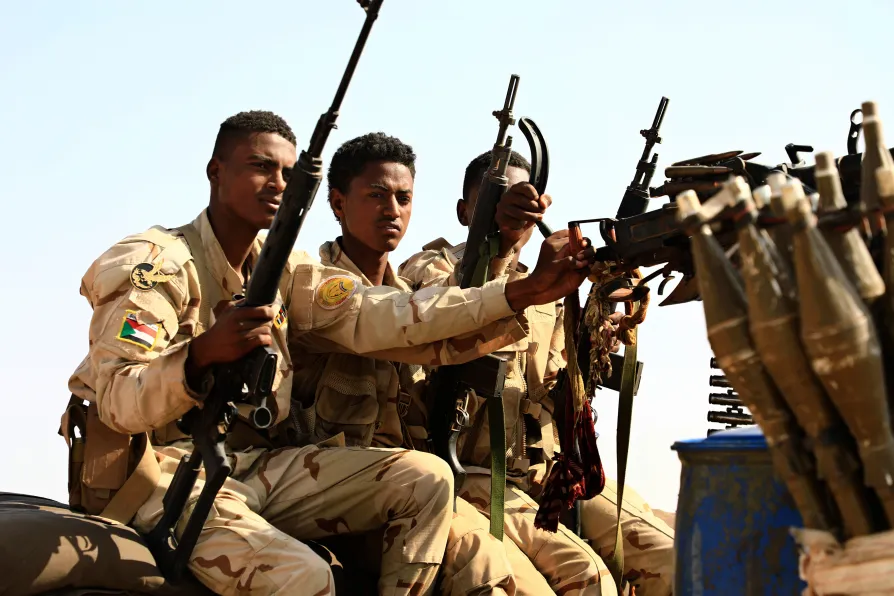 THREAT: Sudanese soldiers from the Rapid Support Forces unit patrol



PARAMILITARY attacks on a strategic city of half-a-million people in central Sudan have raised international fears of another round of mass violence.
“We must not allow the horrors of El Fasher to be repeated in El Obeid,” a spokesman for United Nations secretary-general Antonio Guterres said in a statement on Tuesday.
Last year, more than 6,000 people were killed in three days when the United Arab Emirates-backed Rapid Support Forces seized El Fasher in an attack that UN experts said bore the “hallmarks of genocide.”
The UN security council has said it is alarmed by reports of “substantial” reinforcements being deployed by the RSF around El Obeid in the state of North Kordofan. The United States, Britain and some other European countries have warned of “escalating atrocity risks.”
RSF deployments around El Obeid suggest that preparations are being made for an offensive to retake it and whether the city ultimately falls depends on several factors, according to experts.
The RSF did not immediately respond to requests for comment.
El Obeid, on Sudan’s main east-west road leading to the Nile Valley and the capital Khartoum, is strategic for Sudan’s Egyptian and Saudi-backed army as it battles the RSF.
Over recent months, the city has been subjected to brutal RSF drone strikes that have destroyed civilian infrastructure and targeted bridges and key supply routes into the city, according to the UN.
When reached by phone, resident Taghreed al-Rashid said she felt reassured by the presence of army personnel but was increasingly fearful of drone attacks targeting residential neighbourhoods and markets.
She said a recent strike on a power facility had sparked a water crisis that had led her to pay $5 (£3.60) per barrel of water.
“We’re committed to staying in the city despite our ongoing hardships because forced displacement is a bigger struggle,” Ms Rashid said.
