

 Latest editorial
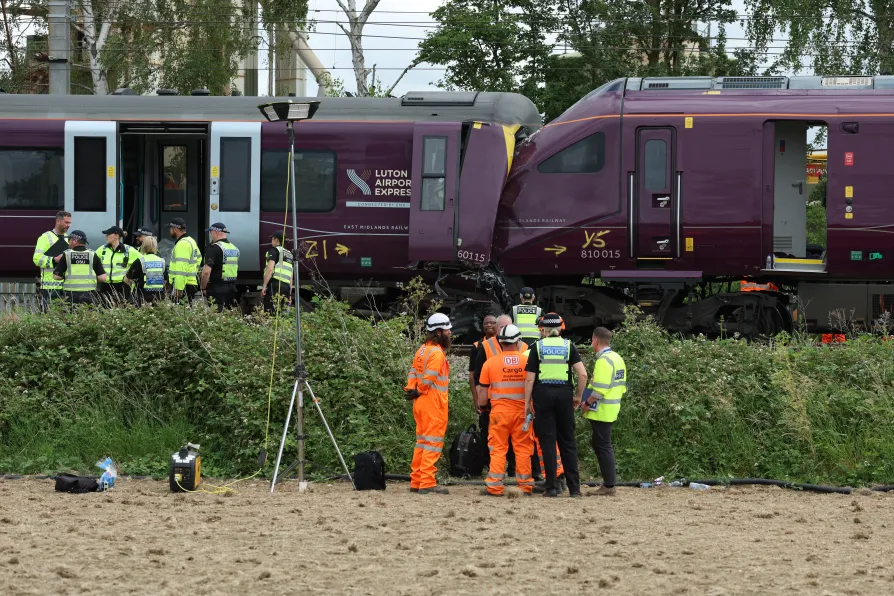 DEVASTATING: The scene just south of the Elstow interchange between the A421 and the A6 in Bedford South after two East Midlands Railway (EMR) trains were involved in a collision


THE Bedford train crash driver passed a red signal at 76mph moments before the collision that killed him and injured about 100 people, investigators revealed today.
The Rail Accident Investigation Branch (RAIB) found 60-year-old Shaun Burton applied the brakes for about nine seconds before hitting the back of a stationary train at 49mph in Elstow at 5.15pm on Friday.
The stopped train had come to a halt “unexpectedly” because of a fault with its Automatic Warning System (AWS) equipment.
In an interim report, the RAIB said that “it is not yet possible to say what indication” Mr Burton got from AWS equipment fitted to his own train and its full investigation would consider “the actions of those involved and any factors that may have influenced them.”
Train drivers’ union Aslef said that the collision could have been prevented if a “deadman’s switch” safety mechanism had been installed on that part of the railway.
Aslef general secretary Dave Calfe said that if the train protection and warning system (TPWS) – which automatically applies emergency brakes if a train passes a red signal or travels too fast – “had been installed, this accident would not have happened, the driver would not have died and no passengers would have been injured.”
Transport union TSSA general secretary Maryam Eslamdoust said: “The interim findings suggest that a sequence of events occurred where multiple layers of safety protection, which should be fundamental to safe railway operations, did not prevent a serious incident.
“That demands urgent and transparent answers about how and why those safety measures failed in practice. We need to understand why they did not perform as intended.”
