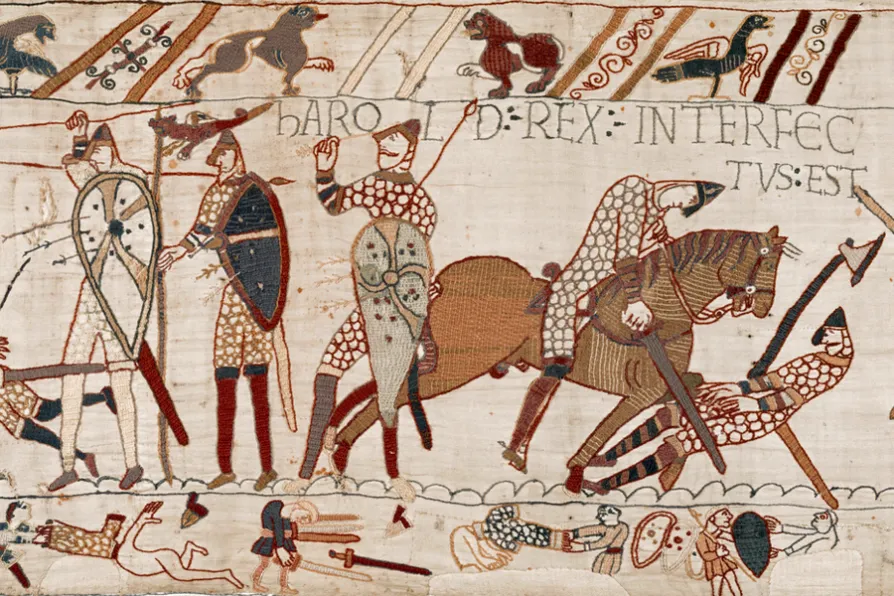
STEPHANIE BROWN draws attention to the hidden labour of the female embroiderers, and how a 19th century replica made no such error


 Latest editorial
Stone circles: the enigma unpacked
STEVEN ANDREW is fascinated by an account of the many baseless folk tales that evolved to explain the existence of pre-historic stone circles
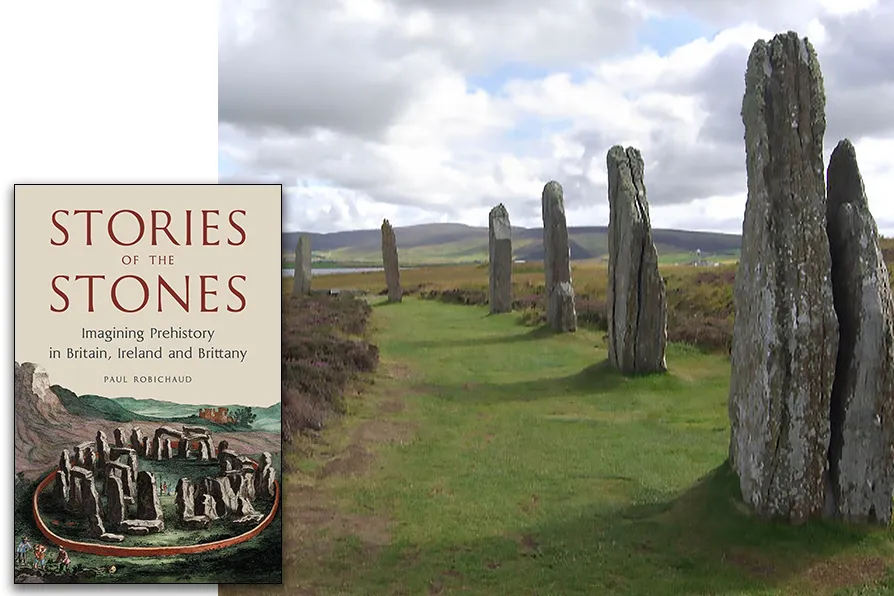 The Ring of Brodgar, Orkney, Scotland; the only major henge and stone circle in Britain which is an almost perfect circle. It has been known as “Temple of the Sun”, "Druid's Circle" and "Sacrificial Altar". [Pic: Stephen McKay/CC]
MIK SABIERS revels in a band that ploughs an idiosyncratic furrow of expletive laden, guitar-driven alt rock
ANDY HEDGECOCK, MARIA DUARTE and ANGUS REID review Synthetic Sincerity, Our Hero, Balthazar, Heartstopper Forever, and A Year In London
The bard invites readers to a gig, raps for Clacton, and lays out the Burnham-Hurzeler conundrum
RON JACOBS recommends an important book that enhances the oppositional theories put forth by Fanon and, in doing so, remakes psychology itself
JAN WOOLF relishes an extensive history of our long relationship to trees in Britain that underlines the current emergency
DIANE WATT argues that while evidence of sex is not there, a 16th‑century lesbian poet could be Scotland’s answer to Gentleman Jack


Stories of the Stones: Imagining Prehistory in Britain, Ireland, and Brittany
Paul Robichaud, Reaktion Books, £25
IT is fair to say that in recent decades interest in and appreciation of ancient stone circles, barrows and mounds has remained at a high and unprecedented level. Many a book and article deal with the subject, there are a huge number of popular TV programmes devoted to it and countless blogs and websites as well.
Proof of this can also be found by simply visiting Castlerigg in England, Newgrange in Ireland, and Callanish in Scotland because you will often meet everyone, from New Age pagans, free festival goers, countryside ramblers and archaeologists, both professional and amateur, all of whom have an opinion and many of whom are not reticent in coming forward about this understandably fascinating subject.
And in a sense this is why Robichaud’s most recent work, Stories of the Stones, is such a different and wonderful read. Its central focus is not strict science as such, but more how different cultures and different peoples and generations have understood these places from the Roman period through to the present day.
As Robichaud notes in his introductory chapter, it’s not surprising huge deficits in knowledge led to speculation and endless theories. The paucity of written records, the complete absence of any dating techniques and little understanding of evolution, both biological and social, meant that this was almost an inevitability right from the start.
We also shouldn’t assume that since these great monuments were built, people have always found them to be as alluring as we do in more recent times. The Romans built many a road through grounds in a fashion that predated by centuries the later construction of a motorway over the centre of Twyford Down. The medieval church vandalised hundreds in an overt attempt to Christianise, and very often local communities only showed appreciation by raiding the sites to use the stones to build with. Celebrated English writer Samuel Johnson, meanwhile, found visits bereft of both beauty and significance.
Other were to were make more sympathetic observations. The Germanic peoples, for example, saw the monuments as the dramatic legacy of a world once ruled by giants. British writers, like the cleric Geoffrey of Monmouth and antiquarian William Stukeley, wrote incessantly about ancient places and the idea that they were the tombs of Merlin and King Arthur took a hold on the literary imagination. Folk cultures very often had contested notions, sometimes seeing them as being arenas of demonic evil but also, at the same time, places where one could heal, end infertility and access hidden treasure.
Many of the remains are now seen to have had a far longer history than was ever thought, few are thought to be directly linked to the “Celtic” peoples, and the connection of the druids to stone circles is largely seen to be a myth, as is the existence of what we often mean by “druidism.”
Robichaud cites studies in which many of the ideas linking the stones to Phoenician if not Brahminic cultures developed during the time that the East India company was being founded, the not too subtle message being that just as white European civilisation had triumphed over barbarism in Britain then so too was it doing in South Asia.
It is interesting to note as well how theories that were once dismissed as nothing more than fanciful suggestions with no evidence base whatsoever, have begun to enter mainstream archaeological debate. A key example of this is the fact that the culture of stone circle building began in northern Scotland, particularly on islands like the Orkneys, and then travelled down to southern England and Wales rather than the other way around.
Robichaud examines it all: from the Romantic poets right through to folk horror cinema, and from the ley line theories of Alfred Watkins and the earth mysteries movement through to the epic guides of the loved eccentric Julian Cope. He covers all of these and far more in a finely detailed and convincing case that history has created not just a few narratives but quite literally hundreds.
Although not given to a belief in magic, this book is a certainly a magical read and, surprisingly, became one of my favourite and most memorable books of the year so far. An absolute gem.
