The new Prime Minister must abandon decades of automatic support for US foreign policy, which makes us all less safe, argues DIANE ABBOTT MP


 Latest editorial

Feeling the heat: the challenges facing our ancient trees
In his fortnightly column MARK SEDDON reflects on the death of Major Oak and why such ancient trees matter to us
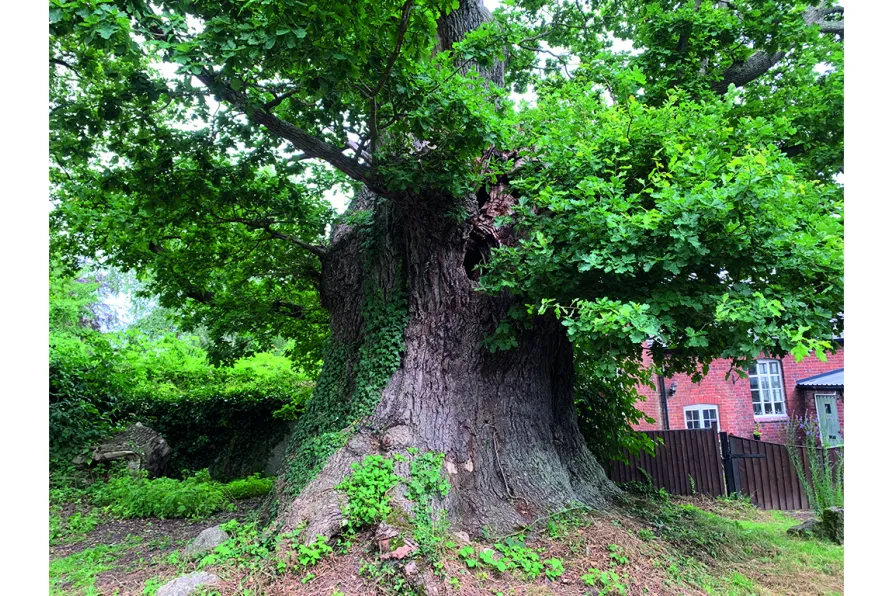 The Eardisley Oak in Herefordshire is believed to be between 800 and 900 years old

Media Lens at 25: David Cromwell and David Edwards reflect on a quarter-century of media criticism, explaining why independent journalism is more important than ever
by Weyman Bennett and Maz’s family
The International Court of Justice has delivered its clearest ruling yet that the right to strike is protected under international law, write Professor TONIA NOVITZ, Professor KEITH EWING and Lord JOHN HENDY KC
Emergency phone alerts could help Britain respond to rising wildfire risk, but Australia’s experience suggests they work best as part of a broader strategy, write ELLIOT CONVERY-FISHER and KATE PARKINS
A champion motorcyclist, trade union organiser and communist, Clem Beckett went from Britain’s speedway tracks to the battlefields of Spain, where he gave his life resisting Franco’s forces at Jarama. GEOFF BOTTOMS pays tribute to this remarkable anti-fascist


NEWS that the Major Oak in Sherwood Forest has finally expired after an extraordinary life of over a thousand years came as something of a shock to most people I suspect.
This remarkable tree had, during its long life, sheltered Robin Hood and his merry men in its hollow trunk and much later Emmeline Pankhurst, who in 1912 led a group of 30 Suffragettes to the tree and where 20 of them squeezed into the ancient hollow. Whether this was some kind practice hideaway from the police we do not know. Today of course if any Palestine Action supporters tried to do the same they would be arrested and charged under the Terrorism Act.
Around 350,000 people visit the Major Oak each year. I think that I must have gone in 1984 to marvel at its majesty after we had dropped off supplies for striking miners and their families at Ollerton and Bevercotes Miners Welfare. Back then the tree appeared luxuriantly healthy, its ancient limbs held in place by giant poles. If memory serves me right, and as with Stonehenge in the day, it was possible to walk straight up to the tree.
But since 2022, the leaf cover had been decreasing and then this year, in June, with no leaves at all the great tree was pronounced dead. On the tree’s death certificate are listed the causes.
These include: not allowing older branches to break off naturally, as this would have ensured that the tree had retained more water and nutrients for the trunk; soil compaction and root problems associated with soil compaction — in other words people like me walking around it over the centuries before a fence was installed; as well as underground mining which will have affected the water table.
And, of course, not forgetting, climate change. The growing number of extreme heat events is affecting the health of our trees, especially some of the veterans. Trees already weakened by age and disease become highly stressed in extreme temperatures. I have noticed a few local oaks which might have lived longer if diminished lives before giving up. And last year over in Cambridgeshire, it was explained to me that the main reason for the death of a couple of elderly smooth-leaved elms was not the dreaded Dutch Elm Disease, but extreme heat and resultant drought.
Barely a couple of miles from where I write, there is a brown tourist sign in the hedge pointing its way to the most famous tree in Herefordshire and one of Britain’s oldest oaks.
Estimated to be between 800-900 years old, the Eardisley Oak also has a hollow trunk. At the last count I think that we managed to get six or seven people inside the gentle giant, which has in the past played host to itinerant “men of the road,” a more common sight 40 or 50 years ago. The tree isn’t propped up in the same way that the Major Oak is, which means more of the water and the nutrients the tree needs are retained nearer the trunk and base of the tree. It has also lost one or two major boughs during storms which gives the tree more resilience, so it is quite possible that the Eardisley Oak may long outlast the Major Oak. Here is hoping that it does.
While Britain has less forest and woodland cover than other European countries, it does have twice the number of ancient and veteran trees than all of Europe combined. Quite how this is the case, others more expert and learned than me may be able to explain. And yet many of these ancient trees are being cut back too hard or ploughed right up to by landowners who find them a bit of a nuisance. Yet these ancient trees — just like the Major Oak — belong to us and to future generations and they surely need our protection.
Security for whom? The warfare not welfare push
Each time I switch on the radio or television I hear assorted politicians and commentators banging the drum for welfare cuts while calling for massively increasing defence spending.
This choice, we are constantly informed, is the one that the putative new prime minister Andy Burnham will have to face up to.
Burnham’s searing experience of Harriet Harman’s famed vote of abstention against Tory welfare cuts back in 2015, when he said that if he were leader he would oppose them but did in the end abstain on grounds of “party unity,” will surely make him alert to the trap being set?
What exactly constitutes “welfare” and what to cut? And why do the talking heads never mention the astonishing waste and project overruns presided over by the Ministry of Defence, with its aircraft carriers that keep breaking down or its new expensive and late Ajax armoured vehicles which shake and vibrate so much they leave army personnel feeling sick?
And then there is of course the all encompassing “security” factor. Yet how secure as a country can we be when there is virtually no food security and how often is this ever mentioned?
We may be largely self-sufficient in meat and dairy, but this country imports a staggering 48 per cent of its foodstuffs. This has all been thrown into sharp relief by the closure of the Strait of Hormuz, following the US and Israel’s attack on Iran, where the fertiliser that helps to grow the food we import has become incredibly expensive.
Talk earlier this year of shortages of cucumbers and tomatoes had me busy planting in my small greenhouse. And at this rate perhaps we will all be obliged to head into the fields in a re-play of “Dig for Victory.”

Similar stories
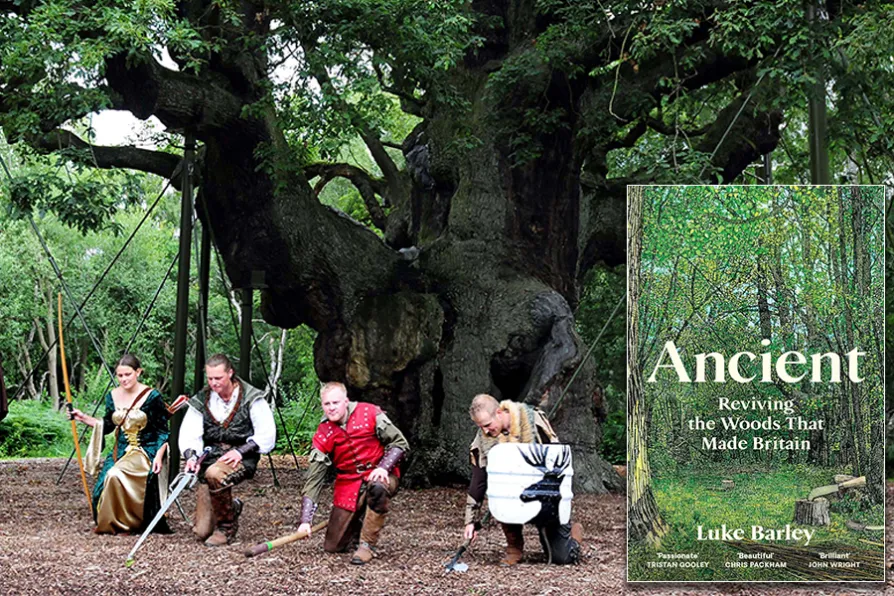
JAN WOOLF relishes an extensive history of our long relationship to trees in Britain that underlines the current emergency
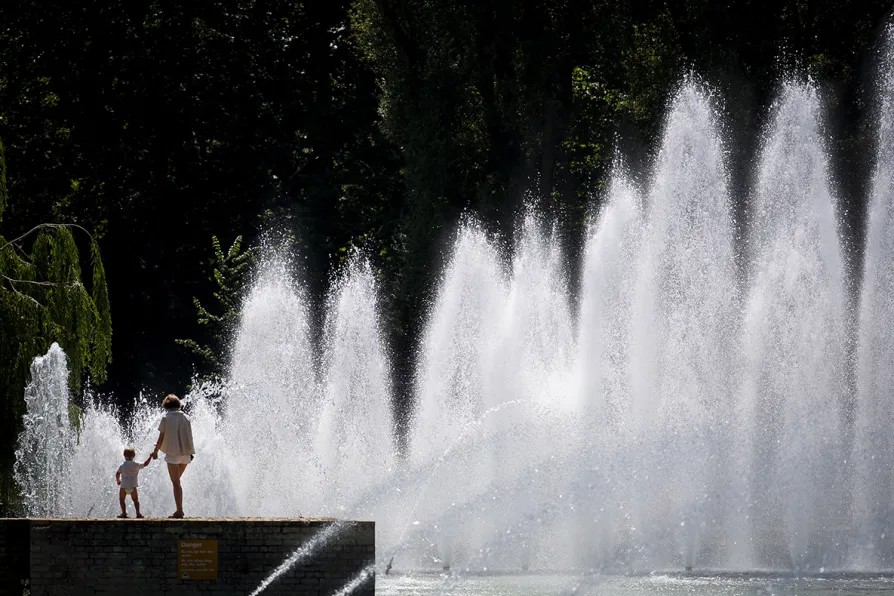
The recent heatwaves revealed how ill-prepared Britain remains for a hotter future – and how unequal the ability to cope with it has become, write ROX MIDDLETON, LIAM SHAW and MIRIAM GAUNTLETT
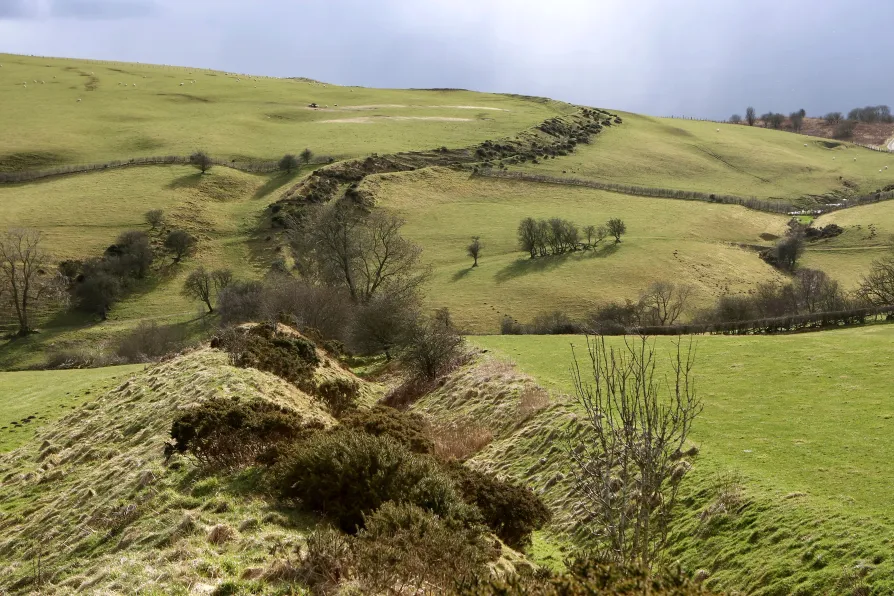
In his fortnightly Borderlands column, MARK SEDDON visits overgrown forts along Offa’s Dyke and reflects on wars past and present