In his fortnightly column MARK SEDDON reflects on the death of Major Oak and why such ancient trees matter to us


 Latest editorial
The US and the CPC: A tale of two anniversaries
Marking milestones in the histories of China and the United States, this week offers a chance to examine two very different visions of the international order, says CARLOS MARTINEZ
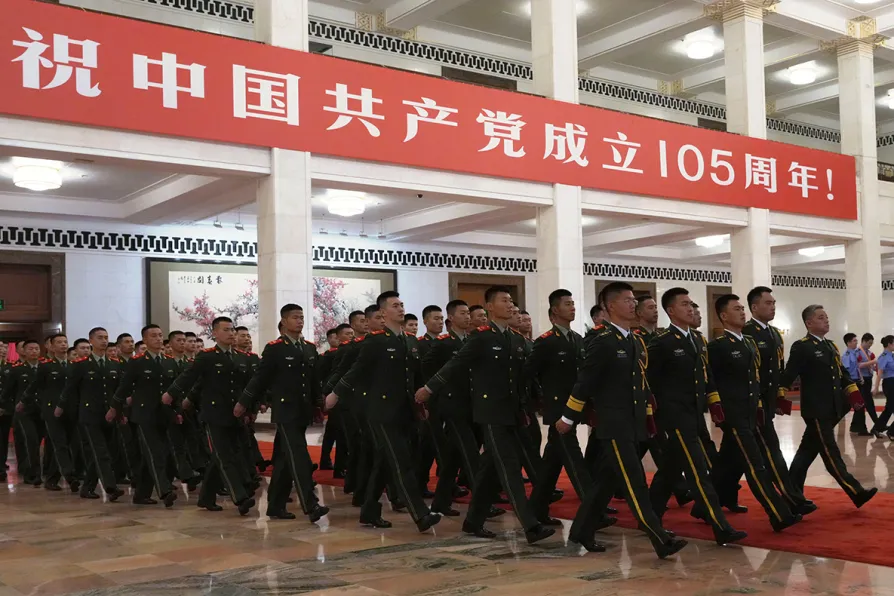 Military personnel march past a banner which reads ‘Celebrating the 105th anniversary of the founding of the Communist Party of China’ at the Great Hall of the People in Beijing, July 1, 2026

The world’s largest communist party marked its 105th birthday this week — and remains true to its principles and firm in its course, says OLIVER VARGAS
The left has become too reliant on persuasion and too detached from the workplaces and communities it seeks to represent, argues NICK TROY
RAMZY BAROUD highlights how Israel’s ambassador sought to shut down UN officials documenting sexual violence and abuses against Palestinians
The US-Israeli conflict with Iran has had far-reaching consequences, including a boost to Pakistan’s regional standing, argues ROGER McKENZIE
The recent heatwaves revealed how ill-prepared Britain remains for a hotter future – and how unequal the ability to cope with it has become, write ROX MIDDLETON, LIAM SHAW and MIRIAM GAUNTLETT
The drive to strengthen European defence is reshaping relations between France, Germany, Italy and Britain, says NICK WRIGHT


THIS week features two anniversaries that, taken together, tell much of the story of our age. On July 1, the Communist Party of China marked 105 years since its founding. On July 4, the United States celebrates 250 years since the Declaration of Independence.
The two milestones invite a comparison: what have these two political projects contributed to the world?
War and peace
The US was born in a revolution against empire and has spent much of its life building one. By one widely cited reckoning, the US has been at war for over 90 per cent of its history — from the wars of continental conquest to Korea, Vietnam, Iraq, Afghanistan, Libya and Iran. It maintains around 800 military bases in 80 countries and spends over a trillion dollars a year on its armed forces.
China’s record could hardly be more different. It has not fought a war in close to five decades. The major conflicts it was previously drawn into — Korea and Vietnam — were in defence of neighbours resisting imperialism.
It has never launched a war of aggression, never seized a colony, never carried out a regime-change operation, never imposed a unilateral sanctions regime. Its foreign policy still rests on the Five Principles of Peaceful Coexistence — mutual respect for sovereignty, non-aggression, non-interference, equality and mutual benefit — first articulated in 1954.
Even on the nuclear question, where Western media warn of a Chinese build-up, China holds around 500 warheads to the United States’ several thousand, and remains the only major nuclear power consistently and unambiguously committed to a policy of no first use, in place since its first nuclear test in 1964.
This difference scales up to the level of the world system. The US sits at the head of an order it designed and polices — an order of dollar dominance, financial sanctions, military alliances, and the assumed right to intervene anywhere in defence of its own economic and strategic interests.
As the New York Times columnist Thomas Friedman famously put it, “the hidden hand of the market will never work without a hidden fist — McDonald’s cannot flourish without McDonnell Douglas.”
China, by contrast, has thrown its weight behind a multipolar trajectory: the Belt and Road Initiative, to which three-quarters of UN member states have signed up; the expansion of Brics; global initiatives on development, security, civilisational dialogue and governance; and an insistence on sovereign equality — that nations be free to choose their own path.
One project seeks to preserve a hierarchy with a single power at the top. The other works towards a global community of shared future, in which all nations participate on equal terms.
Neoliberalism versus common prosperity
Over four decades China has lifted hundreds of millions of people out of poverty — more than three-quarters of the global total — and in 2021 declared the elimination of extreme poverty, a decade ahead of the UN’s own target. It has built the largest public medical insurance network on Earth, covering essentially its entire population, extended pension coverage to all its elderly, and largely solved the problem of homelessness.
The United States, by most measures the world’s richest country, presents a very different picture: in December 2024 a record 771,480 people were homeless on a single night, an 18 per cent jump in a year; tens of millions go without health insurance; medical bankruptcy is routine; and inequality has returned to levels not seen in over a century.
Contrasting China and the US, we see people-centred development on one side; on the other, a society organised around the expansion of wealth for those already at the top.
Meanwhile, Western neoliberalism has fused private wealth and public power so completely that lobbying, donations and the revolving door are simply how the system runs — legalised influence of the capitalist elite dressed up as freedom. The Communist Party of China, by contrast, has waged a sustained anti-corruption campaign that has disciplined officials at every level, including the most senior, and has done so with broad popular support.
Independent surveys consistently record very high levels of public trust in the Chinese government — a fact that ought to trouble those who insist the Western model holds a monopoly on legitimacy.
Ecocide versus ecological civilisation
On the defining question of our century — the survival of a habitable planet — the divergence is stark. China has become the leader of the global energy transition, in 2024 installing more new solar capacity than the rest of the world combined and on course to account for some 60 per cent of all renewable expansion this decade.
It dominates the manufacture of solar panels, wind turbines, electric vehicles and batteries, and in doing so has driven down the global cost of clean technology so that poorer nations can leapfrog straight to it.
The United States, meanwhile, remains by far the largest historical emitter of greenhouse gases, its president dismisses climate change as “the greatest con job ever perpetrated on the world,” and it continues to expand fossil-fuel extraction in the service of private profit.
China is a rising, responsible power oriented towards peace and sustainable development; the US is a declining, reckless hegemon oriented towards war and ecocide.
Hegemonism versus a community of shared future
From May 1 this year, China extended zero-tariff access to all 53 African countries with which it has diplomatic relations — the first major economy to do so — explicitly to help value-added processing remain on the continent rather than draining away as raw materials. This is the opposite of the colonial logic.
China’s record across Africa, Asia, Latin America, the Caribbean and the Pacific is one of building railways, ports, power stations, schools and hospitals; of working closely with governments to assist the long journey out of colonial underdevelopment. This record stands in obvious contrast to the Western pattern of coups, sanctions, structural-adjustment austerity, and the wars and proxy wars that have left entire regions in ruins.
For much of humanity, the difference between the two models is not abstract. It is the difference between a development partner and a neocolonial authority.
The past versus the future
After 105 years, the Communist Party of China can point to the greatest improvement in human wellbeing in history, alongside a foreign policy strongly oriented towards peace and co-operation; it is leading the path towards a future of multipolarity, prosperity and sustainability.
After 250 years, the United States presides over a system of inequality at home and domination abroad that grows more unstable by the year; it is locked into a trajectory of war, ecocide and decline.
This week, looking at these two anniversaries side by side, the contrast could hardly be more stark.

Similar stories

Friedrich Merz’s call for a new Plaza Accord ignores how Washington’s 1985 currency ambush destroyed Japan without fixing US deficits — China, a sovereign socialist state with 1.4 billion consumers, cannot be bullied the same way, writes CARLOS MARTINEZ
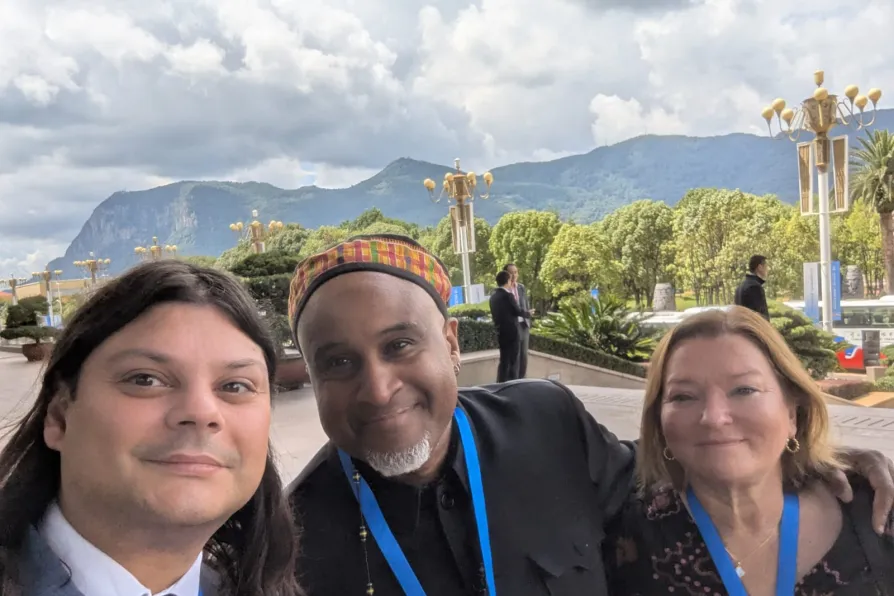
ROGER McKENZIE argues that the BRI represents a choice between treating humans as commodities or as equals — an essential project when, aside from China’s efforts, hundreds of millions worldwide are trapped in poverty
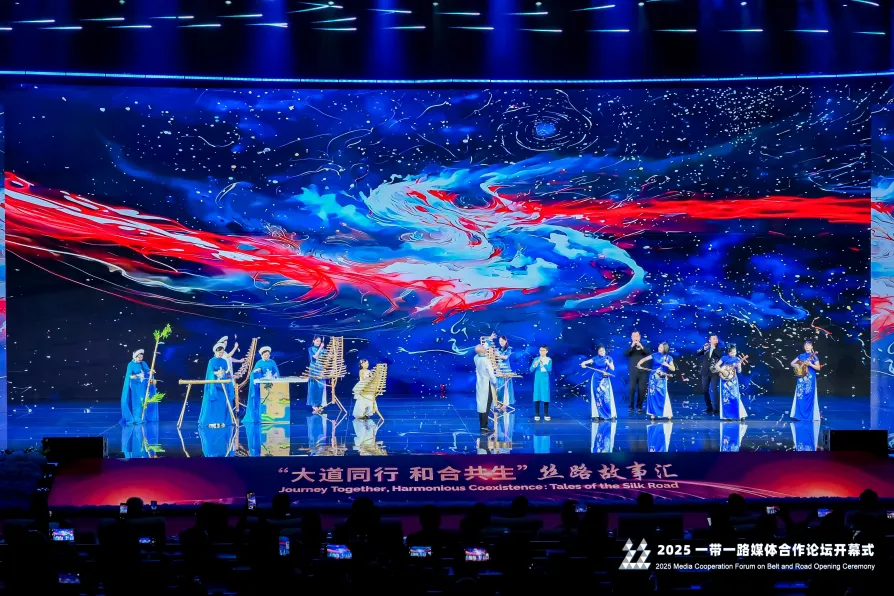
Morning Star editor BEN CHACKO reports from the start of Kunming’s Belt and Road media forum, where 200 journalists from 71 countries celebrated a new openness and optimism, forged by China’s enormous contribution to global development
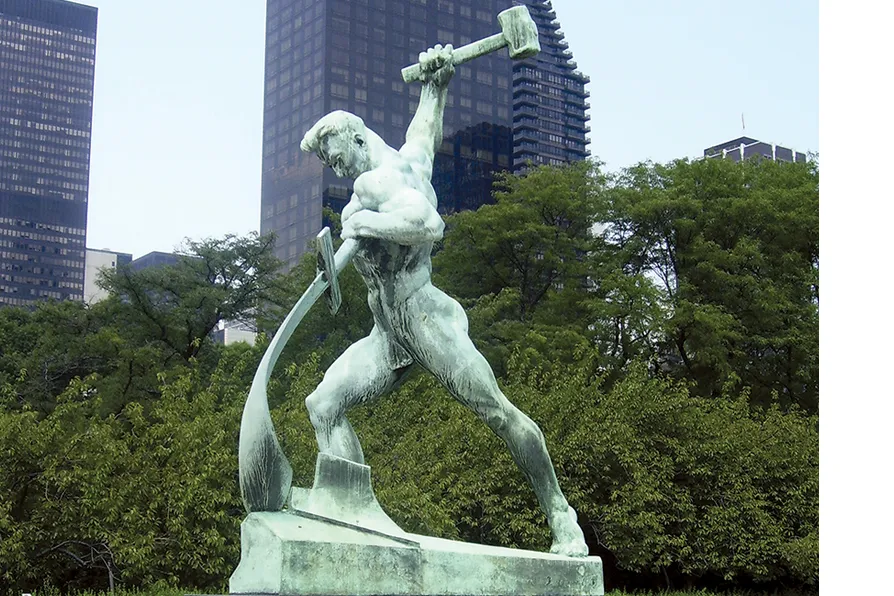
The colonial mindset behind the governance of the UN is the reason for its inertia when it comes to conflict resolution, argues ROGER McKENZIE – but can China’s Global Governance Initiative point in a new direction of global equality?