

 Latest editorial
 Roaa Abu Jarad mourns over the body of her father Omran Abu Jarad, 48, who was killed in an Israeli military strike, during his funeral at Al-Shifa Hospital in Gaza City, July 7, 2026



A LANDMARK legal case seeking to challenge the government’s use of the International Holocaust Remembrance Alliance (IHRA) definition of antisemitism was launched today.
The Department for Culture, Media and Sport (DCMS) is accused of breaching 76-year-old Bea Foster’s human rights when it applied the definition to sanction her over a social media post condemning Israel’s “system of apartheid.”
The Methodist preacher says that the department pressured her to resign from the trustee board of Building Bridges Burnley (BBB), an interfaith charity she helped create, amid critical media reports about posts she made in a personal capacity.
The European Legal Support Centre (ELSC) launched a claim in the county court on her behalf, arguing this breached her rights to freedom of expression and association and to be free from discrimination granted by the Human Rights Act.
Its claim against the DCMS’s application of the non-legally binding IHRA definition is being supported by Palestine Solidarity Campaign (PSC), of which Ms Foster is a long-standing member.
She said: “I’m taking the government to court to fight for my right to be back in the charity that I helped create and to keep demanding justice for the Palestinian people.
“If I win, it will show how the IHRA is not fit for purpose, it doesn’t fight antisemitism. Instead, it’s used to silence people like me who are speaking up for Palestine.”
PSC deputy director Ryvka Barnard said: “The government’s discriminatory action against Bea Foster is a clear example of how the IHRA definition is used to try to punish people who stand up for Palestinian rights.”
ELSC senior legal officer Anna Ost said: “The IHRA must be understood within the wider context of growing efforts to restrict and punish advocacy for Palestinian rights.
“Rather than simply addressing discrimination, its application has increasingly been used to conflate criticism of the state of Israel with antisemitism, resulting in lawful political expression being investigated, sanctioned and suppressed.
“Bea is one of many Palestine advocates who have faced institutional repression in recent years.
“Those who continue to rely on the IHRA definition to restrict political expression should be aware that its use is now subject to legal challenge.”
The DCMS was contacted for comment.


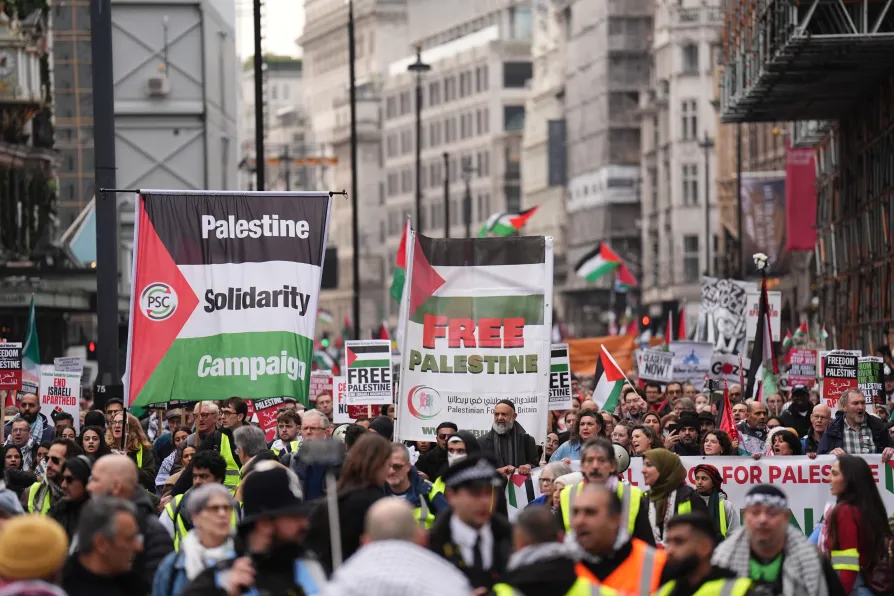
Trade unionists must raise our voices not only for justice and against occupation, but also to protect our fundamental right to protest, writes LOUISE REGAN, ahead of a not-to-be-missed PSC conference
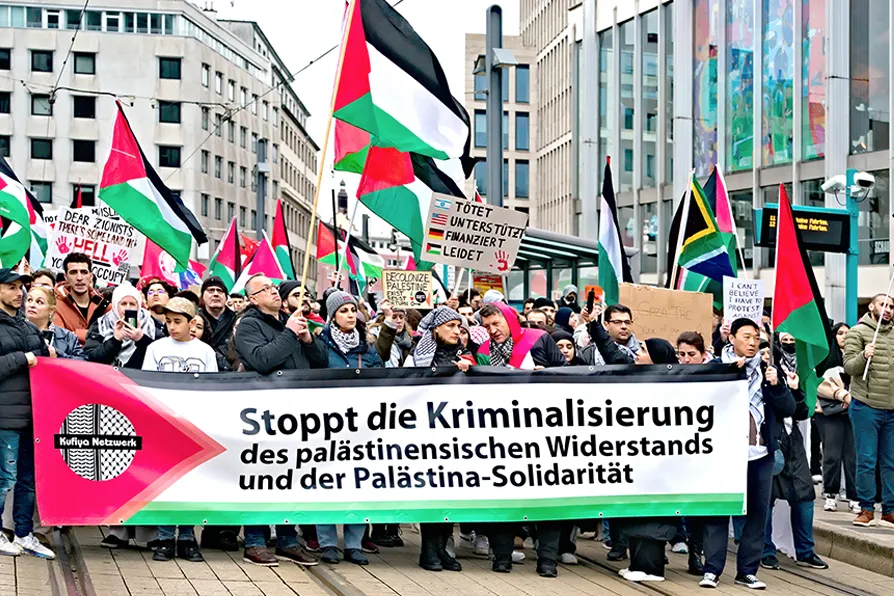
After NGOs and the EU, UN condemns Germany’s crackdown on Palestine Solidarity, writes LEON WYSTRYCHOWSKI
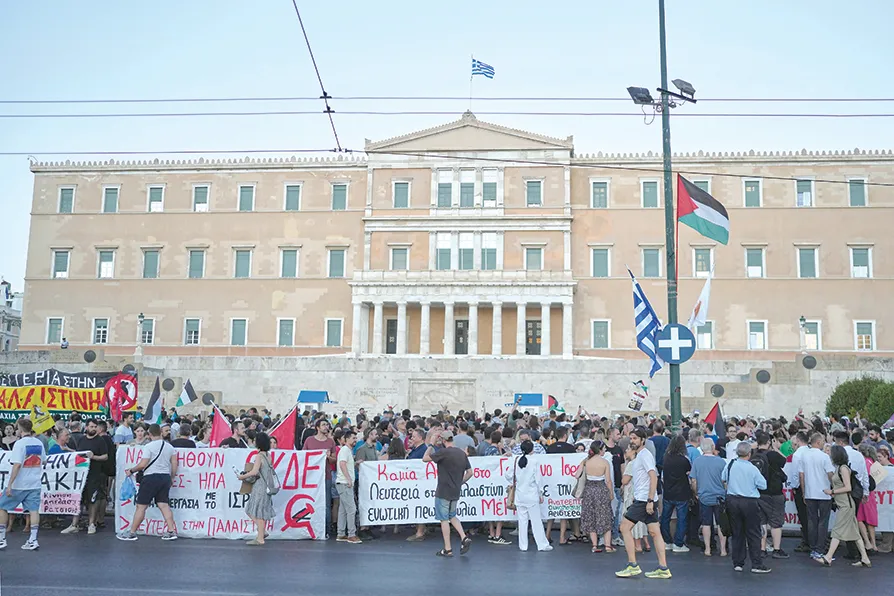
HUGH LANNING reports on an initiative that will aim at counteracting the anti-Palestine narratives spoon-fed to Western governments and the mass media by Israel’s propaganda machine