
While international actors discuss governance and reconstruction, Netanyahu has made it clear that Israel has no intention of ending its military occupation, says RAMZY BAROUD

In Unison we fight for dignity and respect for all workers
TIM ROBERTS says unions have always led on the fight for equality as well as for justice at work
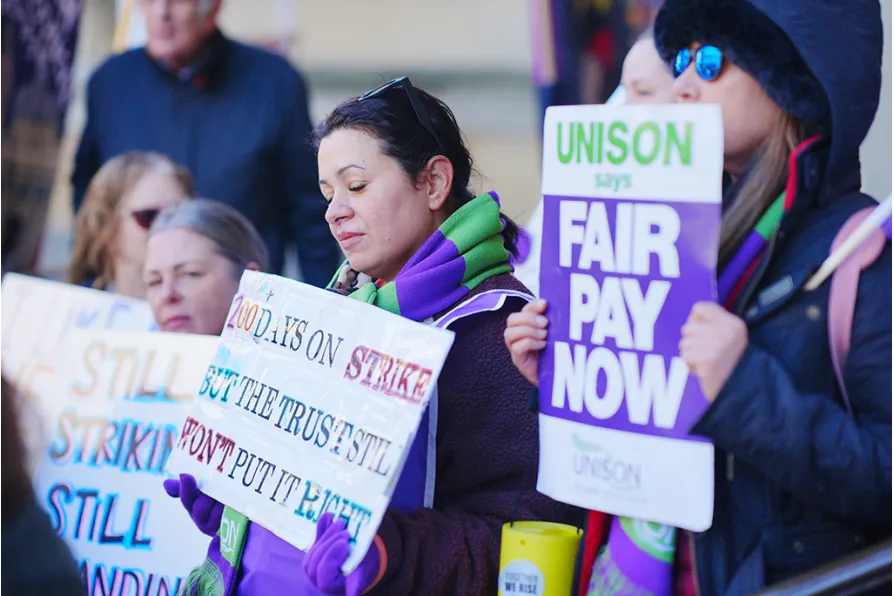
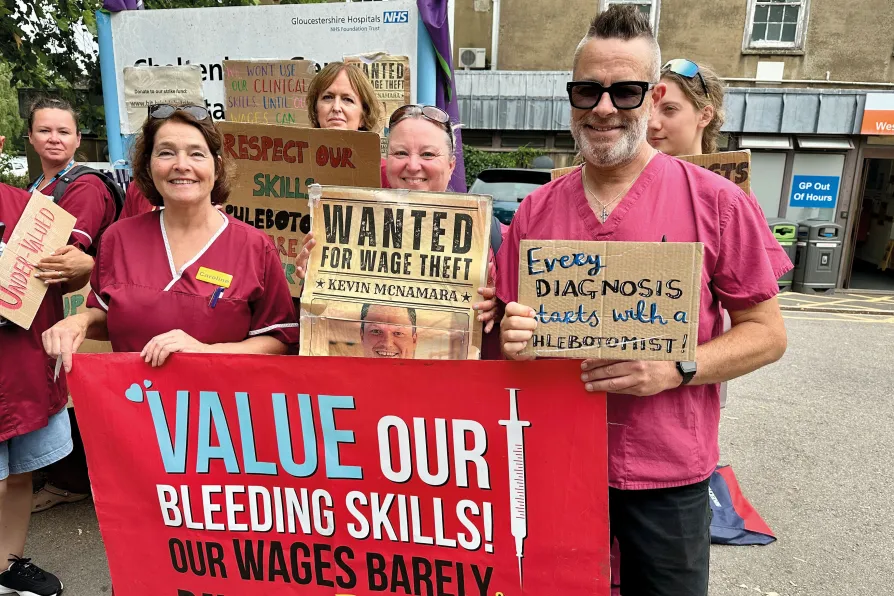
 Phlebotomists in Gloucestershire, members of Unison, mark their 236th day of industrial action during a rally outside Gloucester Shire Hall, November 2025
NICK WRIGHT continues his series analysing the trends in European politics
We have the alternative economics, histories of our struggles and the confidence to change the world
General Federation of Trade Unions assistant general secretary HENRY FOWLER reports on the final day from the GFTU’s residential Summer School at the Workers’ Retreat, Quorn Grange Hotel
Capitalism has exploited — and polluted — our natural resources for too long, it’s time we treated our rivers as living beings, writes MIRIUM GAUNTLETT, LIAM SHAW and ROX MIDDLETON
Treating the Clacton by-election as a joke risks reinforcing the Reform leader’s claim to be the victim of an out-of-touch Establishment, argues JOHN McINALLY
MPs and others called for the urgent release of tortured Palestinian doctor, Hussam Abu Safiya, held hostage by Israel and reportedly near death, reports LINDA PENTZ GUNTER


EVERY July, trade unionists gather in Tolpuddle to honour six workers who dared to organise against exploitation.
The Tolpuddle Martyrs were punished for standing together. Their story reminds us that rights are never handed down from above. They are won collectively by ordinary working people prepared to challenge injustice. That lesson remains as relevant today as it was in 1834. Tolpuddle has become a symbol of the labour movement’s enduring commitment to justice, equality and solidarity.
Over the past year, Unison members across the south-west have embodied that commitment.
Gloucestershire’s phlebotomists made history with the longest-running strike by NHS workers to secure a pay review for the skilled work they undertake every day. Health workers in Dorset won their campaign against plans to transfer NHS staff into a wholly owned subsidiary. School support staff at Cathedral Schools Trust in Bristol fought for fair treatment and won. Migrant health and care workers continue to organise to challenge an immigration system that leaves too many vulnerable to exploitation and insecurity.
Each campaign has been different. Each has involved different workplaces and different workers. But all have been driven by the same belief: that working people deserve dignity and respect.
That belief must extend beyond pay packets and contracts. It must include the fight for equality — not just in the workplace, but in our communities.
When I was a teenager, explicit homophobia was everywhere. Lesbians and gay men were ridiculed in the media, and our relationships, families and identities were dismissed or denigrated. The notorious Section 28 legislation of the Thatcher government cast a long and harmful shadow over my generation.
Unions were at the forefront of resistance to Section 28. Activists organised, campaigned and spoke out when many others remained silent.
Section 28 may be gone, but the need for that solidarity has not.
Trans, non-binary and gender diverse (TNBGD) people increasingly find themselves at the centre of political and media attacks. The hostility has been growing for years, but the Supreme Court ruling last year has added rocket fuel to the fire.
TNBGD workers simply want what every worker deserves — to be respected in the workplace and able to live their lives free from discrimination.
Trade unionists should recognise this moment for what it is. History teaches us that rights can never be taken for granted. Progress is rarely linear. The arguments used against trans people today echo those used against gay men like me decades ago. Fear is manufactured. Divisions are encouraged. Minorities are portrayed as a problem to be solved.
We must reject attempts to divide us.
So, I am immensely proud that my union has a clear and unequivocal position: trans men are men, trans women are women, and non-binary identities are valid.
Unison’s National Delegate Conference last month overwhelmingly passed a motion calling for a change of law to call for self-declaration for TNBGD people allowing them to legally change their gender in line with many other countries across the world.
We fight for trans equality in every public service workplace. We are challenging the wrong-headed and unworkable guidance from the Equality and Human Rights Commission.
We will oppose transphobia wherever it appears — including within the trade union movement.
Unison’s strength comes from the diversity of our membership. That is why equality organising will always be central to our work. Whether challenging racism, tackling sexism, supporting disabled workers, standing with migrant workers or defending LGBT+ rights, we know that an injury to one is an injury to all.
The Tolpuddle Martyrs understood that solidarity is powerful because it brings people together in pursuit of a common cause. In a world where division is too often encouraged, that lesson matters more than ever.
Our movement’s task remains the same: to organise, to campaign and to stand together for justice, equality and dignity for every worker.
Tim Roberts is Unison South West regional secretary.

Similar stories
In Unite I see the solidarity the Tolpuddle Martyrs stood for in today’s picket lines and workplaces
MATT ALLEN salutes the workers and reps who push back against bosses, win for members and make the Unite union what it is
STEVE GILLAN says working-class communities know that solidarity is not a slogan — it is a necessity
ROGER McKENZIE calls for greater support from trade unionists and the general public for female workers involved in industrial disputes
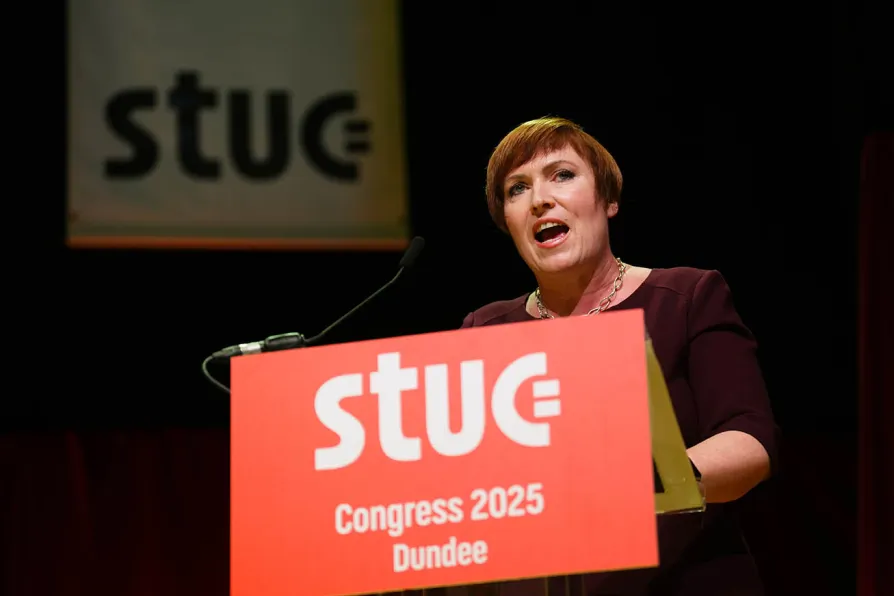
Working-class women lead the fight for fair work and equitable pay and against sexual harassment, the rise of the far right and years of failed austerity policies, writes ROZ FOYER