Snippets of news from the sporting world with JAMIE J


 Latest editorial
Sports and politics: No longer strange bedfellows
The World Cup, Olympics and rise of sports betting reveal how the playing field is increasingly shaped by power and inequality, writes DENNIS BROE
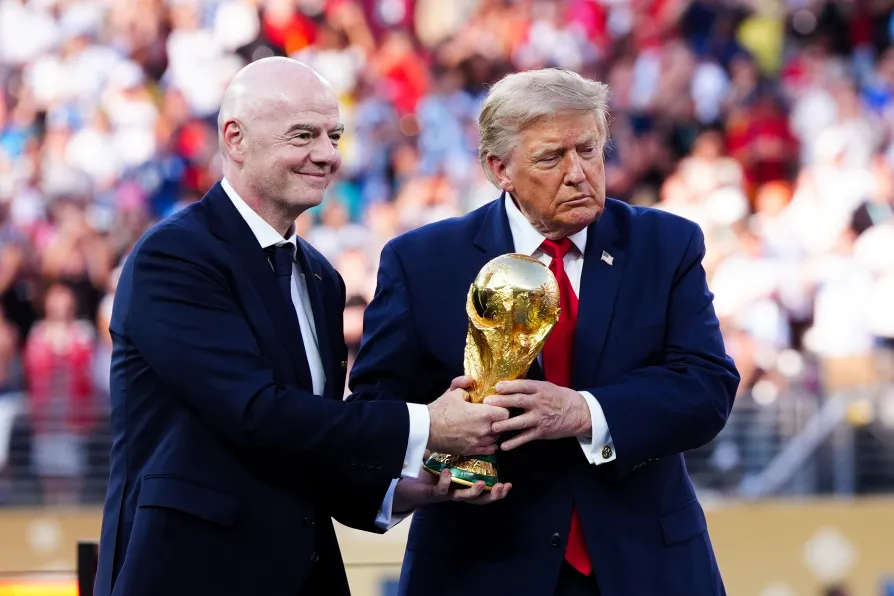 CLOSE TIES: Fifa President Gianni Infantino (left) and US President Donald Trump, present the World Cup Trophy after the final at the New York-New Jersey Stadium



SPORT has always billed itself as above petty indifferences, something that brings people together on the sanctity of the playing field. Fifa, the guardian of the World Cup pledges to ensure accessibility to everyone, promises that each athlete will receive a reception that is “safe, welcoming and inclusive.”
The Olympics promote themselves as bringing humanity, the entire world, together in games that foster global fellow feeling and boost the spirit of co-operation of the host country.
That daydream, though, is every day being shattered by the cold, hard drive for profit in this year’s World Cup, 2028’s LA Olympics and the omnipresence of sports betting, now intruding onto a field of play no longer sheltered from its cultural and — dare we say — political surroundings.
Fifa’s code of conduct has been violated in almost every way in this year’s World Cup, the largest sporting event in history. Accessibility was limited by astronomical ticket prices that few could afford, prompting New York Mayor Zohran Mamdani, a football fan, to negotiate with the World Cup president (who earns $6 million a year) to secure 1,000 tickets at an affordable $50 each for his constituents at the New Jersey venue.
To say nothing of the controversy over Donald Trump’s reported involvement in the red-card suspension of the US team’s leading goalscorer, an episode that was followed by defeat to Belgium and claims that Belgian players mocked him in the dressing room with the “Trump dance” to “YMCA.”
Iranian players, along with their medical and training staff, were unable to stay in the US for their first two matches. They were forced to abandon planned training facilities in Arizona and travel each day before and after matches between their games and back to more limited overnight and training facilities in Tijuana, Mexico.
Finally, for their last and most decisive match, they were allowed to stay in Seattle for two days. The effects of the travel schedule may have proved consequential, as they lost to Egypt and failed to reach the knockout stage after an offside goal was ruled out. Given the circumstances surrounding their preparation, some argued that the conditions did not amount to a level playing field.
Fifa awarded its first “Peace Prize” under the banner “Football Unites the World,” to Donald Trump in 2025, a decision critics saw as a striking contradiction given his administration’s military actions overseas and confrontation with Iran, a Fifa member state.
Meanwhile, Israel, a Fifa member, has faced international criticism as more than 1,000 members of Gaza’s sporting community have reportedly been killed since October 2023, according to figures released by Palestinian sports authorities. Among those killed were Hani al-Masdar, the coach of Palestine’s Olympic football team, and former Palestinian international footballer Suleiman al-Obeid, known as the “Palestinian Pele.”
The 2028 Los Angeles Olympics are already facing controversy, with Casey Wasserman, head of the organising committee, under scrutiny over his past association with Ghislaine Maxwell during the Epstein scandal. Critics argue that the priority placed on fundraising and corporate connections has allowed questions of accountability to go unanswered.
In Paris in 2024, alongside the unprecedented security operation that transformed large parts of the city centre, there were also reports of homeless people being moved away from central areas during the Games. Critics argued that the measures helped create an image of a polished city centre, while obscuring deeper social inequalities and the impact of Emmanuel Macron’s economic policies.
The broader concern, and what critics argue is becoming a defining feature of the Olympics, is the transformation of neighbourhoods to accommodate sports infrastructure that can later struggle to find a lasting purpose.
In Saint-Denis, one of France’s most consistently left-wing and diverse areas, all that’s left of a whole neighbourhood around Pleyel is a hollowed-out arena, surrounded by walls papered with decals. After this forced migration, in the next municipal election, the mayor of this long-time communist area was replaced instead by a socialist, red-centrist democrat, who ran a law-and-order campaign.
One of the major debates surrounding the 2028 LA Olympics is the future of Inglewood, a historically black and Hispanic community that has undergone rapid change in recent years. Critics argue that Olympic-related development, including major sports complexes, is accelerating gentrification and reshaping the area. Plans for new Olympic facilities have also raised concerns among residents over the loss of existing housing and the displacement pressures facing local communities.
As ubiquitous as these massive sports events is one of their most visible companions: sports gambling. At a time when many workers in the US and Europe face growing financial pressures and rising living costs, betting is increasingly promoted as a form of entertainment and escape. In the US, sports betting revenue hit a record $16.96 billion in 2025, with legal wagers approaching $167bn.
Sport, far from existing apart from the social and economic realities of the societies around it, continues to reflect their inequalities and struggles.

Similar stories
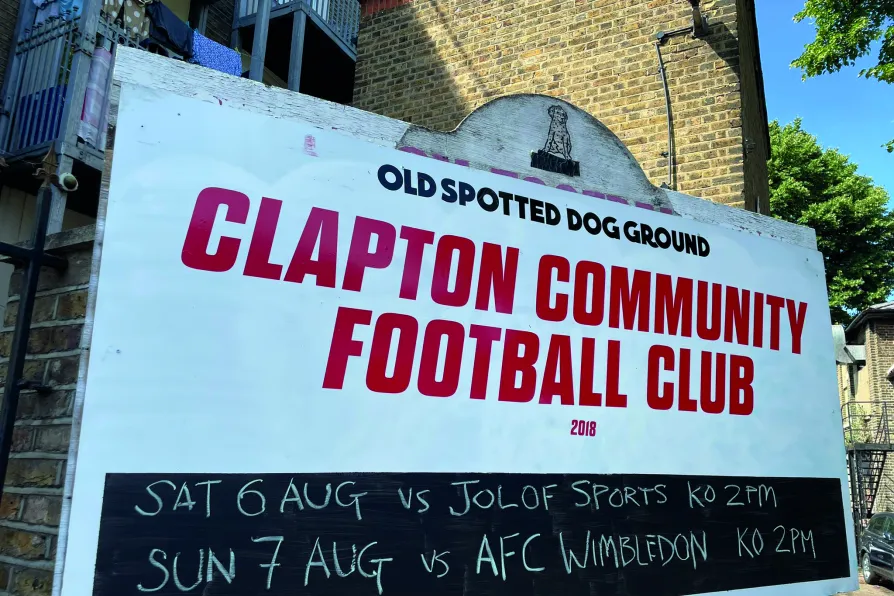
Clapton CFC vs New York International: An alternative international football showcase in east London
Two teams from different sides of the world will face off this weekend in a landmark football occasion. One team from the Americas, another from Europe, will meet in an exhibition of the world’s game that is being broadcast across the globe, writes JAMES NALTON
England survived a thrilling Azteca encounter, but the stadium and its supporters created one of the tournament’s defining nights, writes JAMES NALTON