MARIA DUARTE, JAMES WALSH and ANDY HEDGECOCK review The Invite, My Father’s Island, Nirvanna: the Band, the Show, the Movie, and Oh My Goodness!


 Latest editorial
Theatre: The Resistible Rise Of Arturo Ui
The German playwright's great satire on Hitler's preventable rise to power still packs a contemporary punch, says Gordon Parsons

PAUL DONOVAN is chilled by the contemporary resonance of Harper Lee’s coming of age tale amidst racism and white supremacy in this excellent production
GEOFF BOTTOMS recommends the unashamedly light-hearted escapism on offer in this stage version of the 1963 film
Full of mysterious religious references and radical sound design, the Scottish duo’s new offering is candidate for album of the year, suggests SIMON DUFF
MARY CONWAY revels in a powerful reminder that human lives are not defined by physical perfection
PAUL DONOVAN recommends the fine performances in this account of the pre-war meeting between the US president and the British king
TECLYN AROD relishes an intimate celebration of jazz improvisation that mixes local and national musicians


The Resistible Rise Of Arturo Ui
Duchess Theatre, London
5 Stars
Written in 1941 during the first stage of his wartime exile in Finland, Bertolt Brecht's The Resistible Rise Of Arturo Ui was not produced in his lifetime.
High on the list of Hitler's targets, there can be little doubt that if the play had had an impact on the German public, Brecht would have been a number one target for a nazi death squad.
Unlike Charlie Chaplin's sentimentalised send-up treatment of Hitler in his film The Great Dictator, Brecht's dramatic caricature of Hitler undermines the histrionic fuhrer without ever under-rating the seedy menace of his power.
Setting the play in Chicago's gangster land, where the target of Ui and his vicious hoodlums is control of the cauliflower business through his murderous protection racket, Brecht reduces the world conflict to a level of comic satire which reveals the whole gang of nazi leaders and their business mogul manipulators as the two-bit foetid monsters they were.
Arturo Ui - modelled on Shakespeare's Richard III - along with Mother Courage and Galileo represent Brecht's creation of three of the great character roles in modern theatre.
Here Henry Goodman superlatively portrays Hitler as both a craven coward, cowering behind furniture at every unexpected knock on the door, and a feral criminal tortured by his own infuriating sense of inferiority.
Goodman's performance climaxes in the great comic scene when, tutored by an inebriated Shakespearean thespian, this stunted human rodent acquires the characteristic strutting poses and articulation of the demented leader.
At first adolescently sniggering at the suggestion that to appear authoritative both hands should cover the genitals, he then hilariously mangles Mark Antony's oration at Caesar's funeral as a trial run for his manic political rants.
Brecht was concerned that when all the supporting characters - Hindenburg, Goering, Goebbels and Rohm - and events such as the Reichstag fire trial and the Night of the Long Knives massacre were lost to memory, future audiences would find the play's message lacking immediacy.
Yet when Goodman finally strips off the false moustache and warns us that "If we could look instead of gawking/We'd see the horror in the heart of farce," we know that Hitler may be history but "the bitch that bore him is in heat again."
Runs until December 7. Box office: (0844) 482-9672
Gordon Parsons

Similar stories
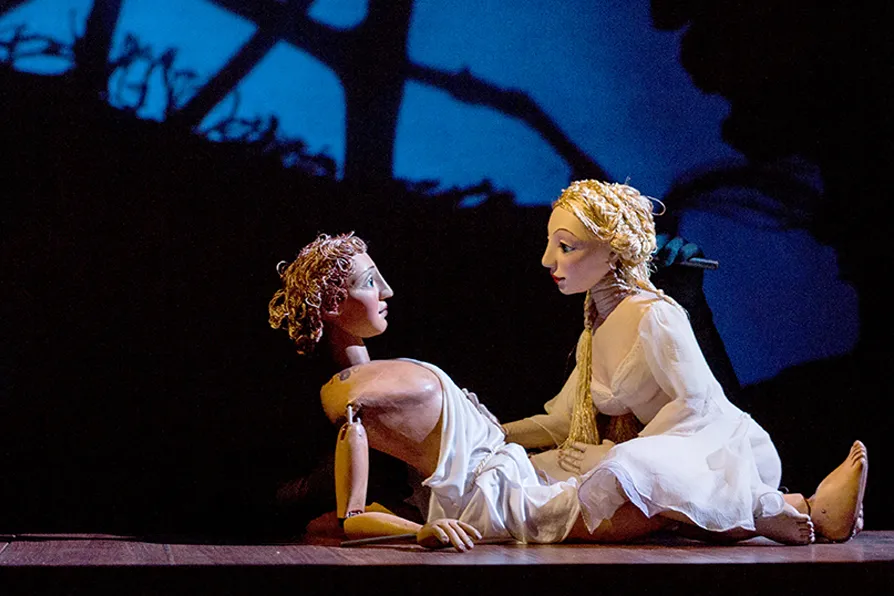
GEORGE FOGARTY is dazzled by a breathtakingly skillful puppet version of Shakespeare’s greatest love poem
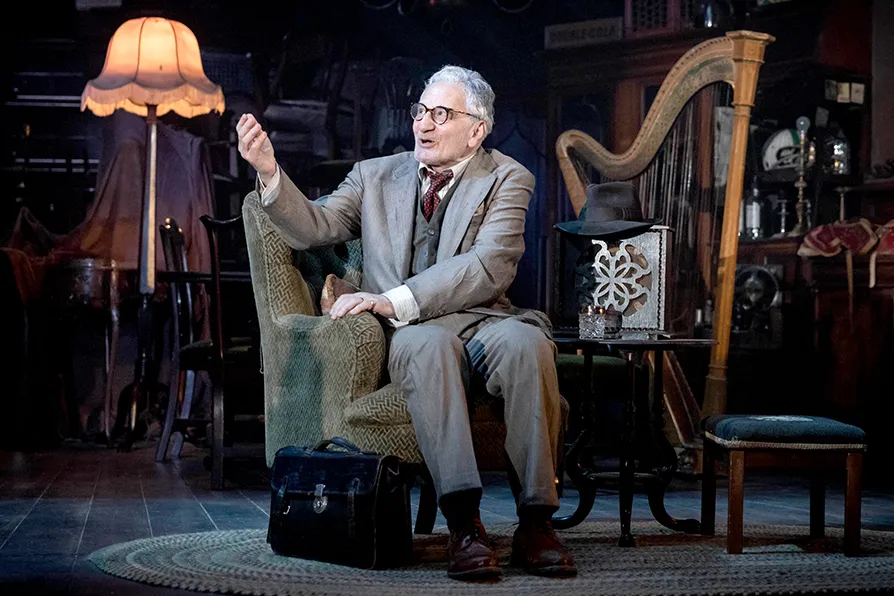
MARY CONWAY applauds the timely revival of Miller’s study of people fatally deformed by the economics of survival
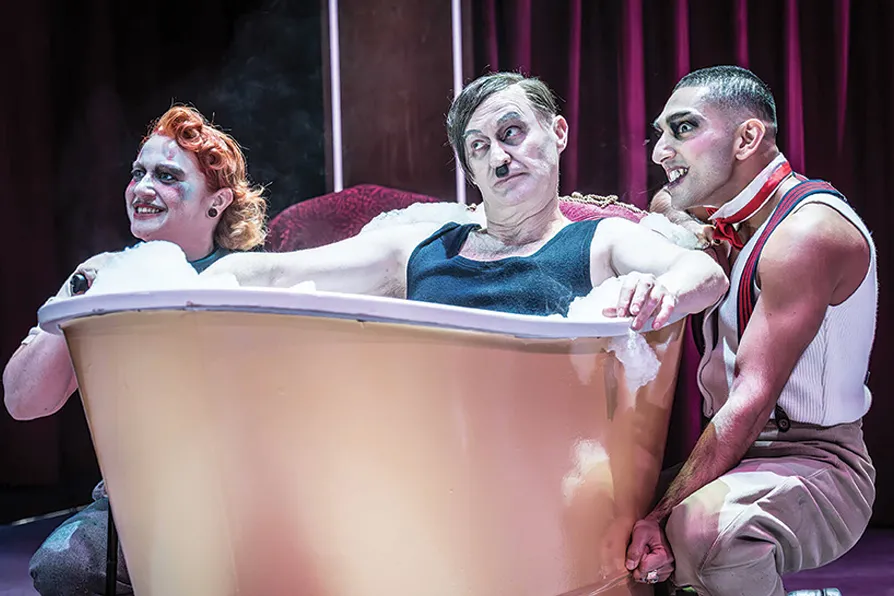
GORDON PARSONS salutes the apt return of Brecht’s vaudevillian cartoon drama that retains the vitality of the boxing or the circus ring
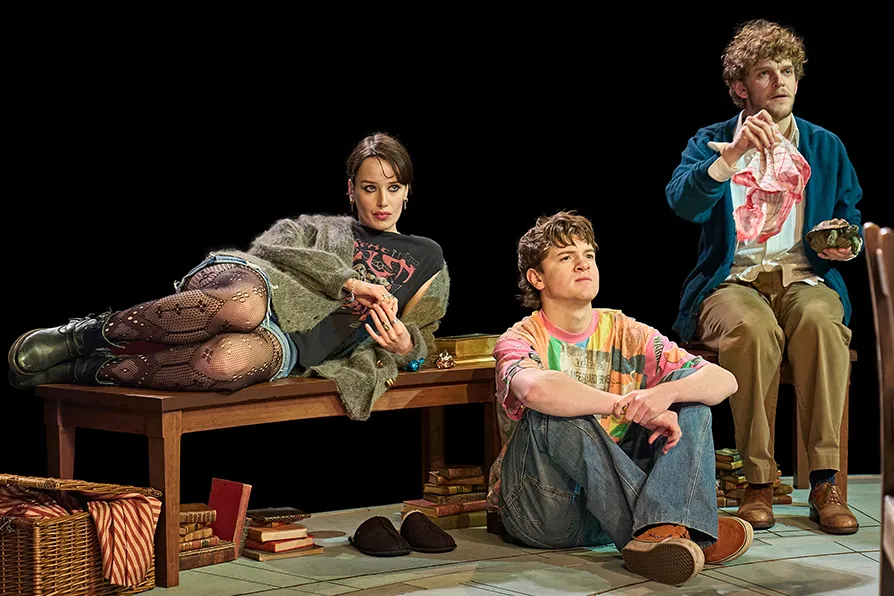
MARY CONWAY becomes impatient with the intellectual self-indulgence of Tom Stoppard in a production that is, nevertheless, total class