New releases from Laura Veirs, The Waterboys, and Yard Act


 Latest editorial
Face card meets femme fatale
GEORGE FOGARTY is dazzled by a breathtakingly skillful puppet version of Shakespeare’s greatest love poem
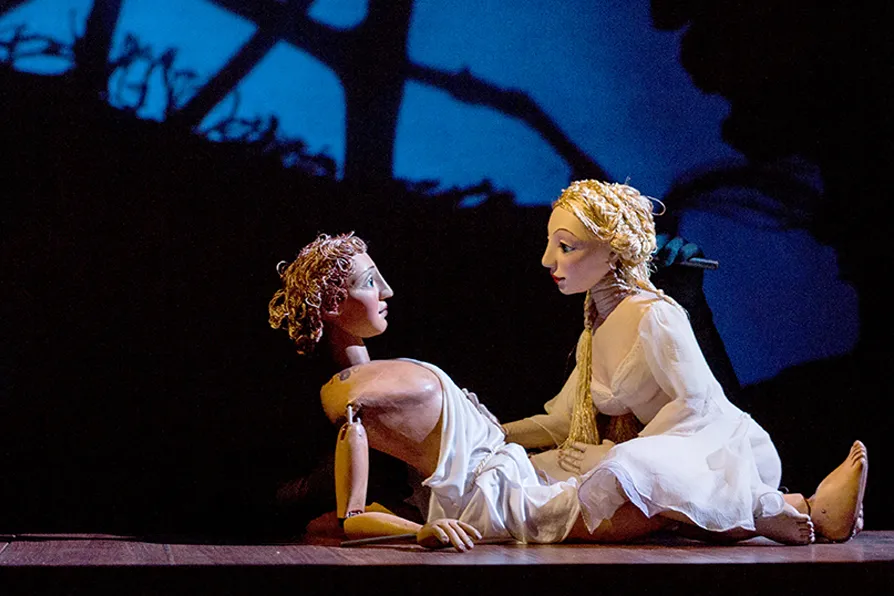 POWER IMBALANCE: Greg Doran’s Venus and Adonis [Pic: Lucy Barriball]
Ron's rages are sincere and — according to his wife — healthily cathartic. But can these splenetic outbursts loosen the grip of capitalism at its most monstrous?
ANGUS REID considers the power of the podcast as a vehicle for consensus building in opposition to mainstream media narratives
GLENN FOSBRAEY recommends a biography worth reading for both existing George Michael fans and those yet to be converted
FRANCIS DEVINE introduces a new collection of essays that draws on Pease McKenna’s example to indicate future paths for the movement
KEVIN DONNELLY and MARIA DUARTE review Shoot the People, The Last One For The Road, Rosebush Pruning, and Moana
JAMES WALSH recommends an exceptional documentary about the experience of Western doctors in Gaza


Venus and Adonis
Oxford Playhouse
⭑⭑⭑⭑⭑
VENUS AND ADONIS is Shakespeare’s epic poem of unrequited love, written during the 1592 lockdown when theatres were closed due to plague. It ended up being the greatest commercial success he would see in his lifetime, running to 10 editions.
RSC director Greg Doran had long dreamed of bringing it to the stage, but faced one seemingly insurmountable obstacle: how to bring to life the story’s many animals? The idea remained at the back of his mind for some years until he found himself touring another play in Japan. Watching a performance of traditional Bunraku puppetry on a day off, the solution became obvious: to create the whole piece as a puppet show. The RSC joined forces with Little Angel Puppet Theatre and the show hit the stage in 2004. It has now been resurrected, probably because it is so obviously a delight both to perform and to witness.
Puppetry is a surprisingly expressive medium, with each puppet a work of art in its own right, operated tonight by up to three puppeteers at the same time. The collaborative nature of this operation makes it in some ways more akin to dancing than acting, as one of the artists explains in the post-show discussion, and watching them at work feels like seeing a film being made in front of your eyes. You are completely taken in, however, and I am initially shocked when the characters themselves do not come and take a bow at the end: it takes a moment to readjust to the fact that they are, after all, inanimate objects. Who knew the movements of a wooden toy could be so moving?
The stage set is sumptuous, focused on a replica theatre, replete with columns, pediment and globe, referencing both ancient Greece and Elizabethan England’s most famous theatre. The animal puppets — including some gorgeous shadow puppetry — are incredible, and were studied by the company who went on to produce War Horse.
The plot follows Venus, the goddess of love, in her attempts to seduce the beautiful mortal Adonis. Adonis is having none of it, however, and simply wants to get on with hunting boar. She believes he is kidding himself, and attempts to get him to embrace love. “Remove your siege from my unyielding heart,” he responds. “Before I know myself, seek not to know me.”
Being Shakespeare, this can only really end one way, and — spoiler alert — Venus herself is immortal.
And so.
If hell hath no fury like a woman scorned, even this is nothing to the wrath of the goddess of love herself. Her revenge on humanity is to transform love for evermore into a cursed thing, to be eternally problematic, painful and confusing.
Interestingly, the unrequited nature of the dalliance does not appear in Ovid’s version, and seems to be something added by Shakespeare, whose retelling is more reminiscent of Echo’s failed seduction of Narcissus.
His version raises some uncomfortable issues around consent (Venus has no concept of taking no for an answer), power imbalance (an immortal god up against a youth of undisclosed, but clearly not that many, years), and, very subtly, coloniality. Adonis’s puppet has curly hair and darker skin than Venus’s lily white complexion, and Shakespeare was writing, of course, during the age of “discovery”; that is, of European domination and conquest of darker peoples.
This aspect and context is sadly unexplored during the post-show discussion, but this is nonetheless a breathtaking performance by some of the country’s most accomplished puppeteers.
Highly recommended.
On tour to The Barbican, London June 23-27; and York Theatre Royal June 30 to July 1.

Similar stories

MAYER WAKEFIELD has reservations about a two-handed theatrical homage to jazz’s most mercurial musician
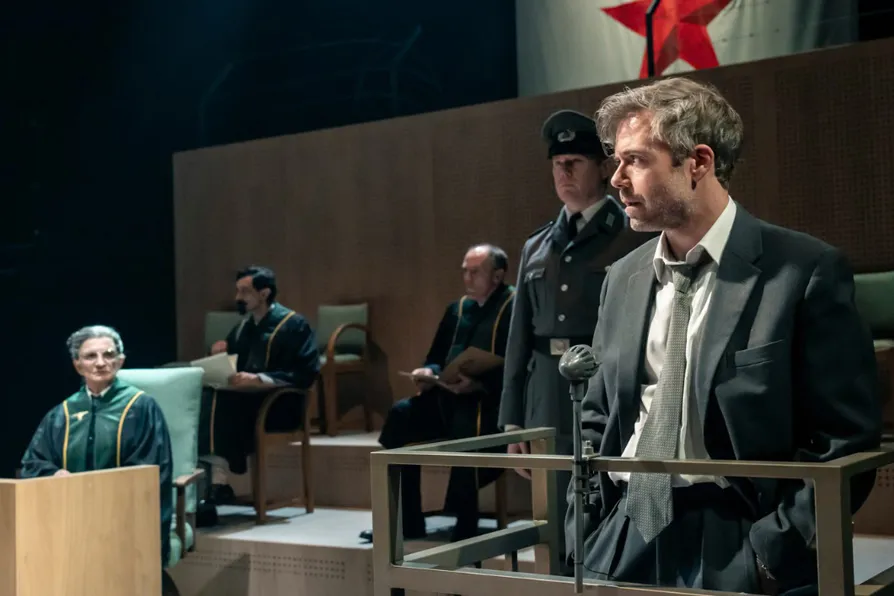
PETER MASON applauds a stage version of Le Carre’s novel that questions what ordinary people have to gain from high-level governmental spying
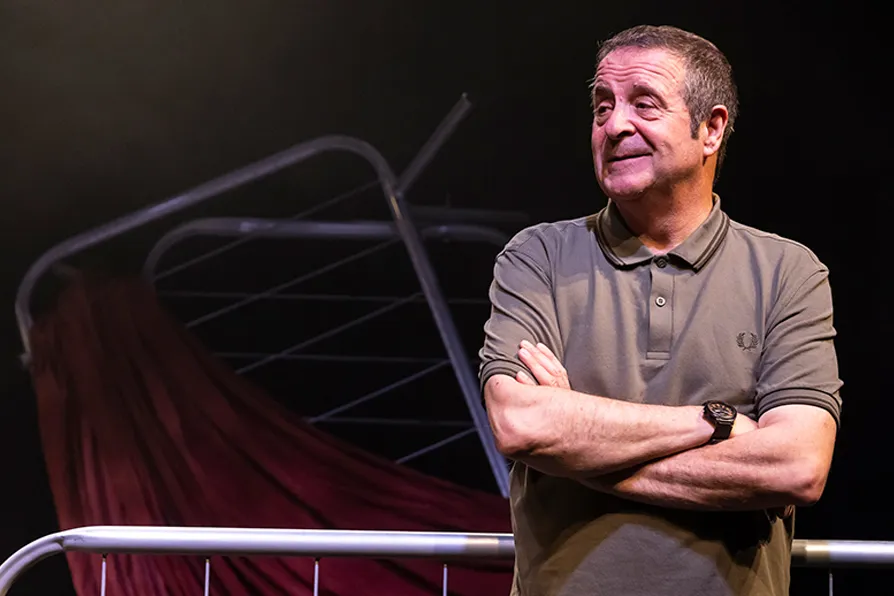
GEORGE FOGARTY is captivated by a brilliant one-man show depicting life in HMP Strangeways
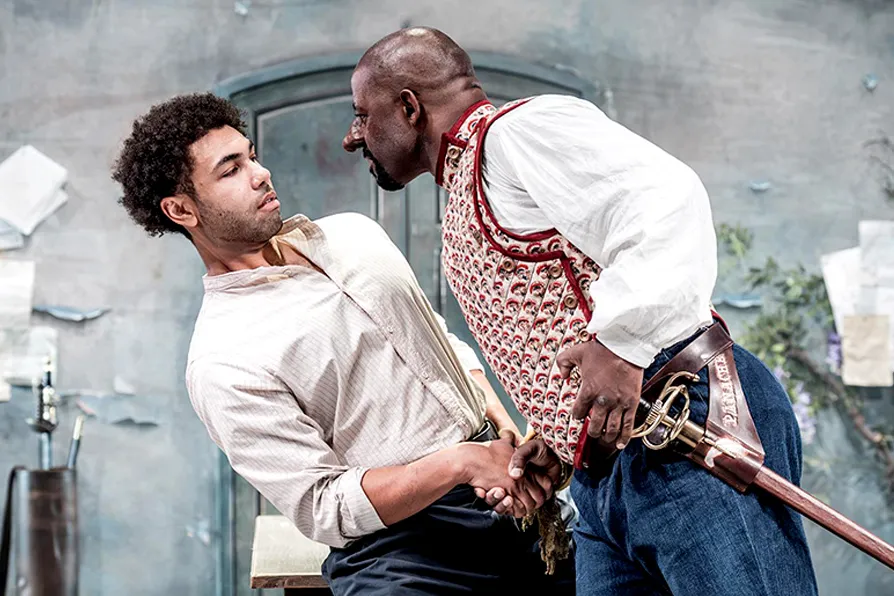
GORDON PARSONS is blown away by a superb production of Rostand’s comedy of verbal panache and swordmanship